
 Afirika
 Asiya
Asiya Bulaaya
 Amerika ey'Obukiikaddyo
 Awusitureeliya ne Oseyaniya
 Antakitika
 Oseyani ya Pasifiki
 Oseyani ya Atlantiki
 Oseyani y'e Buyindi
 Oseyani ya Arakitiki
 Ennyanja ya Mediterenia
 Ennyanja Emmyufu
 Ennyanja ya Karibiyani
 Ennyanja ya Korali
 Ennyanja ya China ey'Obukiikaddyo
 Ennyanja ya Bufilipino
 Ennyanja ya Andaman
 Ennyanja ey'Obukiikakkono (North Sea)
 Ennyanja ya Timor ne Arafura
 Ekikono kya Bengal
 Ekikono kya Kalifoniya
South Australian cobbler
 Amaggwa ag'obusagwa
The South Australian cobbler is a marine fish with venomous spines on its head and fins. It lives along the temperate southern coasts of Australia, in shallow water and seagrass beds. Its spines make it a fish to keep well clear of.1



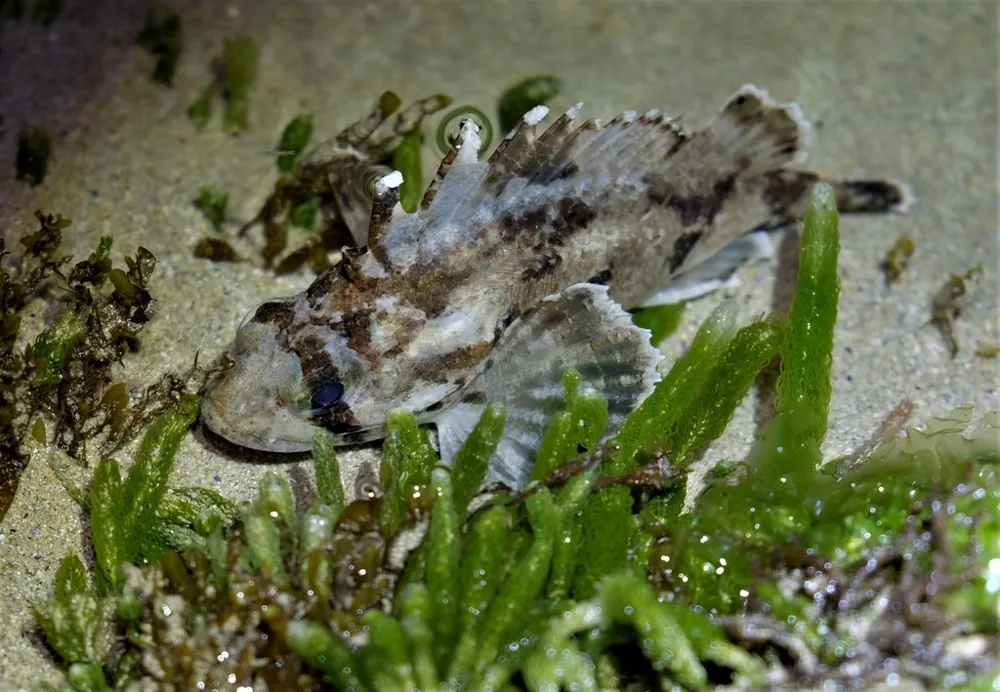
 Engeri y'okukitegeera
- Mottled pattern of brown to dark brown blotches on the upper body, fading to pale underneath1
- The blotches are less obvious in larger fish1
- An obvious dark blotch on the dorsal fin, between the 4th and 7th spines1
- A dark, oblong spot near the base of the pectoral fin1
- Mostly scaleless body, with scales only along the lateral line1
Amaanyi g'obusagwa
Amaggwa amasongovu ge galimu obusagwa. Okukirinnyako oba okukikwata kiruma.
Obusagwa bwakyo bukola ki?
The venom is carried in spines on the head (infraorbital and preopercular bones) and in the dorsal, anal and pectoral fins. Stings cause severe pain and swelling around the affected area, along with nausea, sweating, paralysis of the limbs and fainting. In the worst cases the venom can affect the cardiovascular system, which controls the heart and blood flow.1
Kirina akabi kenkana wa eri abantu?
Akabi eri abantu: Kya maanyiAmaggwa gaakyo bwe gakufumita, genda eri omusawo. Okufa kubaawo kitono nnyo.People who have been stung by this fish rarely die. Symptoms can nevertheless be severe.1
Kikola ki nga kitidde?
It is well defended by venomous spines on its head and fins.1
 Amaggwa gaakyo bwe gakufumita
- Teeka ekiwundu mu mazzi agookya, agookya nga omuntu bw'asobola okugumiikiriza nga tegamwokya (gagezese n'omukono gwo), okumala eddakiika 30 okutuuka ku 90. Funa obuyambi bw'abasawo, naddala ku stonefish ne stingray.
Bulijjo sooka kuba ennamba y'ebigwa bitalaze (112, 000, 911). Buno bulagirizi bwa bujjanjabi obusooka obwa bulijjo, si kuwabula kwa musawo. Obujjanjabi obusooka obw'omusingi
 Weekuume
- Tokwatako, tokwata wadde okusoomooza ensolo ey'omu nsiko, ne bw'eba ntono, era ne bw'eba erabika nga yeebase oba nga efudde.
- Gireke n'ebbanga. Bw'osisinkana emu, beera mukkakkamu, dda emabega mpola era gireke egende mu kkubo lyayo.
- Amaggwa gaayo bwe gakufumita: beera mukkakkamu, totambula, kuba ennamba y'ebigwa bitalaze (112, 000, 911) oba tuuka mu ddwaliro mangu. Jjukira bwe yali efaanana, ekifaananyi kiyamba.
Tekikunoonya. Kikozesa obusagwa bwakyo okukwata emmere oba okwekuuma, era kyandisinze kwekweka. Ebirala ku kwekuuma
Wa mu nsi?
Kinene kyenkana wa?
Kiwanvu kyenkana wa?
 kiwanvu nga bbulooka 7 ez'okuzannyisa mu lunyiriri
 kyandisobodde okuwuga obuwanvu bw'ekidiba ekinene (m 50) mu sikonda 40
South Australian cobbler kinene kyenkana wa bw'ogeraageranya ne GGWE?
Kubala bwokka mu browser yo. Tewali kitterekebwa wadde okusindikibwa wonna.
Kidduka kyenkana wa?
Ebituufu
It can live for more than 14 years, and large individuals are much older than other species of the same size, because it grows slowly.1
It spends the day motionless and hunts at night, waiting for prey to come close.1
Its genus, Gymnapistes, comes from a Greek word meaning 'bare' or 'naked', which refers to its mostly scaleless body.1
Ku bakugu mu busagwa
- Erinnya erya ssaayansi
- Gymnapistes marmoratus
- Ekibinja
- Ebyennyanja eby'obusagwa
- Amaka
- Synanceiidae2
- Ensengeka
- Perciformes
- Ssemazinga
- Oseyani y'e Buyindi, Oseyani ey'Obukiikaddyo, Antakitika, Oseyani
- Abaana abawere
- Fish reach sexual maturity at 2 to 4 years old. In late winter and early spring, adults gather in very large groups in deeper water, thought to be spawning aggregations.1
- Obuwangaazi
- nga emyaka 141
- Akabi eri abantu
- 3 / 5: Kya maanyi3
Ebituufu we biva
- South Australian cobbler (Wikipedia (CC BY-SA 4.0))
- Gymnapistes marmoratus (iNaturalist): amannya n'ensengeka y'ebika.
- Venom Wiki: omutendera gw'akabi, obunene obwa bulijjo n'okuteebereza kw'embiro bibyaffe. Laba engeri gye tubibalamu: Engeri gye tupimamu akabi.
Buli kituufu ku lupapula luno kirina ennamba eraga we kyava. Bwe tuba tukoze ensobi, tusonyiwe, tuli bayagazi ba nsolo, so si magazini ya ssaayansi. Tubuulire ku [email protected] tujja kugitereeza.
 Enjaba erumwa enjala! Venom Wiki pulojekiti ya muntu omu: ya bwereere, tewali birango era tewali bikulondoola. Akasiimo akatono kayamba okugikuuma ku yintaneti.Liisa enjaba
Ebirala okuva mu kibinja kye kimu: Ebyennyanja eby'obusagwa
 Reef stonefishEbyennyanja eby'obusagwaKisobola okuttaTokwatako
 Red lionfishEbyennyanja eby'obusagwaKyetaaga omusawoTokwatako
 Estuarine stonefishEbyennyanja eby'obusagwaKisobola okuttaTokwatako
 Short-tail stingrayEbyennyanja eby'obusagwaKisobola okutta
 Striped eel catfishEbyennyanja eby'obusagwaKisobola okuttaTokwatako
 Bluespotted ribbontail rayEbyennyanja eby'obusagwaKyetaaga omusawo
Era kibeera mu: Oseyani y'e Buyindi
 Australian box jellyfishJellyfish n'ebibojja eby'ennyanjaKittaTokwatako
 Geography coneCone snail ne octopusKitta
 Greater blue-ringed octopusCone snail ne octopusKitta
 Southern blue-ringed octopusCone snail ne octopusKitta
 Hawksbill sea turtleEnsolo endala ez'obutwaKisobola okutta
 Irukandji jellyfishJellyfish n'ebibojja eby'ennyanjaKisobola okuttaTokwatako