
 Afrika
 Asia
Asia Eropah
 Amerika Selatan
 Australia & Oceania
 Antartika
 Lautan Pasifik
 Lautan Atlantik
 Lautan Hindi
 Lautan Artik
 Laut Mediterranean
 Laut Merah
 Laut Caribbean
 Laut Karang
 Laut China Selatan
 Laut Filipina
 Laut Andaman
 Laut Utara
 Laut Timor & Laut Arafura
 Teluk Benggala
 Teluk California
Oak processionary
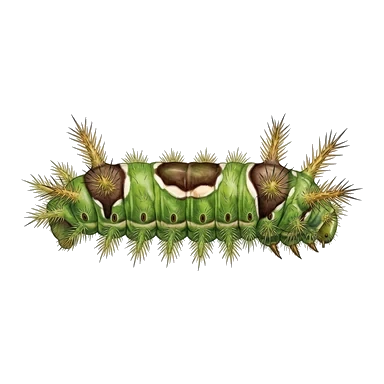 Bulu yang menyengat
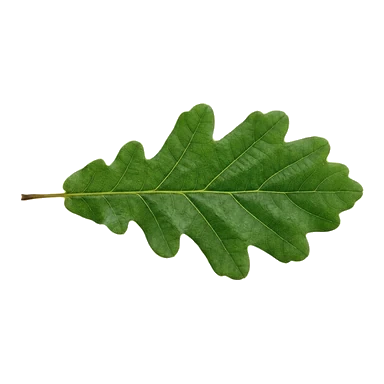
The oak processionary is a moth whose caterpillars feed on oak leaves and can strip trees bare. The caterpillars travel in long, nose-to-tail lines, which is how they got their name. Their fine, hair-like bristles can irritate skin and breathing, so they matter a lot to people.1
 Cara mengenalinya
- Adult moths have a wingspan of 25 to 35 mm and are tan, brown and white, which makes them hard to see against oak bark.1
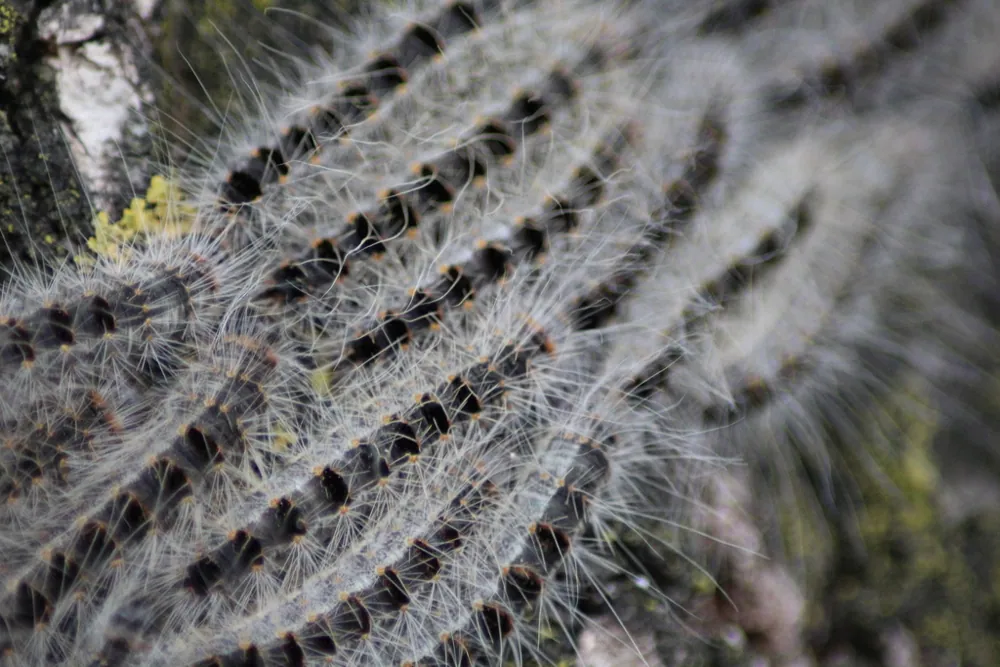
- Caterpillars have very long, white hairs that contrast with shorter hairs.1
- Caterpillars march in lines, often arrow-shaped, with a leader and rows of several caterpillars side by side.1
- Nests are white and silk-like when new, and become discoloured and hard to see over time.1
- Nests can be round, teardrop-shaped, bag-like or blanket-like, and can be found at any height on an oak tree.1
Sering dikelirukan dengan: Caterpillars of several other species may be mistaken for the oak processionary. Unlike other caterpillars, the oak processionary does not live on fences or walls, so it is mostly found in oak trees or on the ground beneath them in late spring and early summer.1
Kuasa bisa
Bulu atau duri halus patah di dalam kulit dan menyengat.
Apa kesan bisanya?
The caterpillars' back bristles contain a urticating toxin called thaumetopoein, a protein that irritates the skin. Contact can cause a papular rash and itching, and the hairs can also cause eye inflammation (conjunctivitis). If the hairs are breathed in, they can cause sore throat (pharyngitis), breathing problems, asthma, or in rare cases anaphylaxis, a severe allergic reaction.1
Berapa bahaya ia kepada manusia?
Bahaya kepada manusia: MenyakitkanIa boleh jadi sangat sakit, tetapi hampir tidak pernah serius.The moths are an increasing nuisance to people as their range grows, and the hairs can cause a skin condition called epidemic caterpillar dermatitis. The hairs break off easily, float in the air, and can stay harmful for several seasons. Mowing a lawn can bring people into contact with them.1
 Berita baik: doktor ada ubat (antibisa) atau rawatan untuk ini.1
Apa yang ia buat apabila takut?
The caterpillars defend themselves with thousands of pointed, easily broken bristles on their backs that float in the air and irritate the skin.1
 Jika kamu menyentuh bulunya
- The skin irritation and itching can be largely relieved by cetirizine-based antihistamine tablets. Anyone with breathing problems or a severe reaction needs urgent medical help.1
- Untuk bulu ulat yang menyengat: angkat bulu itu dengan pita pelekat, kemudian basuh kulit. Jangan gosok.
- Untuk gigitan: basuh dan sejukkan. Dapatkan bantuan perubatan jika orang itu berasa tidak sihat atau mudah berdarah.
Sentiasa hubungi nombor kecemasan dahulu (112, 000, 911). Ini panduan pertolongan cemas umum, bukan nasihat perubatan. Asas pertolongan cemas
 Kekal selamat
- Jangan sesekali sentuh, tangkap atau usik haiwan liar, walaupun yang kecil, dan walaupun ia nampak tidur atau mati.
- Beri ia ruang. Jika kamu terjumpa, bertenang, undur perlahan-lahan dan biarkan ia pergi.
- Jika kamu menyentuh bulunya: bertenang, jangan bergerak, hubungi nombor kecemasan (112, 000, 911) atau pergi ke hospital dengan segera. Ingat rupanya, gambar boleh membantu.
Ia bukan mahu memburu kamu. Ia guna bisanya untuk menangkap makanan atau melindungi diri, dan ia lebih suka bersembunyi. Lagi tentang keselamatan
Di mana di dunia?
Berapa besar ia?
Berapa panjang ia?
 lebih kurang sepanjang klip kertas
 lebih perlahan daripada siput kebun
Berapa besar Oak processionary berbanding KAMU?
Hanya matematik dalam pelayar kamu. Tiada apa yang disimpan atau dihantar ke mana-mana.
Berapa laju ia?

Fakta
Older caterpillars can have up to 63,000 pointed defensive bristles on their backs.1
In 2007, soldiers were deployed to burn infestations in the Belgian province of Limburg.1
The UK government spent £37 million trying to control the caterpillars, which had spread to all 33 London boroughs by 2019.1
In the Netherlands, great tits have been observed eating the young caterpillars before their hairs develop in April.1
In 2023, an outbreak in Ireland was successfully eradicated.1
Untuk pakar bisa
- Nama saintifik
- Thaumetopoea processionea
- Kumpulan
- Ulat bulu & serangga
- Keluarga
- Notodontidae2
- Susunan
- Lepidoptera
- Benua-benua
- Eropah
- Anak
- Eggs hatch into caterpillars that build communal silk nests in oak trees, and the caterpillars later pupate into adult moths in these nests.1
- Bahaya kepada manusia
- 2 / 5: Menyakitkan3
Dari mana fakta datang
- Oak processionary (Wikipedia (CC BY-SA 4.0))
- Thaumetopoea processionea (iNaturalist): nama dan pengelasan.
- Venom Wiki: tahap bahaya, saiz biasa dan anggaran kelajuan adalah penilaian kami sendiri. Lihat cara kami mengiranya: Cara kami menilai bahaya.
Setiap fakta di halaman ini ada nombor yang menunjuk kepada sumbernya. Jika kami tersilap, maaf, kami peminat haiwan, bukan jurnal sains. Beritahu kami di [email protected] dan kami akan betulkan.
 Kala jengking lapar! Venom Wiki ialah projek seorang lelaki: percuma, tanpa iklan dan tanpa penjejak. Sedikit sumbangan membantu memastikannya terus dalam talian.Beri kala jengking makan
Lagi dari kumpulan yang sama: Ulat bulu & serangga
 Pine processionaryUlat bulu & seranggaSakit sahajaJangan sentuh
 Common bombardier beetleUlat bulu & seranggaTidak berbahaya
 Brown-tail mothUlat bulu & seranggaSakit sahajaJangan sentuh
 Masked hunterUlat bulu & seranggaSakit sahaja
 Pine-tree lappetUlat bulu & seranggaSakit sahajaJangan sentuh
 Common backswimmerUlat bulu & seranggaTidak berbahaya
Juga hidup di: Eropah
 Common European adderUlar kapak & adderPerlu jumpa doktor
 Spanish flyHaiwan beracun lainPerlu jumpa doktorJangan sentuh
 Common waspLebah, penyengat & tebuanSakit sahaja
 European hornetLebah, penyengat & tebuanSakit sahaja
 Fire salamanderKatak beracun, katak puru & newtSakit sahajaJangan sentuh
 Western honey beeLebah, penyengat & tebuanSakit sahaja