
 Africa
 Asia
Asia Ulaya
Ulaya Amereka ya Kumwera
 Australia ndi Oceania
 Antarctica
 Nyanja ya Pacific
 Nyanja ya Atlantic
 Nyanja ya Indian
 Nyanja ya Arctic
 Nyanja ya Mediterranean
 Nyanja Yofiira
 Nyanja ya Caribbean
 Nyanja ya Coral
 Nyanja ya South China
 Nyanja ya Philippine
 Nyanja ya Andaman
 Nyanja ya Kumpoto (North Sea)
 Nyanja ya Timor ndi Arafura
 Nyanja ya Bengal
 Gulf ya California
Brown centipede
 Imaluma
The brown centipede is a small, common centipede with a chestnut brown body. It lives in the upper layers of soil, under rocks and rotting logs, across Europe, North America and the Hawaiian Islands. It is venomous, but its bite is not dangerous to people.1



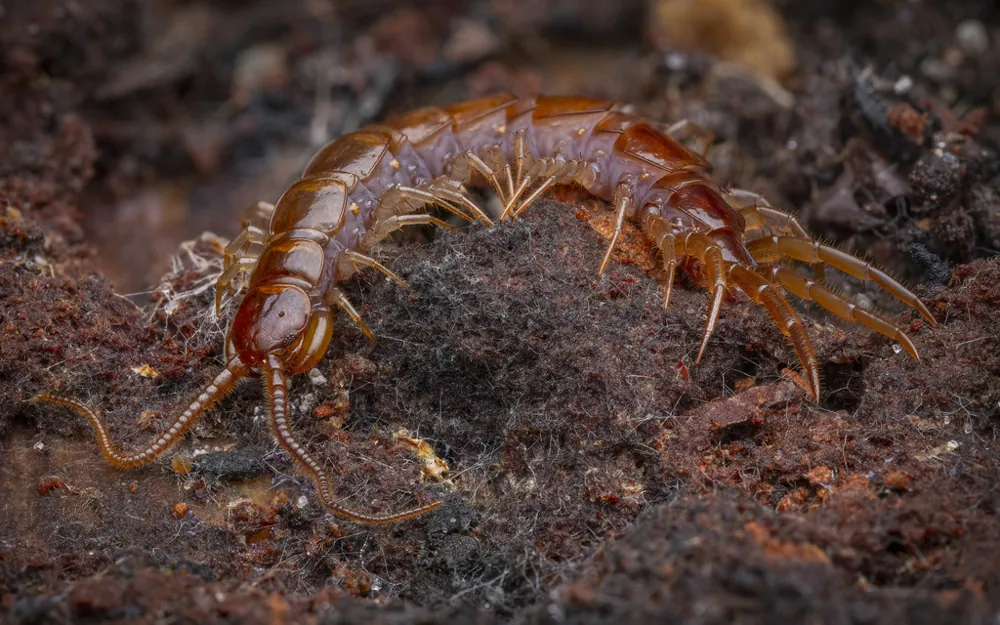
 Mmene ungaizindikirire
- Chestnut brown body1
- Adults are 18 to 30 mm long and up to 4 mm wide1
- Legs have no stripes1
- Runs extremely quickly for cover when uncovered1
Nthawi zambiri imasokonezedwa ndi: It is similar to several other European centipedes, especially the striped centipede (Lithobius variegatus). The brown centipede does not have stripes on its legs.1
Mphamvu ya ululu
Ululu umatuluka kudzera m'mano ake ikaluma.
Ululu wake umachita chiyani?
Its venom is used to overpower prey such as insects and spiders. In people, a bite causes at most brief, localised pain.1
Ndi yoopsa bwanji kwa anthu?
Ngozi kwa anthu: YofatsaNgati kulasidwa ndi njuchi kapena pang'ono kuposa pamenepo. Pafupifupi yosavulaza anthu.It is considered harmless to humans. Its small size means it rarely breaks the skin.1
Imachita chiyani ikachita mantha?
When uncovered, it runs away extremely quickly to find cover.1
 Ikaluma
- Sambitsa polumidwapo, ziziritsa kapena viika m'madzi ofunda kuti uchepetse kupweteka, ndipo peza thandizo la dokotala ngati zikuipiraipira.
Nthawi zonse yamba wayimbira nambala yadzidzidzi (112, 000, 911). Awa ndi malangizo wamba a chithandizo choyamba, osati malangizo a dokotala. Zoyambira za chithandizo choyamba
 Khala wotetezeka
- Usakhudze, kugwira kapena kuseweretsa nyama yakuthengo, ngakhale yaing'ono, ndipo ngakhale ikuoneka ngati yagona kapena yafa.
- Ipatse malo. Ukakumana nayo, khala chete, bwerera m'mbuyo pang'onopang'ono ndipo uilole ipite njira yake.
- Ikakuluma: khala chete, usasunthe, imbira nambala yadzidzidzi (112, 000, 911) kapena pita kuchipatala mwachangu. Kumbukira m'mene inkaonekera, chithunzi chimathandiza.
Sikufuna kukuvulaza. Imagwiritsa ntchito ululu wake kugwira chakudya kapena kudziteteza, ndipo imakonda kwambiri kubisala. Zambiri za kukhala wotetezeka
Kuti padziko lapansi?
Ndi yaikulu bwanji?
Ndi yaitali bwanji?
 yaitali pafupifupi ngati kachitsulo komangira mapepala
Brown centipede ndi yaikulu bwanji poyerekeza ndi IWE?
Ndi masamu chabe mu msakatuli wako. Palibe chomwe chimasungidwa kapena kutumizidwa kwina.
Imathamanga bwanji?


Mfundo
Kuthetsa nthano zabodza
Nthano yabodza: Any centipede with venom is dangerous to people.
Zoona: Although it has venom, this centipede is considered harmless to humans. Its small size means it rarely breaks the skin, and bites cause at most brief, localised pain.1
Za akatswiri a ululu
- Dzina la sayansi
- Lithobius forficatus
- Gulu
- Ma centipede
- Banja
- Lithobiidae2
- Dongosolo
- Lithobiomorpha
- Makontinenti
- Ulaya
- Ana akhanda
- It hatches from an egg with seven pairs of legs. It gains body segments and a new pair of legs each time it moults, up to a maximum of 15 pairs in adults.1
- Kutalika kwa moyo
- pafupifupi zaka 61
- Ngozi kwa anthu
- 1 / 5: Yofatsa3
Kumene mfundo zimachokera
- Lithobius forficatus (Wikipedia (CC BY-SA 4.0))
- Lithobius forficatus (iNaturalist): mayina ndi magulu a sayansi.
- Venom Wiki: mlingo wa ngozi, kukula wamba ndi kuyerekeza kwa liwiro ndi zathu. Ona mmene timazipezera: Mmene timayezera ngozi.
Mfundo iliyonse patsamba lino ili ndi nambala yosonyeza kochokera. Ngati talakwitsa, pepani, ndife okonda nyama, osati magazini a sayansi. Tiuze pa [email protected] ndipo tikonza.
 Chinkhanira chili ndi njala! Venom Wiki ndi ntchito ya munthu mmodzi: yaulere, yopanda zotsatsa ndi zokutsatira. Mphatso yaing'ono imathandiza kuti ikhalebe pa intaneti.Dyetsa chinkhanira
Zina za gulu lomwelo: Ma centipede
 Mediterranean banded centipedeMa centipedeImangopweteka
 House centipedeMa centipedeYosavulaza
 Western Mediterranean centipedeMa centipedeImangopweteka
 Peruvian giant centipedeMa centipedeIkufuna dokotala
 Chinese red-headed centipedeMa centipedeIkufuna dokotala
 Giant Australian centipedeMa centipedeImangopweteka
Imakhalanso ku: Ulaya
 Common European adderMa viper ndi adderIkufuna dokotala
 Spanish flyNyama zina za poizoniIkufuna dokotalaUsakhudze
 Common waspNjuchi, mavu ndi mavu akuluakulu (hornets)Imangopweteka
 European hornetNjuchi, mavu ndi mavu akuluakulu (hornets)Imangopweteka
 Fire salamanderAchule a poizoni, achule a mphini (toads) ndi ma newtImangopwetekaUsakhudze
 Western honey beeNjuchi, mavu ndi mavu akuluakulu (hornets)Imangopweteka