
 Africa
 Asia
Asia Ulaya
Ulaya Amereka ya Kumwera
 Australia ndi Oceania
 Antarctica
 Nyanja ya Pacific
 Nyanja ya Atlantic
 Nyanja ya Indian
 Nyanja ya Arctic
 Nyanja ya Mediterranean
 Nyanja Yofiira
 Nyanja ya Caribbean
 Nyanja ya Coral
 Nyanja ya South China
 Nyanja ya Philippine
 Nyanja ya Andaman
 Nyanja ya Kumpoto (North Sea)
 Nyanja ya Timor ndi Arafura
 Nyanja ya Bengal
 Gulf ya California
Buff-tailed bumblebee
 Imalasa
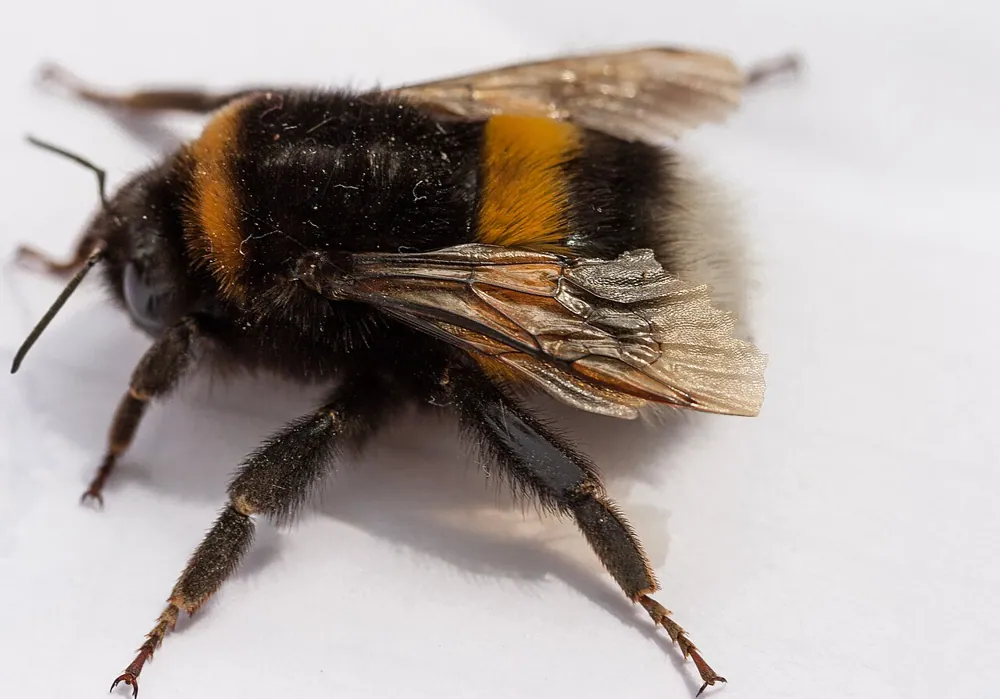
The buff-tailed bumblebee is a fuzzy, striped bee and one of the most common bumblebees in Europe. It lives in colonies and is one of the main bees used to pollinate greenhouse crops. It can also be found in many places outside its home range, where it has spread after escaping from greenhouses.1


 Mmene ungaizindikirire
- Workers have white-ended abdomens.1
- The queen has a buff-white abdomen tip, which gives the bee its name.1
- Yellowish bands that are darker than those of the white-tailed bumblebee when the two are compared side by side.1
- Queens are 20 to 22 mm long, males 14 to 16 mm and workers 11 to 17 mm.1
Nthawi zambiri imasokonezedwa ndi: The white-tailed bumblebee (Bombus lucorum), a close relative, looks almost identical. When the two are compared side by side, the yellowish bands of the buff-tailed bumblebee look darker.1
Mphamvu ya ululu
Ululu umatuluka kudzera mu mbola.
Ndi yoopsa bwanji kwa anthu?
Ngozi kwa anthu: YofatsaNgati kulasidwa ndi njuchi kapena pang'ono kuposa pamenepo. Pafupifupi yosavulaza anthu.Imachita chiyani ikachita mantha?
Workers defend the colony.1
 Ikalasa
- Chotsa mbola ya njuchi poikwangula ndipo ziziritsa pamalopo.
- Ngati munthuyo akuvutika kupuma, nkhope kapena khosi zikutupa, kapena akumva ngati akomoka, ndi vuto ladzidzidzi la ziwengo (allergy): imbira nambala yadzidzidzi ndipo gwiritsa ntchito jakisoni wake wa adrenaline (adrenaline pen) ngati ali nawo.
Nthawi zonse yamba wayimbira nambala yadzidzidzi (112, 000, 911). Awa ndi malangizo wamba a chithandizo choyamba, osati malangizo a dokotala. Zoyambira za chithandizo choyamba
 Khala wotetezeka
- Usakhudze, kugwira kapena kuseweretsa nyama yakuthengo, ngakhale yaing'ono, ndipo ngakhale ikuoneka ngati yagona kapena yafa.
- Ipatse malo. Ukakumana nayo, khala chete, bwerera m'mbuyo pang'onopang'ono ndipo uilole ipite njira yake.
- Ikakulasa: khala chete, usasunthe, imbira nambala yadzidzidzi (112, 000, 911) kapena pita kuchipatala mwachangu. Kumbukira m'mene inkaonekera, chithunzi chimathandiza.
Sikufuna kukuvulaza. Imagwiritsa ntchito ululu wake kugwira chakudya kapena kudziteteza, ndipo imakonda kwambiri kubisala. Zambiri za kukhala wotetezeka
Kuti padziko lapansi?
Ndi yaikulu bwanji?
Ndi yaitali bwanji?
Ndi yolemera bwanji?
 yaitali pafupifupi ngati kachitsulo komangira mapepala
 yopepuka moti sungaimve m'dzanja lako
 ingauluke kudutsa bwalo lonse la mpira m'masekondi 14
Buff-tailed bumblebee ndi yaikulu bwanji poyerekeza ndi IWE?
Ndi masamu chabe mu msakatuli wako. Palibe chomwe chimasungidwa kapena kutumizidwa kwina.
Imathamanga bwanji?


Mfundo
Worker bees vary unusually widely in size, with thorax lengths from 2.3 to 6.9 mm. This is unusual among bees.1
It has escaped from captivity and is now considered an invasive species in places such as Japan, Chile, Argentina and Tasmania.1
It is one of the main species used for greenhouse pollination, which is why it is found in many countries where it is not native.1
The queen usually mates with only one male, unlike many social insects.1
The colony works as a team. It has three social castes, with the queen laying eggs, workers foraging and defending the nest, and males leaving to find mates.1
Za akatswiri a ululu
- Dzina la sayansi
- Bombus terrestris
- Gulu
- Njuchi, mavu ndi mavu akuluakulu (hornets)
- Banja
- Apidae2
- Dongosolo
- Hymenoptera
- Makontinenti
- Ulaya, Africa, Asia
- Ana akhanda
- The queen lays eggs in spring in comb-like egg cells, each holding several eggs. Colonies produce 300 to 400 bees on average.1
- Ngozi kwa anthu
- 1 / 5: Yofatsa3
Kumene mfundo zimachokera
- Bombus terrestris (Wikipedia (CC BY-SA 4.0))
- Bombus terrestris (iNaturalist): mayina ndi magulu a sayansi.
- Venom Wiki: mlingo wa ngozi, kukula wamba ndi kuyerekeza kwa liwiro ndi zathu. Ona mmene timazipezera: Mmene timayezera ngozi.
Mfundo iliyonse patsamba lino ili ndi nambala yosonyeza kochokera. Ngati talakwitsa, pepani, ndife okonda nyama, osati magazini a sayansi. Tiuze pa [email protected] ndipo tikonza.
 Chinkhanira chili ndi njala! Venom Wiki ndi ntchito ya munthu mmodzi: yaulere, yopanda zotsatsa ndi zokutsatira. Mphatso yaing'ono imathandiza kuti ikhalebe pa intaneti.Dyetsa chinkhanira
Zina za gulu lomwelo: Njuchi, mavu ndi mavu akuluakulu (hornets)
 Asian giant hornetNjuchi, mavu ndi mavu akuluakulu (hornets)Ingathe kupha
 Common waspNjuchi, mavu ndi mavu akuluakulu (hornets)Imangopweteka
 European hornetNjuchi, mavu ndi mavu akuluakulu (hornets)Imangopweteka
 Western honey beeNjuchi, mavu ndi mavu akuluakulu (hornets)Imangopweteka
 Giant honey beeNjuchi, mavu ndi mavu akuluakulu (hornets)Ikufuna dokotala
 Asian hornetNjuchi, mavu ndi mavu akuluakulu (hornets)Imangopweteka
Imakhalanso ku: Ulaya
 Common European adderMa viper ndi adderIkufuna dokotala
 Spanish flyNyama zina za poizoniIkufuna dokotalaUsakhudze
 Fire salamanderAchule a poizoni, achule a mphini (toads) ndi ma newtImangopwetekaUsakhudze
 Blunt-nosed viperMa viper ndi adderIngathe kupha
 Nose-horned viperMa viper ndi adderIngathe kupha
 Ottoman viperMa viper ndi adderIngathe kupha