
 Africa
 Asia
Asia Ulaya
Ulaya Amereka ya Kumwera
 Australia ndi Oceania
 Antarctica
 Nyanja ya Pacific
 Nyanja ya Atlantic
 Nyanja ya Indian
 Nyanja ya Arctic
 Nyanja ya Mediterranean
 Nyanja Yofiira
 Nyanja ya Caribbean
 Nyanja ya Coral
 Nyanja ya South China
 Nyanja ya Philippine
 Nyanja ya Andaman
 Nyanja ya Kumpoto (North Sea)
 Nyanja ya Timor ndi Arafura
 Nyanja ya Bengal
 Gulf ya California
Common rain spider
 Imaluma
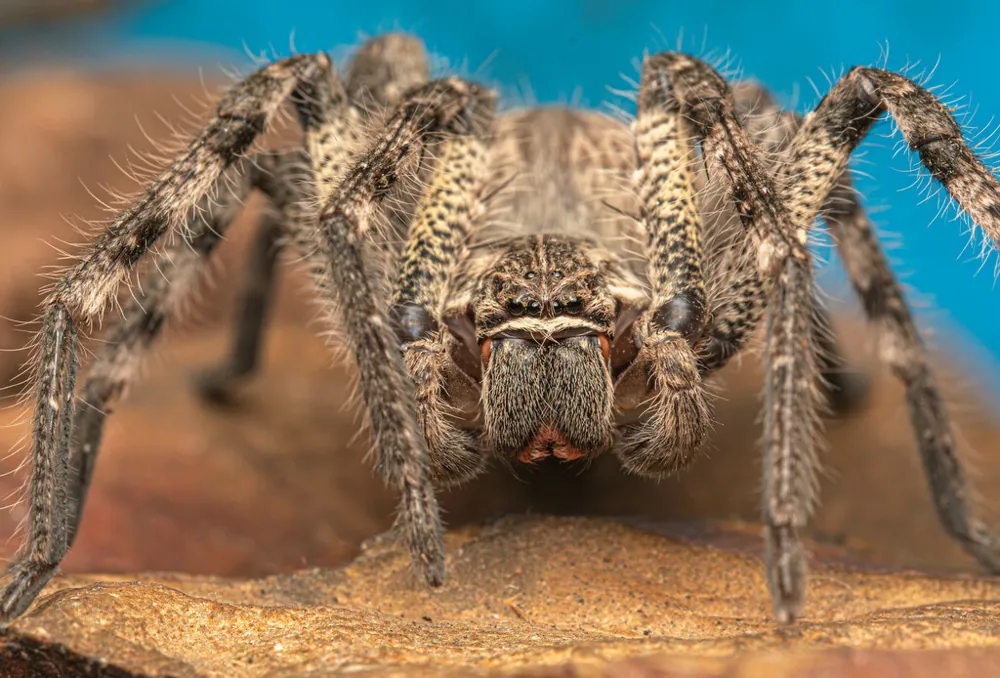
The common rain spider is a large huntsman spider that lives across southern Africa. It often comes indoors, especially before rain, and it hunts geckos. Its size and striking leg markings make it look frightening, but its bite is not dangerous to people.1

 Mmene ungaizindikirire
- A large huntsman spider. Its body can reach about 4 cm and its legs about 11 cm.1
- Both males and females are roughly the same size.1
- When threatened, it lifts into a threat pose that shows yellow and black bands on the underside of its legs.1
- Females build large round silk egg sacs with twigs and leaves woven in.1
Mphamvu ya ululu
Ululu umatuluka kudzera m'mano ake ikaluma.
Ululu wake umachita chiyani?
Its bite causes a burning sensation and swelling. The swelling lasts for a few days. Recovery is spontaneous and complete.1
Ndi yoopsa bwanji kwa anthu?
Ngozi kwa anthu: YofatsaNgati kulasidwa ndi njuchi kapena pang'ono kuposa pamenepo. Pafupifupi yosavulaza anthu.In humans, the bite is no more dangerous than a bee sting. Many gardeners are bitten by protective females guarding their egg sacs.1
Imachita chiyani ikachita mantha?
It lifts into a threat pose that shows yellow and black banding on the underside of its legs, and females guard their egg sacs aggressively.1
 Ikaluma
- Sambitsa polumidwapo ndipo ikapo paketi ya ayezi kuti uchepetse kupweteka. Peza thandizo la dokotala ngati kupweteka kuli kwakukulu, kukufalikira kapena munthuyo sakumva bwino.
Nthawi zonse yamba wayimbira nambala yadzidzidzi (112, 000, 911). Awa ndi malangizo wamba a chithandizo choyamba, osati malangizo a dokotala. Zoyambira za chithandizo choyamba
 Khala wotetezeka
- Usakhudze, kugwira kapena kuseweretsa nyama yakuthengo, ngakhale yaing'ono, ndipo ngakhale ikuoneka ngati yagona kapena yafa.
- Ipatse malo. Ukakumana nayo, khala chete, bwerera m'mbuyo pang'onopang'ono ndipo uilole ipite njira yake.
- Ikakuluma: khala chete, usasunthe, imbira nambala yadzidzidzi (112, 000, 911) kapena pita kuchipatala mwachangu. Kumbukira m'mene inkaonekera, chithunzi chimathandiza.
Sikufuna kukuvulaza. Imagwiritsa ntchito ululu wake kugwira chakudya kapena kudziteteza, ndipo imakonda kwambiri kubisala. Zambiri za kukhala wotetezeka
Kuti padziko lapansi?
Ndi yaikulu bwanji?
Ndi yaitali bwanji?
 yaitali pafupifupi ngati kachitsulo komangira mapepala
 ingathamange mamita 100 m'masekondi 210 (munthu wothamanga kwambiri amafunika 9.6)
Common rain spider ndi yaikulu bwanji poyerekeza ndi IWE?
Ndi masamu chabe mu msakatuli wako. Palibe chomwe chimasungidwa kapena kutumizidwa kwina.
Imathamanga bwanji?


Mfundo
Kuthetsa nthano zabodza
Nthano yabodza: A guinea pig died within 7 minutes after a rain spider bit it in a 1959 experiment, so the spider's venom must be deadly.
Zoona: Further research on anaesthetised guinea pigs showed the original animal died of shock, not from the venom. In humans, the bite is no more dangerous than a bee sting.1
Za akatswiri a ululu
- Dzina la sayansi
- Palystes superciliosus
- Gulu
- Akangaude
- Banja
- Sparassidae2
- Dongosolo
- Araneae
- Makontinenti
- Africa
- Ana akhanda
- Females lay eggs in a large silk egg sac, about three sacs over their two-year lives. The spiderlings hatch inside the sac and chew their way out about three weeks later.1
- Kutalika kwa moyo
- pafupifupi zaka 21
- Ngozi kwa anthu
- 1 / 5: Yofatsa3
Kumene mfundo zimachokera
- Palystes superciliosus (Wikipedia (CC BY-SA 4.0))
- Palystes superciliosus (iNaturalist): mayina ndi magulu a sayansi.
- Venom Wiki: mlingo wa ngozi, kukula wamba ndi kuyerekeza kwa liwiro ndi zathu. Ona mmene timazipezera: Mmene timayezera ngozi.
Mfundo iliyonse patsamba lino ili ndi nambala yosonyeza kochokera. Ngati talakwitsa, pepani, ndife okonda nyama, osati magazini a sayansi. Tiuze pa [email protected] ndipo tikonza.
 Chinkhanira chili ndi njala! Venom Wiki ndi ntchito ya munthu mmodzi: yaulere, yopanda zotsatsa ndi zokutsatira. Mphatso yaing'ono imathandiza kuti ikhalebe pa intaneti.Dyetsa chinkhanira
 Mediterranean black widow
 Six-eyed sand spider
 Brown widow
 Noble false widow
 Darwin's bark spider
 Wasp spider
 Black mamba
 Deathstalker
 Egyptian cobra
 Puff adder
 Boomslang
 Fat-tailed scorpion