
 Africa
 Asia
Asia Ulaya
Ulaya Amereka ya Kumwera
 Australia ndi Oceania
 Antarctica
 Nyanja ya Pacific
 Nyanja ya Atlantic
 Nyanja ya Indian
 Nyanja ya Arctic
 Nyanja ya Mediterranean
 Nyanja Yofiira
 Nyanja ya Caribbean
 Nyanja ya Coral
 Nyanja ya South China
 Nyanja ya Philippine
 Nyanja ya Andaman
 Nyanja ya Kumpoto (North Sea)
 Nyanja ya Timor ndi Arafura
 Nyanja ya Bengal
 Gulf ya California
Mamushi
 Imaluma
The mamushi is a pit viper, a type of snake that has heat-sensing pits between its eyes and nostrils. It lives in Japan, in places such as swamps, meadows and farmland. It matters because its bite is one of the most dangerous of Japan's snakes.1



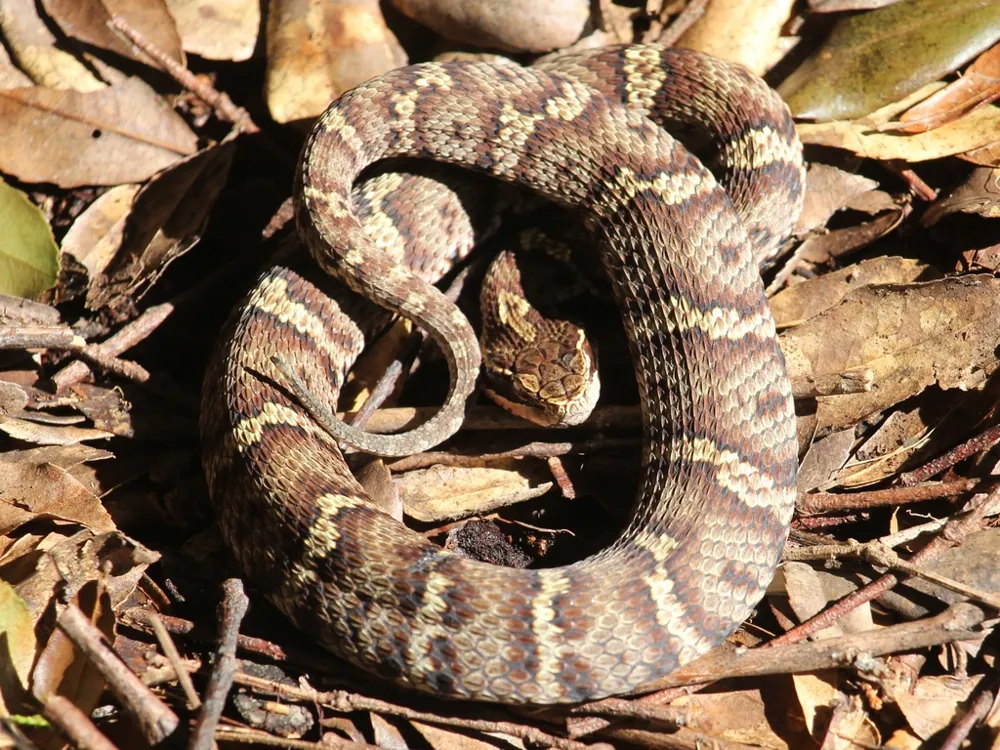
 Mmene ungaizindikirire
- Background colour is pale grey, reddish-brown or yellow-brown.1
- A series of irregular blotches runs along the body. Each blotch has a black border and often a lighter centre.1
- The head is dark brown or black, with beige or pale-grey sides.1
- Adults are typically 45 to 81 cm long.1
- It has excellent camouflage and often hides among plants or leaf litter.1
Nthawi zambiri imasokonezedwa ndi: It is similar to the cottonmouths and copperheads (Agkistrodon) of the Americas, and it was long considered part of the same group.1
Mphamvu ya ululu
Ululu umatuluka kudzera m'mano ake ikaluma.
Ululu wake umachita chiyani?
Its venom is mostly haemolytic, meaning it breaks down red blood cells. It also contains two neurotoxins, which attack the nerves, and an anticoagulant, which stops blood from clotting. Reported effects include kidney failure, visual disturbances and palsy (paralysis).1
Ndi yoopsa bwanji kwa anthu?
Ngozi kwa anthu: Yoopsa kwambiriIngathe kupha munthu amene sanalandire chithandizo.About 2000 to 3000 people in Japan are bitten by a mamushi each year. Approximately 10 die annually. Severe bites require intensive care, and typical bite victims need about one week of hospital treatment.1
 Nkhani yabwino: madokotala ali ndi mankhwala (antivenom) kapena chithandizo cha ichi.1
 Ikaluma
- Treatment is given in hospital. It involves cutting the wound to remove venom and injecting mamushi antivenom. Pregnant women who are bitten have had miscarriages, so medical care is essential.1
- Munthuyo akhale chete ndi wodekha, chiwalo cholumidwacho chikhale pamlingo wa mtima, chotsa mphete ndi zinthu zothina, ndipo mufikitse kuchipatala mwachangu.
Nthawi zonse yamba wayimbira nambala yadzidzidzi (112, 000, 911). Awa ndi malangizo wamba a chithandizo choyamba, osati malangizo a dokotala. Zoyambira za chithandizo choyamba
 Khala wotetezeka
- Usakhudze, kugwira kapena kuseweretsa nyama yakuthengo, ngakhale yaing'ono, ndipo ngakhale ikuoneka ngati yagona kapena yafa.
- Ipatse malo. Ukakumana nayo, khala chete, bwerera m'mbuyo pang'onopang'ono ndipo uilole ipite njira yake.
- Ikakuluma: khala chete, usasunthe, imbira nambala yadzidzidzi (112, 000, 911) kapena pita kuchipatala mwachangu. Kumbukira m'mene inkaonekera, chithunzi chimathandiza.
Sikufuna kukuvulaza. Imagwiritsa ntchito ululu wake kugwira chakudya kapena kudziteteza, ndipo imakonda kwambiri kubisala. Zambiri za kukhala wotetezeka
Kuti padziko lapansi?
Ndi yaikulu bwanji?
Ndi yaitali bwanji?
 yaitali ngati amphaka apakhomo 1,5 mphuno ndi mchira motsatizana
 yaitali ngati nthochi 5 zoyalidwa motsatizana
 ingathamange mamita 100 m'masekondi 110 (munthu wothamanga kwambiri amafunika 9.6)
Mamushi ndi yaikulu bwanji poyerekeza ndi IWE?
Ndi masamu chabe mu msakatuli wako. Palibe chomwe chimasungidwa kapena kutumizidwa kwina.
Imathamanga bwanji?


Mfundo
Recovery takes a long time. Bite victims may need several months to fully recover, even after hospital treatment and weeks of follow-up care.1
It is highly resistant to its own venom because its blood contains neutralising factors, including phospholipase A2 (PLA2) inhibitors.1
Its beta-toxin acts before the nerve junction, so anticholinesterase drugs cannot block or treat its effects.1
Its venom contains a peptide called ablomin, which is very similar in amino acid sequence to helothermine, a venom peptide of the Mexican beaded lizard.1
It is considered one of the most venomous snakes in Japan, along with the yamakagashi and the Okinawan habu.1
Its venom varies very little across Japan in either potency or effects.1
Kumene mfundo zimachokera
- Mamushi (Wikipedia (CC BY-SA 4.0))
- Gloydius blomhoffii (iNaturalist): mayina ndi magulu a sayansi.
- Venom Wiki: mlingo wa ngozi, kukula wamba ndi kuyerekeza kwa liwiro ndi zathu. Ona mmene timazipezera: Mmene timayezera ngozi.
Mfundo iliyonse patsamba lino ili ndi nambala yosonyeza kochokera. Ngati talakwitsa, pepani, ndife okonda nyama, osati magazini a sayansi. Tiuze pa [email protected] ndipo tikonza.
 Chinkhanira chili ndi njala! Venom Wiki ndi ntchito ya munthu mmodzi: yaulere, yopanda zotsatsa ndi zokutsatira. Mphatso yaing'ono imathandiza kuti ikhalebe pa intaneti.Dyetsa chinkhanira
 Brown spotted pit viper
 Habu
Habu Hump-nosed viper
 Hundred-pace viper
 Malayan pit viper
 Mangshan pit viper
 Deathstalker
 Indian cobra
 Indian saw-scaled viper
 King cobra
 Puff adder
 Njoka ya Russell (Russell's viper)