
 Africa
 Asia
Asia Ulaya
Ulaya Amereka ya Kumwera
 Australia ndi Oceania
 Antarctica
 Nyanja ya Pacific
 Nyanja ya Atlantic
 Nyanja ya Indian
 Nyanja ya Arctic
 Nyanja ya Mediterranean
 Nyanja Yofiira
 Nyanja ya Caribbean
 Nyanja ya Coral
 Nyanja ya South China
 Nyanja ya Philippine
 Nyanja ya Andaman
 Nyanja ya Kumpoto (North Sea)
 Nyanja ya Timor ndi Arafura
 Nyanja ya Bengal
 Gulf ya California
Northern short-tailed shrew
 Imaluma
The northern short-tailed shrew is a small, very active mammal that lives in eastern and central North America. It is one of the few venomous mammals, and it uses venom in its saliva to paralyse the animals it hunts. It is also a voracious eater that can eat up to three times its own weight in food each day.1



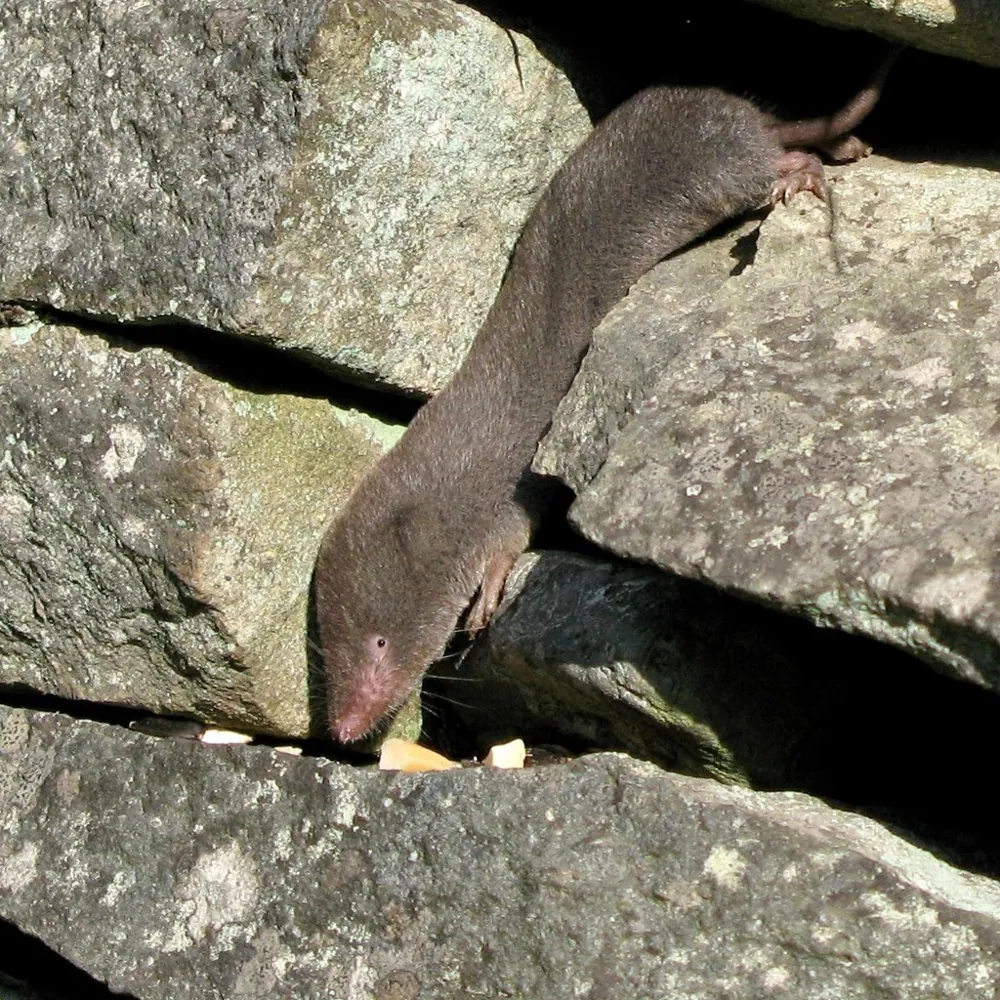
 Mmene ungaizindikirire
Mphamvu ya ululu
Ululu umatuluka kudzera m'mano ake ikaluma.
Ululu wake umachita chiyani?
Its saliva contains a kallikrein-like protease, a toxin that paralyses and subdues prey. The toxin is strong enough to kill small animals, including some somewhat larger than the shrew itself. In people, it causes painful bites when they handle the shrew.1
Ndi yoopsa bwanji kwa anthu?
Ngozi kwa anthu: YofatsaNgati kulasidwa ndi njuchi kapena pang'ono kuposa pamenepo. Pafupifupi yosavulaza anthu.Its bites are painful to people who try to handle it.1
Imachita chiyani ikachita mantha?
Its scent glands produce a musky odour that deters mammalian carnivores.1
 Ikaluma
- Sambitsa bala bwino ndipo peza thandizo la dokotala.
Nthawi zonse yamba wayimbira nambala yadzidzidzi (112, 000, 911). Awa ndi malangizo wamba a chithandizo choyamba, osati malangizo a dokotala. Zoyambira za chithandizo choyamba
 Khala wotetezeka
- Usakhudze, kugwira kapena kuseweretsa nyama yakuthengo, ngakhale yaing'ono, ndipo ngakhale ikuoneka ngati yagona kapena yafa.
- Ipatse malo. Ukakumana nayo, khala chete, bwerera m'mbuyo pang'onopang'ono ndipo uilole ipite njira yake.
- Ikakuluma: khala chete, usasunthe, imbira nambala yadzidzidzi (112, 000, 911) kapena pita kuchipatala mwachangu. Kumbukira m'mene inkaonekera, chithunzi chimathandiza.
Sikufuna kukuvulaza. Imagwiritsa ntchito ululu wake kugwira chakudya kapena kudziteteza, ndipo imakonda kwambiri kubisala. Zambiri za kukhala wotetezeka
Kuti padziko lapansi?
Ndi yaikulu bwanji?
Ndi yaitali bwanji?
Ndi yolemera bwanji?

 yaitali ngati zidutswa zomangira zoseweretsa 4 pamzere
 ingathamange mamita 100 m'masekondi 90 (munthu wothamanga kwambiri amafunika 9.6)
Northern short-tailed shrew ndi yaikulu bwanji poyerekeza ndi IWE?
Ndi masamu chabe mu msakatuli wako. Palibe chomwe chimasungidwa kapena kutumizidwa kwina.
Imathamanga bwanji?


Mfundo
It is one of the few venomous mammals, and its saliva is used to subdue prey.1
It can eat up to three times its own weight in food each day.1
It is thought to have a poor sense of smell and very limited vision, so it uses echolocation and a fine sense of touch instead.1
Its winter food intake is 43% higher than in summer, because it must work harder to keep its body warm.1
Its nests can be up to 20 cm across and lined with leaves or vole fur, and its waste is kept in a separate latrine area.1
Za akatswiri a ululu
- Dzina la sayansi
- Blarina brevicauda
- Gulu
- Nyama zoyamwitsa zaululu
- Banja
- Soricidae2
- Dongosolo
- Eulipotyphla
- Makontinenti
- Amereka ya Kumpoto
- Ana akhanda
- Females usually have two litters a season, each with six to eight young. The young are born hairless and blind, weighing less than a gram.1
- Mmene ilili kuthengo
- Least Concern1
- Ngozi kwa anthu
- 1 / 5: Yofatsa3
Kumene mfundo zimachokera
- Northern short-tailed shrew (Wikipedia (CC BY-SA 4.0))
- Blarina brevicauda (iNaturalist): mayina ndi magulu a sayansi.
- Venom Wiki: mlingo wa ngozi, kukula wamba ndi kuyerekeza kwa liwiro ndi zathu. Ona mmene timazipezera: Mmene timayezera ngozi.
Mfundo iliyonse patsamba lino ili ndi nambala yosonyeza kochokera. Ngati talakwitsa, pepani, ndife okonda nyama, osati magazini a sayansi. Tiuze pa [email protected] ndipo tikonza.
 Chinkhanira chili ndi njala! Venom Wiki ndi ntchito ya munthu mmodzi: yaulere, yopanda zotsatsa ndi zokutsatira. Mphatso yaing'ono imathandiza kuti ikhalebe pa intaneti.Dyetsa chinkhanira
Zina za gulu lomwelo: Nyama zoyamwitsa zaululu
 Common vampire batNyama zoyamwitsa zaululuImangopweteka
 Cuban solenodonNyama zoyamwitsa zaululuImangopweteka
 Hispaniolan solenodonNyama zoyamwitsa zaululuImangopweteka
 Hairy-legged vampire batNyama zoyamwitsa zaululuYosavulaza
 White-winged vampire batNyama zoyamwitsa zaululuYosavulaza
 PlatypusNyama zoyamwitsa zaululuImangopweteka
Imakhalanso ku: Amereka ya Kumpoto
 TerciopeloNjoka za pit viperYakupha
 Eastern coral snakeNjoka za coralIngathe kupha
 Eastern diamondback rattlesnakeNjoka za rattlesnakeIngathe kupha
 Eyelash viperNjoka za pit viperIngathe kupha
 Timber rattlesnakeNjoka za rattlesnakeIngathe kupha
 Western diamondback rattlesnakeNjoka za rattlesnakeIngathe kupha