
 Africa
 Asia
Asia Ulaya
Ulaya Amereka ya Kumwera
 Australia ndi Oceania
 Antarctica
 Nyanja ya Pacific
 Nyanja ya Atlantic
 Nyanja ya Indian
 Nyanja ya Arctic
 Nyanja ya Mediterranean
 Nyanja Yofiira
 Nyanja ya Caribbean
 Nyanja ya Coral
 Nyanja ya South China
 Nyanja ya Philippine
 Nyanja ya Andaman
 Nyanja ya Kumpoto (North Sea)
 Nyanja ya Timor ndi Arafura
 Nyanja ya Bengal
 Gulf ya California
Phinda button spider
 Imaluma
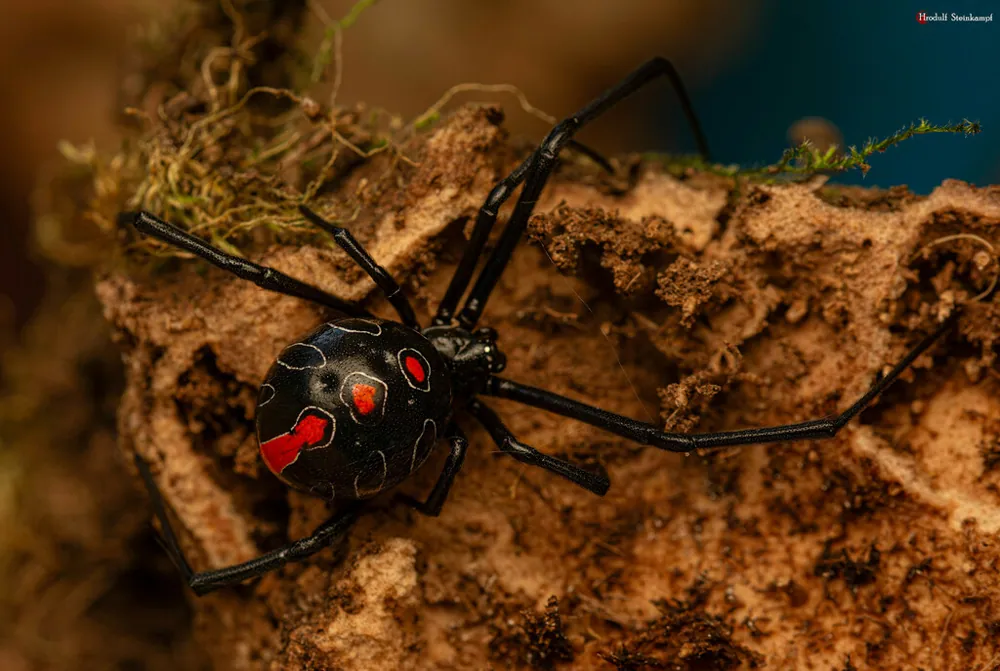
The Phinda button spider is a type of button, or widow, spider. It was formally described as a new species in 2019. It lives only in sand forests in northern Zululand, in South Africa's KwaZulu-Natal province, and is believed to be the largest member of its genus.1
 Mmene ungaizindikirire
- Females have red markings on both the top and underside of the abdomen, which no other African Latrodectus species has.1
- Males have white markings on the underside of the abdomen, which darken with age.1
- Egg sacs are large and smooth, bright purple when freshly laid, fading to shiny grey as they dry.1
- Webs are not usually found outside the tree hollow. When present, they are typical hackle webs spreading out from the hollow.1
Nthawi zambiri imasokonezedwa ndi: Other African button spiders do not have the red markings on both the top and underside of the female abdomen, which is the main feature that sets this species apart.1
Mphamvu ya ululu
Ululu umatuluka kudzera m'mano ake ikaluma.
Ndi yoopsa bwanji kwa anthu?
Ngozi kwa anthu: YopwetekaIngathe kupweteka kwambiri, koma pafupifupi nthawi zonse si vuto lalikulu. Ikaluma
- Sambitsa polumidwapo ndipo ikapo paketi ya ayezi kuti uchepetse kupweteka. Peza thandizo la dokotala ngati kupweteka kuli kwakukulu, kukufalikira kapena munthuyo sakumva bwino.
Nthawi zonse yamba wayimbira nambala yadzidzidzi (112, 000, 911). Awa ndi malangizo wamba a chithandizo choyamba, osati malangizo a dokotala. Zoyambira za chithandizo choyamba
 Khala wotetezeka
- Usakhudze, kugwira kapena kuseweretsa nyama yakuthengo, ngakhale yaing'ono, ndipo ngakhale ikuoneka ngati yagona kapena yafa.
- Ipatse malo. Ukakumana nayo, khala chete, bwerera m'mbuyo pang'onopang'ono ndipo uilole ipite njira yake.
- Ikakuluma: khala chete, usasunthe, imbira nambala yadzidzidzi (112, 000, 911) kapena pita kuchipatala mwachangu. Kumbukira m'mene inkaonekera, chithunzi chimathandiza.
Sikufuna kukuvulaza. Imagwiritsa ntchito ululu wake kugwira chakudya kapena kudziteteza, ndipo imakonda kwambiri kubisala. Zambiri za kukhala wotetezeka
Kuti padziko lapansi?
Ndi yaikulu bwanji?
Ndi yaitali bwanji?
 yaitali pafupifupi ngati kachitsulo komangira mapepala
Phinda button spider ndi yaikulu bwanji poyerekeza ndi IWE?
Ndi masamu chabe mu msakatuli wako. Palibe chomwe chimasungidwa kapena kutumizidwa kwina.
Imathamanga bwanji?


Mfundo
It is believed to be the largest member of the button spider genus, Latrodectus.1
Its discovery was the first new addition to the genus in 28 years. Before this, 31 button or widow spiders were known, eight of them from Africa.1
Females nest in tree hollows and stumps higher above the ground than most other members of the genus.1
It was first found in 2014 in Tembe Elephant Park, but was only confirmed as a new species in 2019, after live specimens were collected from Phinda reserve.1
One female kept in a laboratory lived for two years until her natural death, and her offspring were also studied.1
Kumene mfundo zimachokera
- Latrodectus umbukwane (Wikipedia (CC BY-SA 4.0))
- Latrodectus umbukwane (iNaturalist): mayina ndi magulu a sayansi.
- Venom Wiki: mlingo wa ngozi, kukula wamba ndi kuyerekeza kwa liwiro ndi zathu. Ona mmene timazipezera: Mmene timayezera ngozi.
Mfundo iliyonse patsamba lino ili ndi nambala yosonyeza kochokera. Ngati talakwitsa, pepani, ndife okonda nyama, osati magazini a sayansi. Tiuze pa [email protected] ndipo tikonza.
 Chinkhanira chili ndi njala! Venom Wiki ndi ntchito ya munthu mmodzi: yaulere, yopanda zotsatsa ndi zokutsatira. Mphatso yaing'ono imathandiza kuti ikhalebe pa intaneti.Dyetsa chinkhanira
 Mediterranean black widow
 Six-eyed sand spider
 Brown widow
 Noble false widow
 Darwin's bark spider
 Wasp spider
 Black mamba
 Deathstalker
 Egyptian cobra
 Puff adder
 Boomslang
 Fat-tailed scorpion