
 Africa
 Asia
Asia Ulaya
Ulaya Amereka ya Kumwera
 Australia ndi Oceania
 Antarctica
 Nyanja ya Pacific
 Nyanja ya Atlantic
 Nyanja ya Indian
 Nyanja ya Arctic
 Nyanja ya Mediterranean
 Nyanja Yofiira
 Nyanja ya Caribbean
 Nyanja ya Coral
 Nyanja ya South China
 Nyanja ya Philippine
 Nyanja ya Andaman
 Nyanja ya Kumpoto (North Sea)
 Nyanja ya Timor ndi Arafura
 Nyanja ya Bengal
 Gulf ya California
Warrior wasp
 Imalasa
The warrior wasp is a large paper wasp that lives in Central and South America. It builds paper nests on tree trunks and is known for an extremely painful sting. Its colonies defend their nests together as a group.1
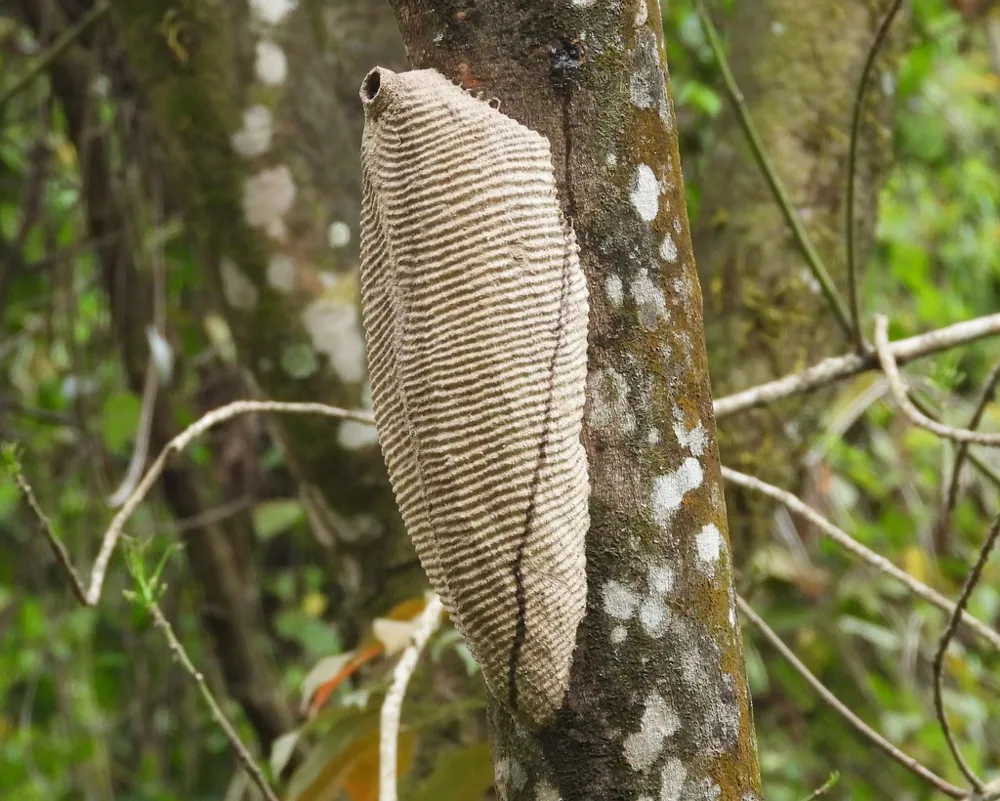
 Mmene ungaizindikirire
Mphamvu ya ululu
Ululu umatuluka kudzera mu mbola.
Ululu wake umachita chiyani?
The sting is extremely painful. On the Schmidt sting pain index it scores the highest possible rating, the same as the bullet ant. On the Starr sting pain scale it also scores the maximum 4 out of 4, a rating shared by very few other species.1
Ndi yoopsa bwanji kwa anthu?
Ngozi kwa anthu: YoopsaKulasidwa kumafuna dokotala. Imfa ndi zosowa kwambiri.A sting from this wasp is rated as traumatically painful, and such stings often need some medical attention.1
Imachita chiyani ikachita mantha?
When disturbed, many workers leave the nest to display or sting. They raise their abdomen upright in a behaviour called gaster-flagging, and they drum the nest walls to sound an alarm.1
 Ikalasa
- Because the sting is often traumatically painful, medical attention may be needed.1
- Chotsa mbola ya njuchi poikwangula ndipo ziziritsa pamalopo.
- Ngati munthuyo akuvutika kupuma, nkhope kapena khosi zikutupa, kapena akumva ngati akomoka, ndi vuto ladzidzidzi la ziwengo (allergy): imbira nambala yadzidzidzi ndipo gwiritsa ntchito jakisoni wake wa adrenaline (adrenaline pen) ngati ali nawo.
Nthawi zonse yamba wayimbira nambala yadzidzidzi (112, 000, 911). Awa ndi malangizo wamba a chithandizo choyamba, osati malangizo a dokotala. Zoyambira za chithandizo choyamba
 Khala wotetezeka
- Usakhudze, kugwira kapena kuseweretsa nyama yakuthengo, ngakhale yaing'ono, ndipo ngakhale ikuoneka ngati yagona kapena yafa.
- Ipatse malo. Ukakumana nayo, khala chete, bwerera m'mbuyo pang'onopang'ono ndipo uilole ipite njira yake.
- Ikakulasa: khala chete, usasunthe, imbira nambala yadzidzidzi (112, 000, 911) kapena pita kuchipatala mwachangu. Kumbukira m'mene inkaonekera, chithunzi chimathandiza.
Sikufuna kukuvulaza. Imagwiritsa ntchito ululu wake kugwira chakudya kapena kudziteteza, ndipo imakonda kwambiri kubisala. Zambiri za kukhala wotetezeka
Kuti padziko lapansi?
Ndi yaikulu bwanji?
Ndi yaitali bwanji?
 yaitali pafupifupi ngati kachitsulo komangira mapepala
 ingauluke kudutsa bwalo lonse la mpira m'masekondi 13
Warrior wasp ndi yaikulu bwanji poyerekeza ndi IWE?
Ndi masamu chabe mu msakatuli wako. Palibe chomwe chimasungidwa kapena kutumizidwa kwina.
Imathamanga bwanji?


Mfundo
Its sting ranks as high as the bullet ant's on the Schmidt sting pain index, which is the top rating.1
Army ants regularly prey on these wasps, and the wasps have been seen piling their bodies against the nest entrance to defend against them.1
Montezuma oropendola birds often nest in trees where these wasps are present, because the wasps' stings help keep predators and parasites away.1
When moving to a new nest, the wasps rub glands on their abdomen to lay a chemical trail that the colony can follow.1
A colony can have more than one queen at a time, and the number of queens often changes.1
Za akatswiri a ululu
- Dzina la sayansi
- Synoeca septentrionalis
- Gulu
- Njuchi, mavu ndi mavu akuluakulu (hornets)
- Banja
- Vespidae2
- Dongosolo
- Hymenoptera
- Makontinenti
- Amereka ya Kumpoto, Amereka ya Kumwera
- Ana akhanda
- The queen lays eggs in the cells of the nest. The larvae hatch about a week after the nest is finished, and they become adults around 30 days after hatching.1
- Ngozi kwa anthu
- 3 / 5: Yoopsa3
Kumene mfundo zimachokera
- Synoeca septentrionalis (Wikipedia (CC BY-SA 4.0))
- Synoeca septentrionalis (iNaturalist): mayina ndi magulu a sayansi.
- Venom Wiki: mlingo wa ngozi, kukula wamba ndi kuyerekeza kwa liwiro ndi zathu. Ona mmene timazipezera: Mmene timayezera ngozi.
Mfundo iliyonse patsamba lino ili ndi nambala yosonyeza kochokera. Ngati talakwitsa, pepani, ndife okonda nyama, osati magazini a sayansi. Tiuze pa [email protected] ndipo tikonza.
 Chinkhanira chili ndi njala! Venom Wiki ndi ntchito ya munthu mmodzi: yaulere, yopanda zotsatsa ndi zokutsatira. Mphatso yaing'ono imathandiza kuti ikhalebe pa intaneti.Dyetsa chinkhanira
Zina za gulu lomwelo: Njuchi, mavu ndi mavu akuluakulu (hornets)
 Tarantula hawkNjuchi, mavu ndi mavu akuluakulu (hornets)Imangopweteka
 Executioner waspNjuchi, mavu ndi mavu akuluakulu (hornets)Ikufuna dokotala
 Bald-faced hornetNjuchi, mavu ndi mavu akuluakulu (hornets)Imangopweteka
 Cow killer velvet antNjuchi, mavu ndi mavu akuluakulu (hornets)Imangopweteka
 Eastern cicada killerNjuchi, mavu ndi mavu akuluakulu (hornets)Yosavulaza
 Armadillo waspNjuchi, mavu ndi mavu akuluakulu (hornets)Ikufuna dokotala
Imakhalanso ku: Amereka ya Kumpoto
 TerciopeloNjoka za pit viperYakupha
 Eastern coral snakeNjoka za coralIngathe kupha
 Eastern diamondback rattlesnakeNjoka za rattlesnakeIngathe kupha
 Eyelash viperNjoka za pit viperIngathe kupha
 Timber rattlesnakeNjoka za rattlesnakeIngathe kupha
 Western diamondback rattlesnakeNjoka za rattlesnakeIngathe kupha