
 Africa
 Asia
Asia Ulaya
Ulaya Amereka ya Kumwera
 Australia ndi Oceania
 Antarctica
 Nyanja ya Pacific
 Nyanja ya Atlantic
 Nyanja ya Indian
 Nyanja ya Arctic
 Nyanja ya Mediterranean
 Nyanja Yofiira
 Nyanja ya Caribbean
 Nyanja ya Coral
 Nyanja ya South China
 Nyanja ya Philippine
 Nyanja ya Andaman
 Nyanja ya Kumpoto (North Sea)
 Nyanja ya Timor ndi Arafura
 Nyanja ya Bengal
 Gulf ya California
Wheel bug
 Imaluma
The wheel bug is a large assassin bug with a wheel-shaped crest on its back. It is the only wheel bug found in the United States, and it hunts caterpillars and beetles. Gardeners value it because it helps keep pests down.1
 Mmene ungaizindikirire
- Adults are grey to brownish grey, and black shortly after moulting.1
- Adults have a wheel-shaped or cog-shaped ridge on the back of the thorax. Young nymphs do not have this wheel yet.1
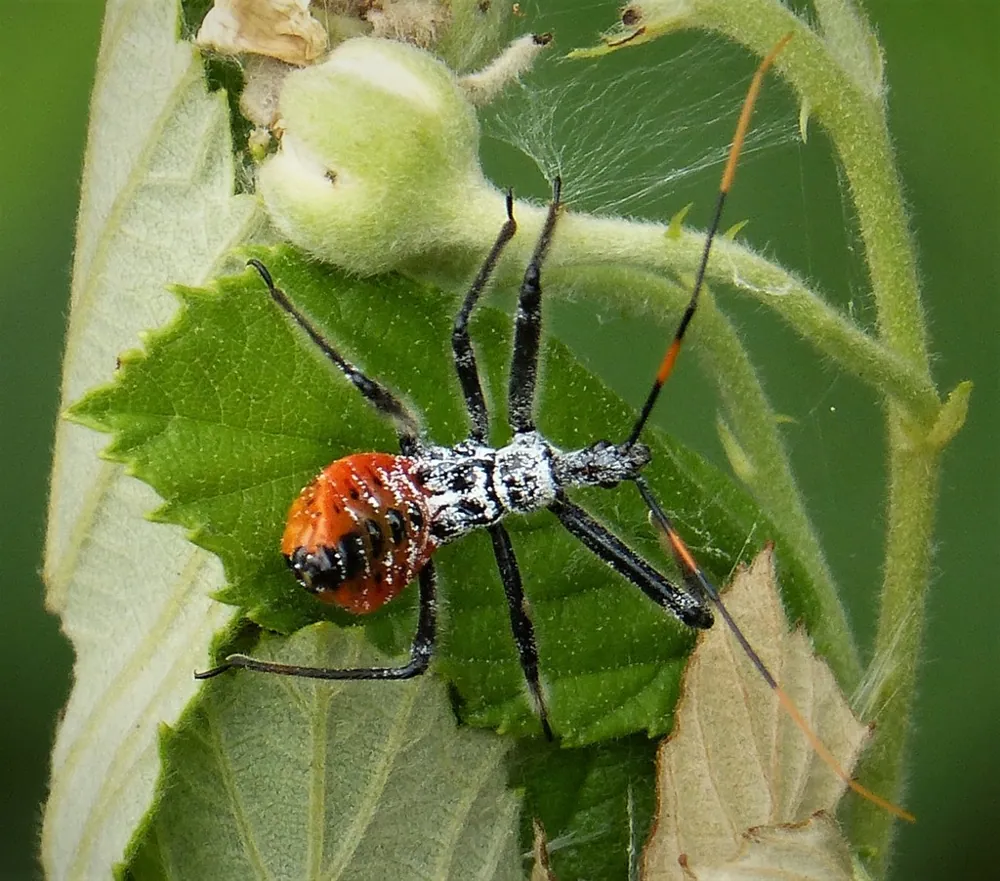
- Nymphs have a bright red or orange abdomen.1
- Adults can grow up to 38 mm long. Females are somewhat larger than males.1
- They move and fly slowly, and make a noisy buzzing sound in flight.1
Mphamvu ya ululu
Ululu umatuluka kudzera m'mano ake ikaluma.
Ululu wake umachita chiyani?
The bug injects enzymes into its prey that paralyse it and dissolve its insides. Its bite is not considered highly venomous. In people, the bite causes a wound that is very painful and lingering, with the area becoming hot and irritated, and numbness that can last for days.1
Ndi yoopsa bwanji kwa anthu?
Ngozi kwa anthu: YopwetekaIngathe kupweteka kwambiri, koma pafupifupi nthawi zonse si vuto lalikulu.The bite is not considered highly venomous, so it is not serious in the short term. Discomfort may last for two weeks, and in some cases up to six months. Longer-lasting problems are often linked to allergic reactions or repeated infections of the wound.1
Imachita chiyani ikachita mantha?
When threatened, it relies on camouflage, its bite, or unpleasant odours from two scent glands in its abdomen.1
 Ikaluma
- Pa ubweya wa mbozi zolasa: uchotse ndi tepi yomata, kenako sambitsa khungu. Usasisite.
- Polumidwa: sambitsa ndi kuziziritsa. Peza thandizo la dokotala ngati munthuyo sakumva bwino kapena akutuluka magazi mosavuta.
Nthawi zonse yamba wayimbira nambala yadzidzidzi (112, 000, 911). Awa ndi malangizo wamba a chithandizo choyamba, osati malangizo a dokotala. Zoyambira za chithandizo choyamba
 Khala wotetezeka
- Usakhudze, kugwira kapena kuseweretsa nyama yakuthengo, ngakhale yaing'ono, ndipo ngakhale ikuoneka ngati yagona kapena yafa.
- Ipatse malo. Ukakumana nayo, khala chete, bwerera m'mbuyo pang'onopang'ono ndipo uilole ipite njira yake.
- Ikakuluma: khala chete, usasunthe, imbira nambala yadzidzidzi (112, 000, 911) kapena pita kuchipatala mwachangu. Kumbukira m'mene inkaonekera, chithunzi chimathandiza.
Sikufuna kukuvulaza. Imagwiritsa ntchito ululu wake kugwira chakudya kapena kudziteteza, ndipo imakonda kwambiri kubisala. Zambiri za kukhala wotetezeka
Kuti padziko lapansi?
Ndi yaikulu bwanji?
Ndi yaitali bwanji?
 yaitali pafupifupi ngati kachitsulo komangira mapepala
Wheel bug ndi yaikulu bwanji poyerekeza ndi IWE?
Ndi masamu chabe mu msakatuli wako. Palibe chomwe chimasungidwa kapena kutumizidwa kwina.
Imathamanga bwanji?


Mfundo
It is cannibalistic. Nymphs may prey on each other, and a female may feed on the male after mating.1
It can make a sound by rubbing the tip of its beak in a groove under its thorax. The purpose is unknown, but it may be a way of communicating.1
Nymphs are predators as soon as they hatch, but the wheel only appears after the final moult into adulthood.1
It can prey on useful insects such as lady beetles and honey bees, as well as pests.1
It is one of the largest true bugs in North America.1
In a laboratory test, parasitic wasps attacked 10 of 12 egg clusters, stopping many eggs from hatching normally.1
Za akatswiri a ululu
- Dzina la sayansi
- Arilus cristatus
- Gulu
- Mbozi ndi tizilombo
- Banja
- Reduviidae2
- Dongosolo
- Hemiptera
- Makontinenti
- Amereka ya Kumpoto
- Ana akhanda
- After mating in autumn, a female lays 40 to 200 small, brown, cylindrical eggs in a glued cluster on trees, bushes, twigs and other objects. The eggs hatch the following spring.1
- Ngozi kwa anthu
- 2 / 5: Yopweteka3
Kumene mfundo zimachokera
- Arilus cristatus (Wikipedia (CC BY-SA 4.0))
- Arilus cristatus (iNaturalist): mayina ndi magulu a sayansi.
- Venom Wiki: mlingo wa ngozi, kukula wamba ndi kuyerekeza kwa liwiro ndi zathu. Ona mmene timazipezera: Mmene timayezera ngozi.
Mfundo iliyonse patsamba lino ili ndi nambala yosonyeza kochokera. Ngati talakwitsa, pepani, ndife okonda nyama, osati magazini a sayansi. Tiuze pa [email protected] ndipo tikonza.
 Chinkhanira chili ndi njala! Venom Wiki ndi ntchito ya munthu mmodzi: yaulere, yopanda zotsatsa ndi zokutsatira. Mphatso yaing'ono imathandiza kuti ikhalebe pa intaneti.Dyetsa chinkhanira
Zina za gulu lomwelo: Mbozi ndi tizilombo
 Giant water bugMbozi ndi tizilomboImangopweteka
 Puss caterpillarMbozi ndi tizilomboImangopwetekaUsakhudze
 Saddleback caterpillarMbozi ndi tizilomboImangopwetekaUsakhudze
 Giant vinegaroonMbozi ndi tizilomboYosavulaza
 Rhodnius kissing bugMbozi ndi tizilomboIkufuna dokotala
 Black-waved flannel mothMbozi ndi tizilomboImangopwetekaUsakhudze
Imakhalanso ku: Amereka ya Kumpoto
 TerciopeloNjoka za pit viperYakupha
 Eastern coral snakeNjoka za coralIngathe kupha
 Eastern diamondback rattlesnakeNjoka za rattlesnakeIngathe kupha
 Eyelash viperNjoka za pit viperIngathe kupha
 Timber rattlesnakeNjoka za rattlesnakeIngathe kupha
 Western diamondback rattlesnakeNjoka za rattlesnakeIngathe kupha