
 Afurika
 Aziya
Aziya Uburayi
 Amerika y'Amajyepfo
 Ositaraliya na Oseyaniya
 Antaragitika
 Inyanja ya Pasifika
 Inyanja ya Atalantika
 Inyanja y'Abahinde
 Inyanja ya Arigitika
 Inyanja ya Mediterane
 Inyanja Itukura
 Inyanja ya Karayibe
 Inyanja ya Korali
 Inyanja y'Amajyepfo y'u Bushinwa
 Inyanja ya Filipine
 Inyanja ya Andamani
 Inyanja y'Amajyaruguru
 Inyanja ya Timor na Arafura
 Ikigobe cya Bengali
 Ikigobe cya Kaliforuniya
Asian needle ant
 Itera urubori
The Asian needle ant is a small stinging ant that is native to Japan and mainland Asia. It has spread to the United States, where it is now common across much of the American South and along the East Coast. It matters because its sting can cause serious allergic reactions in some people, and it crowds out native ants.1

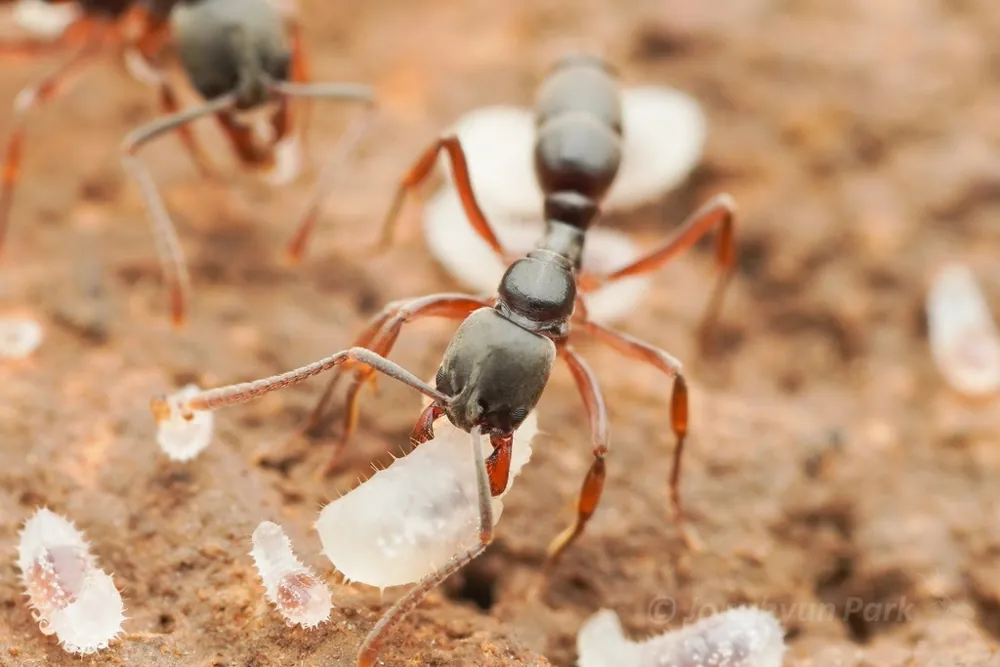
 Uko wayimenya
- A stinging ant from the ponerine group1
- Often nests near termite colonies, which are a reliable food source1
- Looks very similar to Brachyponera luteipes, B. nigrita and B. obscurans, so it is often mistaken for them1
Ikunze kwitiranywa na: It is commonly mistaken for Brachyponera luteipes, Brachyponera nigrita and Brachyponera obscurans because they look similar. Misidentification can mean people do not realise the seriousness of the sting.1
Imbaraga z'ubumara
Ubumara busohokera mu rubori.
Ubumara bwayo bukora iki?
Its venom contains proteins that can trigger allergic reactions. The sting is painful and can leave people in distress. In some cases, allergic reactions cause anaphylaxis, a severe whole-body reaction, or urticaria, which is hives.1
Iteje akaga kangana iki ku bantu?
Akaga ku bantu: IrababazaIshobora kubabaza cyane, ariko hafi ya buri gihe nta kibazo gikomeye biteza.The ant is not aggressive but will sting when disturbed. Its sting can cause anaphylaxis in some people. As it spreads into more urban areas, encounters with people are likely to increase.1
Ikora iki iyo ifite ubwoba?
Although not aggressive, it will sting when it is disturbed.1
 Niba itera urubori
- Oza aho zateye urubori kandi uhakonjeshe.
- Niba umuntu ahumeka bimugoye, akabyimba mu maso cyangwa mu muhogo, cyangwa akumva agiye guta ubwenge, ni ikibazo cyihutirwa cya aleriji: hamagara nimero y'ubutabazi.
Buri gihe banza uhamagare nimero y'ubutabazi (112, 000, 911). Izi ni inama rusange z'ubutabazi bw'ibanze, si inama za muganga. Ibanze by'ubutabazi bw'ibanze
 Irinde akaga
- Ntuzigere ukora, ufata cyangwa ushotora inyamaswa yo mu gasozi, nubwo yaba ntoya, kandi nubwo yasa n'isinziriye cyangwa yapfuye.
- Yihe umwanya. Niba uhuye n'imwe, tuza, usubire inyuma buhoro buhoro kandi uyireke yigendere.
- Niba imwe igutereye urubori: tuza, ntunyeganyege, hamagara nimero y'ubutabazi (112, 000, 911) cyangwa ujye ku bitaro vuba. Ibuka uko yasaga, ifoto irafasha.
Ntigushakisha ngo ikugirire nabi. Ikoresha ubumara bwayo kugira ngo ifate ibyo kurya cyangwa yirinde, kandi ikunda cyane kwihisha. Ibindi ku kwirinda
Ingana gute?
Ireshya ite?
 ntoya ku buryo yakwicara ku nzara yawe
Asian needle ant ingana ite ugereranyije NAWE?
Ni imibare gusa ikorerwa muri mudasobwa yawe. Nta kintu kibikwa cyangwa cyoherezwa ahandi.
Yihuta gute?


Ibintu by'ukuri
In invaded areas, the native ant Aphaenogaster rudis was reduced by 96%.1
A study in North Carolina found that the Asian needle ant outnumbered all native ant species in most sample areas.1
Workers carry nestmates from one place to another when the colony moves nests. Unlike many ant species, they likely use visual cues rather than pheromone trails to do this.1
Queen ants have a special pouch that stores sperm, so they can mate once and keep reproducing for their whole lives.1
The European Union has listed it as an invasive alien species of Union concern, so it cannot be imported, bred, transported, sold or intentionally released in any EU member state.1
Aho ibintu bivugwa bituruka
- Brachyponera chinensis (Wikipedia (CC BY-SA 4.0))
- Brachyponera chinensis (iNaturalist): amazina n'ibyiciro.
- Venom Wiki: urwego rw'akaga, ingano isanzwe n'ikigereranyo cy'umuvuduko ni ibyacu bwite. Reba uko tubibara: Uko tugena akaga.
Buri kintu kivugwa kuri iyi paji gifite nimero yerekana aho cyavuye. Niba twibeshye, tubabarire, turi abakunzi b'inyamaswa, ntituri ikinyamakuru cya siyansi. Tubwire kuri [email protected] tuzabikosora.
 Sikorupiyo irashonje! Venom Wiki ni umushinga w'umuntu umwe: ni ubuntu, nta matangazo kandi nta bikurikirana abantu. Impano ntoya ifasha kugira ngo ikomeze kuboneka kuri interineti.Gaburira sikorupiyo
 Green weaver ant
 Red wood ant
 Arboreal bicoloured ant
 European fire ant
 Indian jumping ant
 Samsum ant
 Deathstalker
 Indian cobra
 Indian saw-scaled viper
 King cobra
 Puff adder
 Impiri ya Russell