
 Afurika
 Aziya
Aziya Uburayi
 Amerika y'Amajyepfo
 Ositaraliya na Oseyaniya
 Antaragitika
 Inyanja ya Pasifika
 Inyanja ya Atalantika
 Inyanja y'Abahinde
 Inyanja ya Arigitika
 Inyanja ya Mediterane
 Inyanja Itukura
 Inyanja ya Karayibe
 Inyanja ya Korali
 Inyanja y'Amajyepfo y'u Bushinwa
 Inyanja ya Filipine
 Inyanja ya Andamani
 Inyanja y'Amajyaruguru
 Inyanja ya Timor na Arafura
 Ikigobe cya Bengali
 Ikigobe cya Kaliforuniya
Horn shark
 Amahwa afite ubumara
The horn shark is a small shark with a blunt head and two tall fins, each with a large spine at the front. It lives along the western coast of North America, from California to the Gulf of California. It spends its days hidden in caves and crevices and hunts at night.1



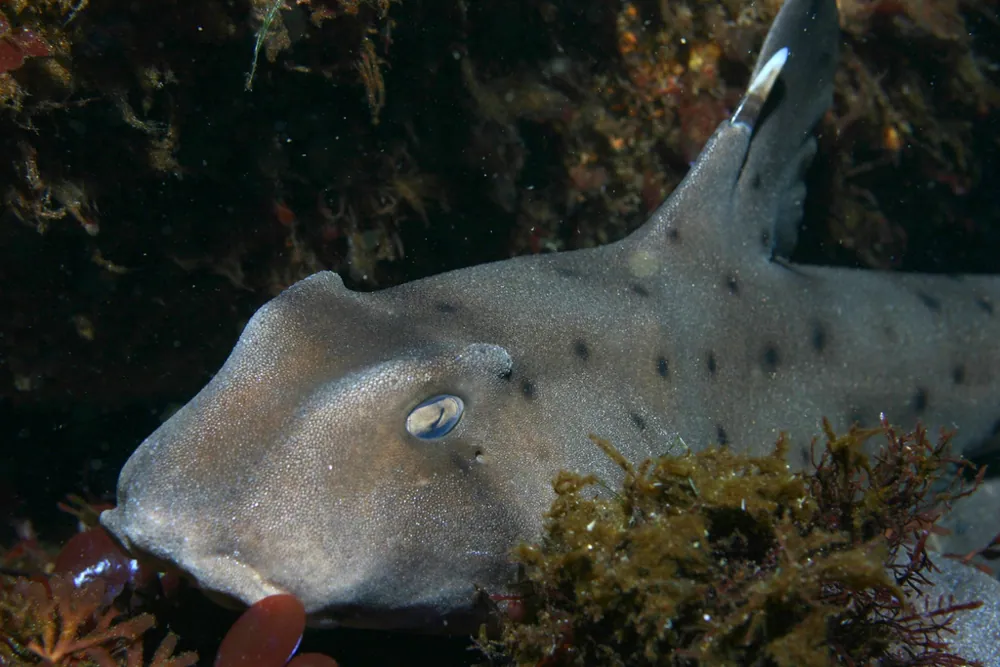
 Uko wayimenya
Imbaraga z'ubumara
Amahwa atyaye ni yo atwara ubumara. Kuyikandagira cyangwa kuyifata birababaza.
Iteje akaga kangana iki ku bantu?
Akaga ku bantu: YorohejeNko guterwa urubori n'uruyuki cyangwa munsi yaho. Mu by'ukuri ntacyo itwaye abantu.Horn sharks are harmless unless they are harassed. They are not targeted by commercial or recreational fisheries, though small numbers are caught by accident.1
Ikora iki iyo ifite ubwoba?
During the day they stay still in hiding places, but they swim away quickly if disturbed.1
 Niba amahwa yayo akujombye
- Shyira igikomere mu mazi ashyushye, ashyushye uko umuntu abyihanganira atiriwe ashya (bigerageze ukoresheje ukuboko kwawe), mu gihe cy'iminota 30 kugeza kuri 90. Shaka ubufasha bwa muganga, cyane cyane ku bya stonefish na stingray.
Buri gihe banza uhamagare nimero y'ubutabazi (112, 000, 911). Izi ni inama rusange z'ubutabazi bw'ibanze, si inama za muganga. Ibanze by'ubutabazi bw'ibanze
 Irinde akaga
- Ntuzigere ukora, ufata cyangwa ushotora inyamaswa yo mu gasozi, nubwo yaba ntoya, kandi nubwo yasa n'isinziriye cyangwa yapfuye.
- Yihe umwanya. Niba uhuye n'imwe, tuza, usubire inyuma buhoro buhoro kandi uyireke yigendere.
- Niba amahwa yayo akujombye: tuza, ntunyeganyege, hamagara nimero y'ubutabazi (112, 000, 911) cyangwa ujye ku bitaro vuba. Ibuka uko yasaga, ifoto irafasha.
Ntigushakisha ngo ikugirire nabi. Ikoresha ubumara bwayo kugira ngo ifate ibyo kurya cyangwa yirinde, kandi ikunda cyane kwihisha. Ibindi ku kwirinda
Ni hehe ku isi?
Ingana gute?
Ireshya ite?
 ireshya n'injangwe zo mu rugo 2,5 zikurikiranye kuva ku zuru kugeza ku murizo
 ireshya n'imineke 7 ikurikiranye
 yakoga uburebure bw'ikidendezi kinini (metero 50) mu masegonda 9
Horn shark ingana ite ugereranyije NAWE?
Ni imibare gusa ikorerwa muri mudasobwa yawe. Nta kintu kibikwa cyangwa cyoherezwa ahandi.
Yihuta gute?

Ibintu by'ukuri
For its size, the horn shark has the strongest bite of any shark that has been measured.1
To pull prey loose, the shark pushes its head up with a downward stroke of its tail. No other shark has been seen doing this.1
Large horn sharks that eat many sea urchins can have purple-stained teeth and fin spines.1
A Pacific angelshark was filmed trying to swallow a juvenile horn shark, but spat it out because of the spines.1
Horn sharks have only 148 electroreceptors (ampullae of Lorenzini), far fewer than most sharks, which may have over 2,000. They rely mainly on smell to find food.1
A dropped tooth takes about 4 weeks to be replaced.1
Ku bahanga mu by'ubumara
- Izina rya siyansi
- Heterodontus francisci
- Itsinda
- Amafi afite ubumara
- Umuryango
- Heterodontidae2
- Itsinda rinini (order)
- Heterodontiformes
- Imigabane
- Inyanja ya Pasifika, Ikigobe cya Kaliforuniya, Inyanja ngari
- Abana bato
- They lay eggs. From February to April, females lay up to 24 eggs, two at a time, every 11 to 14 days, and wedge the egg cases into crevices to protect them.1
- Uko imeze mu gasozi
- Insufficient data (IUCN); population listed as stable on 10 October 20251
- Akaga ku bantu
- 1 / 5: Yoroheje3
Aho ibintu bivugwa bituruka
- Horn shark (Wikipedia (CC BY-SA 4.0))
- Heterodontus francisci (iNaturalist): amazina n'ibyiciro.
- Venom Wiki: urwego rw'akaga, ingano isanzwe n'ikigereranyo cy'umuvuduko ni ibyacu bwite. Reba uko tubibara: Uko tugena akaga.
Buri kintu kivugwa kuri iyi paji gifite nimero yerekana aho cyavuye. Niba twibeshye, tubabarire, turi abakunzi b'inyamaswa, ntituri ikinyamakuru cya siyansi. Tubwire kuri [email protected] tuzabikosora.
 Sikorupiyo irashonje! Venom Wiki ni umushinga w'umuntu umwe: ni ubuntu, nta matangazo kandi nta bikurikirana abantu. Impano ntoya ifasha kugira ngo ikomeze kuboneka kuri interineti.Gaburira sikorupiyo
Izindi zo mu itsinda rimwe: Amafi afite ubumara
 Reef stonefishAmafi afite ubumaraIshobora kwicaNtukayikoreho
 Red lionfishAmafi afite ubumaraBisaba mugangaNtukayikoreho
 Estuarine stonefishAmafi afite ubumaraIshobora kwicaNtukayikoreho
 Short-tail stingrayAmafi afite ubumaraIshobora kwica
 Striped eel catfishAmafi afite ubumaraIshobora kwicaNtukayikoreho
 Bluespotted ribbontail rayAmafi afite ubumaraBisaba muganga
Iba kandi muri: Inyanja ya Pasifika
 Australian box jellyfishJellyfish n'izindi nyamaswa zo mu nyanja zitera uruboriYicaNtukayikoreho
 Geography coneCone snail na octopusYica
 Greater blue-ringed octopusCone snail na octopusYica
 Japanese pufferfishIzindi nyamaswa zifite uburoziYica
 Southern blue-ringed octopusCone snail na octopusYica
 Hawksbill sea turtleIzindi nyamaswa zifite uburoziIshobora kwica