
 Afurika
 Aziya
Aziya Uburayi
 Amerika y'Amajyepfo
 Ositaraliya na Oseyaniya
 Antaragitika
 Inyanja ya Pasifika
 Inyanja ya Atalantika
 Inyanja y'Abahinde
 Inyanja ya Arigitika
 Inyanja ya Mediterane
 Inyanja Itukura
 Inyanja ya Karayibe
 Inyanja ya Korali
 Inyanja y'Amajyepfo y'u Bushinwa
 Inyanja ya Filipine
 Inyanja ya Andamani
 Inyanja y'Amajyaruguru
 Inyanja ya Timor na Arafura
 Ikigobe cya Bengali
 Ikigobe cya Kaliforuniya
Hura centipede
 Iraruma
The hura, also called the giant centipede, is a centipede found in Australia and New Zealand. In New Zealand it can grow to over 20 centimetres, which makes it one of the largest centipedes there. It hunts small animals and can give a painful bite when threatened.1


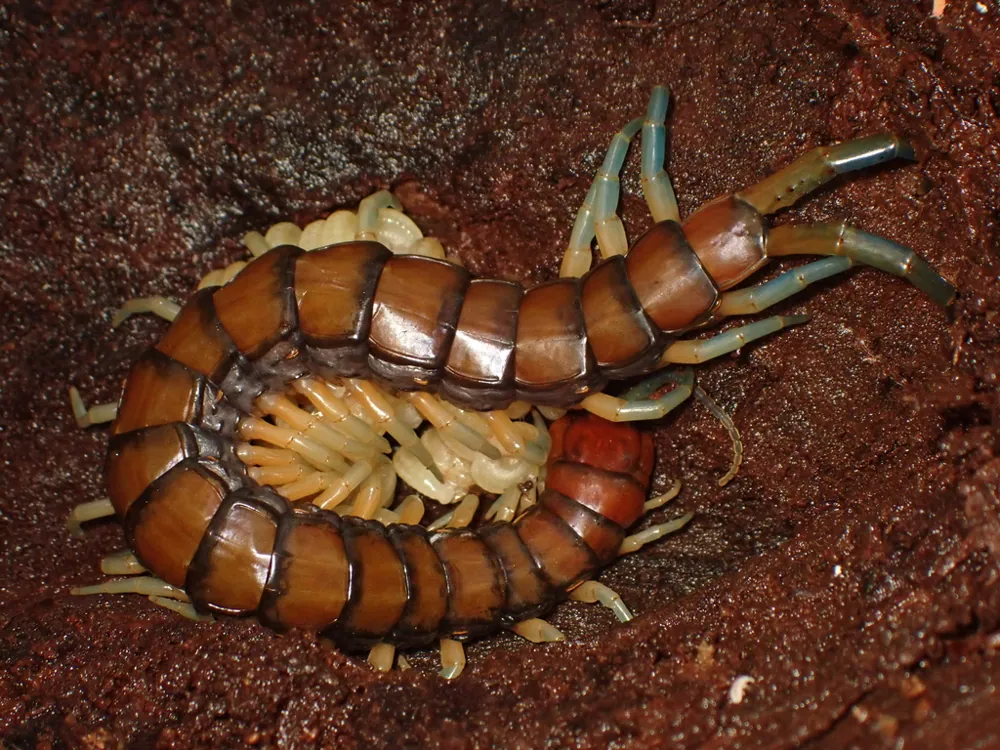
 Uko wayimenya
- The head and first body plate are reddish-brown, and the other body plates are olive-brown.1
- It has large black forcipules, which are fang-like claws near the head.1
- Its legs are yellowish at the base and turn green towards the tip.1
- The last pair of legs has light blue tips.1
- In New Zealand it can exceed 20 cm long, but in Australia it usually reaches only about 3.9 cm.1
Imbaraga z'ubumara
Ubumara busohokera mu menyo yayo y'ubumara cyangwa mu yandi menyo iyo iriye.
Ubumara bwayo bukora iki?
The bite can cause swelling. In one recorded case it caused severe pain and vomiting.1
Iteje akaga kangana iki ku bantu?
Akaga ku bantu: IrababazaIshobora kubabaza cyane, ariko hafi ya buri gihe nta kibazo gikomeye biteza.When threatened, it can inflict a painful bite.1
Ikora iki iyo ifite ubwoba?
When threatened, it uses its forcipules to bite.1
 Niba iruma
- Oza aho yarumye, uhakonjeshe cyangwa uhinjize mu mazi y'akazuyazi kubera ububabare, kandi ushake ubufasha bwa muganga niba bikomeje kuba bibi.
Buri gihe banza uhamagare nimero y'ubutabazi (112, 000, 911). Izi ni inama rusange z'ubutabazi bw'ibanze, si inama za muganga. Ibanze by'ubutabazi bw'ibanze
 Irinde akaga
- Ntuzigere ukora, ufata cyangwa ushotora inyamaswa yo mu gasozi, nubwo yaba ntoya, kandi nubwo yasa n'isinziriye cyangwa yapfuye.
- Yihe umwanya. Niba uhuye n'imwe, tuza, usubire inyuma buhoro buhoro kandi uyireke yigendere.
- Niba imwe ikurumye: tuza, ntunyeganyege, hamagara nimero y'ubutabazi (112, 000, 911) cyangwa ujye ku bitaro vuba. Ibuka uko yasaga, ifoto irafasha.
Ntigushakisha ngo ikugirire nabi. Ikoresha ubumara bwayo kugira ngo ifate ibyo kurya cyangwa yirinde, kandi ikunda cyane kwihisha. Ibindi ku kwirinda
Ingana gute?
Ireshya ite?
 ireshya n'ibice 6 by'ibikinisho byo kubaka biri ku murongo
 yakwiruka metero 100 mu masegonda 180 (umuntu wihuta kurusha abandi akenera 9,6)
Hura centipede ingana ite ugereranyije NAWE?
Ni imibare gusa ikorerwa muri mudasobwa yawe. Nta kintu kibikwa cyangwa cyoherezwa ahandi.
Yihuta gute?


Ibintu by'ukuri
In a study on the Three Kings Islands, researchers reportedly had to wrap their sleeping bags in tinfoil to warn them of the centipedes nearby.1
In New Zealand, introduced rats and European hedgehogs eat hura, so the centipedes are most common on islands without these pests.1
North Island brown kiwi are known to prey on hura.1
Its blood-like fluid, called haemolymph, has a high concentration of protein and is thought to be typical of more primitive arthropods.1
Aho ibintu bivugwa bituruka
- Cormocephalus rubriceps (Wikipedia (CC BY-SA 4.0))
- Cormocephalus rubriceps (iNaturalist): amazina n'ibyiciro.
- Venom Wiki: urwego rw'akaga, ingano isanzwe n'ikigereranyo cy'umuvuduko ni ibyacu bwite. Reba uko tubibara: Uko tugena akaga.
Buri kintu kivugwa kuri iyi paji gifite nimero yerekana aho cyavuye. Niba twibeshye, tubabarire, turi abakunzi b'inyamaswa, ntituri ikinyamakuru cya siyansi. Tubwire kuri [email protected] tuzabikosora.
 Sikorupiyo irashonje! Venom Wiki ni umushinga w'umuntu umwe: ni ubuntu, nta matangazo kandi nta bikurikirana abantu. Impano ntoya ifasha kugira ngo ikomeze kuboneka kuri interineti.Gaburira sikorupiyo
 Giant Australian centipede
 Orange-footed centipede
 Tanzanian blue ringleg centipede
 Peruvian giant centipede
 Chinese red-headed centipede
 Giant desert centipede
 Coastal taipan
 Common death adder
 Eastern brown snake
 Tayipani yo mu gihugu imbere
 Sydney funnel-web spider
 Inzoka y'ingwe