
 Afurika
 Aziya
Aziya Uburayi
 Amerika y'Amajyepfo
 Ositaraliya na Oseyaniya
 Antaragitika
 Inyanja ya Pasifika
 Inyanja ya Atalantika
 Inyanja y'Abahinde
 Inyanja ya Arigitika
 Inyanja ya Mediterane
 Inyanja Itukura
 Inyanja ya Karayibe
 Inyanja ya Korali
 Inyanja y'Amajyepfo y'u Bushinwa
 Inyanja ya Filipine
 Inyanja ya Andamani
 Inyanja y'Amajyaruguru
 Inyanja ya Timor na Arafura
 Ikigobe cya Bengali
 Ikigobe cya Kaliforuniya
Coastal taipan
 Iraruma
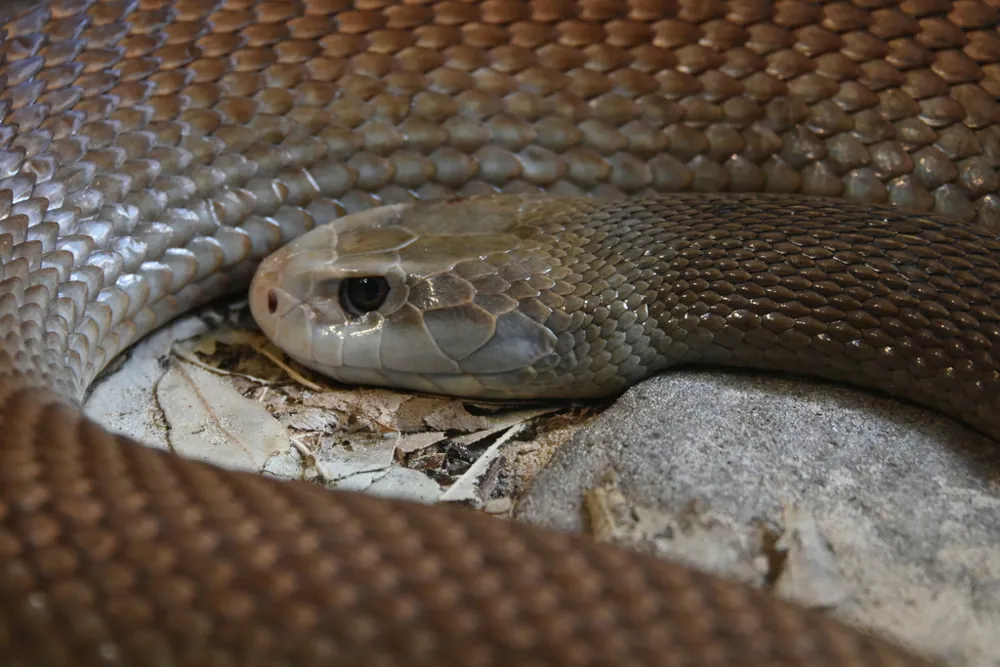
The coastal taipan is one of the most feared snakes in Australia. It is a large, fast snake with a powerful venom, and it lives along the coasts of northern and eastern Australia and on the island of New Guinea. It is one of the reasons snake bite safety matters so much in these areas.1



 Uko wayimenya
- Light olive or reddish-brown upperparts, sometimes dark grey to black1
- Paler sides and a creamy-white to pale yellow belly, often marked with orange or pink flecks1
- Long, narrow head with an angular brow and a lighter-coloured face1
- Large, round, light brown or hazel eyes with large pupils1
- Typically about 2.0 m long as an adult, with a slender body1
Ikunze kwitiranywa na: It is often confused with the eastern brown snake, northern brown snake and king brown snake. The coastal taipan has a larger head and a narrow neck, and a lighter face and snout. In the other species, the head and neck are the same width.1
Imbaraga z'ubumara
Ubumara busohokera mu menyo yayo y'ubumara cyangwa mu yandi menyo iyo iriye.
Ubumara bwayo bukora iki?
Its venom is mainly neurotoxic, which means it attacks the nerves, and it is also coagulopathic, which means it disturbs blood clotting. In a recorded bite case, the victim became unwell within 15 to 30 minutes, with drooping eyelids, nausea and difficulty breathing. Some victims have also lost their sense of smell for a time.1
Iteje akaga kangana iki ku bantu?
Akaga ku bantu: YicaImwe mu nyamaswa ziteje akaga kurusha izindi ku isi.It is considered one of the most dangerous snakes in the region and is classified by the World Health Organization as a snake of medical importance. Several deaths were recorded from its bites in the 1930s and 1940s, and more were added later as historical cases.1
 Inkuru nziza: abaganga bafite umuti (umuti urwanya ubumara, antivenom) cyangwa uburyo bwo kuvura ibi.1
Ikora iki iyo ifite ubwoba?
It tends to avoid confrontation but becomes highly defensive if provoked.1
 Niba iruma
- Any suspected bite needs urgent medical care. In one recorded case, the bitten man was taken to hospital, where he was given fluids and tiger snake antivenom, and he recovered after 19 days in hospital.1
- Gupfuka ukanda no kudanyeganyeza (pressure immobilisation): zingira bande ikweduka kandi ifashe neza hejuru y'aho yarumye, hanyuma uzamuke ku rugingo rwose, urushyireho agati ko kurukomeza (attelle), kandi umuntu agume atanyeganyega na gato kugeza ubutabazi buhageze.
- Ntugasukure aho yarumye ukoresheje amazi: ibitaro bishobora gupima ubumara bwasigaye ku ruhu kugira ngo bihitemo umuti urwanya ubumara (antivenom) ukwiye.
Buri gihe banza uhamagare nimero y'ubutabazi (112, 000, 911). Izi ni inama rusange z'ubutabazi bw'ibanze, si inama za muganga. Ibanze by'ubutabazi bw'ibanze
 Irinde akaga
- Ntuzigere ukora, ufata cyangwa ushotora inyamaswa yo mu gasozi, nubwo yaba ntoya, kandi nubwo yasa n'isinziriye cyangwa yapfuye.
- Yihe umwanya. Niba uhuye n'imwe, tuza, usubire inyuma buhoro buhoro kandi uyireke yigendere.
- Niba imwe ikurumye: tuza, ntunyeganyege, hamagara nimero y'ubutabazi (112, 000, 911) cyangwa ujye ku bitaro vuba. Ibuka uko yasaga, ifoto irafasha.
Ntigushakisha ngo ikugirire nabi. Ikoresha ubumara bwayo kugira ngo ifate ibyo kurya cyangwa yirinde, kandi ikunda cyane kwihisha. Ibindi ku kwirinda
Ingana gute?
Ireshya ite?
Iremera ibingana iki?
 ireshya n'imbwa 3 zikurikiranye kuva ku zuru kugeza ku murizo
 ireshya n'imineke 16 ikurikiranye
 iremera hafi nk'injangwe yo mu rugo
 yakwiruka metero 100 mu masegonda 41 (umuntu wihuta kurusha abandi akenera 9,6)
Coastal taipan ingana ite ugereranyije NAWE?
Ni imibare gusa ikorerwa muri mudasobwa yawe. Nta kintu kibikwa cyangwa cyoherezwa ahandi.
Yihuta gute?


Ibintu by'ukuri
The longest recorded coastal taipan was 2.9 m long and weighed 6.5 kg, and larger specimens of up to 3.3 m are widely believed to exist.1
Its hunting method, freezing, striking and releasing prey, is similar to that of the African black mamba.1
It is the second-longest venomous snake in Australia, after the king brown snake.1
Newly hatched young grow quickly, reaching about 1.0 m in their first year.1
It may have become more common since cane toads were introduced to Australia in 1935.1
Usenya ibinyoma
Ikinyoma: The snake hides in trees and drops onto people, and it chases people for hours.
Ukuri: Stories of it hiding in trees and dropping on victims were spread in newspapers and books, but snake handlers say it is shy and avoids confrontation. It only becomes highly defensive when provoked.1
Ku bahanga mu by'ubumara
- Izina rya siyansi
- Oxyuranus scutellatus
- Itsinda
- Inzoka zo muri Ositaraliya
- Umuryango
- Elapidae2
- Itsinda rinini (order)
- Squamata
- Imigabane
- Ositaraliya na Oseyaniya
- Abana bato
- It lays a clutch of 7 to 20 eggs. The eggs take 60 to 80 days to hatch, and the young are 30 to 34 cm long.1
- Uko imeze mu gasozi
- Least Concern (IUCN)1
- Akaga ku bantu
- 5 / 5: Yica3
Aho ibintu bivugwa bituruka
- Coastal taipan (Wikipedia (CC BY-SA 4.0))
- Oxyuranus scutellatus (iNaturalist): amazina n'ibyiciro.
- Venom Wiki: urwego rw'akaga, ingano isanzwe n'ikigereranyo cy'umuvuduko ni ibyacu bwite. Reba uko tubibara: Uko tugena akaga.
Buri kintu kivugwa kuri iyi paji gifite nimero yerekana aho cyavuye. Niba twibeshye, tubabarire, turi abakunzi b'inyamaswa, ntituri ikinyamakuru cya siyansi. Tubwire kuri [email protected] tuzabikosora.
 Sikorupiyo irashonje! Venom Wiki ni umushinga w'umuntu umwe: ni ubuntu, nta matangazo kandi nta bikurikirana abantu. Impano ntoya ifasha kugira ngo ikomeze kuboneka kuri interineti.Gaburira sikorupiyo
Izindi zo mu itsinda rimwe: Inzoka zo muri Ositaraliya
 Common death adderInzoka zo muri OsitaraliyaYica
 Eastern brown snakeInzoka zo muri OsitaraliyaYica
 Tayipani yo mu gihugu imbereInzoka zo muri OsitaraliyaYica
 Inzoka y'ingweInzoka zo muri OsitaraliyaYica
 Collett's snakeInzoka zo muri OsitaraliyaIshobora kwica
 Desert death adderInzoka zo muri OsitaraliyaIshobora kwica
Iba kandi muri: Ositaraliya na Oseyaniya
 Sydney funnel-web spiderTarantula na funnel-webYica
 Redback spiderIbitagangurirwaBisaba muganga
 Brown tree snakeInzoka zifite amenyo y'ubumara inyumaIrababaza gusa
 Hooded pitohuiIzindi nyamaswa zifite uburoziIrababaza gusaNtukayikoreho
 PlatypusInyamabere zifite ubumaraIrababaza gusa
 Northern tree-dwelling funnel-web spiderTarantula na funnel-webYica