
 Afurika
 Aziya
Aziya Uburayi
 Amerika y'Amajyepfo
 Ositaraliya na Oseyaniya
 Antaragitika
 Inyanja ya Pasifika
 Inyanja ya Atalantika
 Inyanja y'Abahinde
 Inyanja ya Arigitika
 Inyanja ya Mediterane
 Inyanja Itukura
 Inyanja ya Karayibe
 Inyanja ya Korali
 Inyanja y'Amajyepfo y'u Bushinwa
 Inyanja ya Filipine
 Inyanja ya Andamani
 Inyanja y'Amajyaruguru
 Inyanja ya Timor na Arafura
 Ikigobe cya Bengali
 Ikigobe cya Kaliforuniya
Mangrove snake
 Iraruma
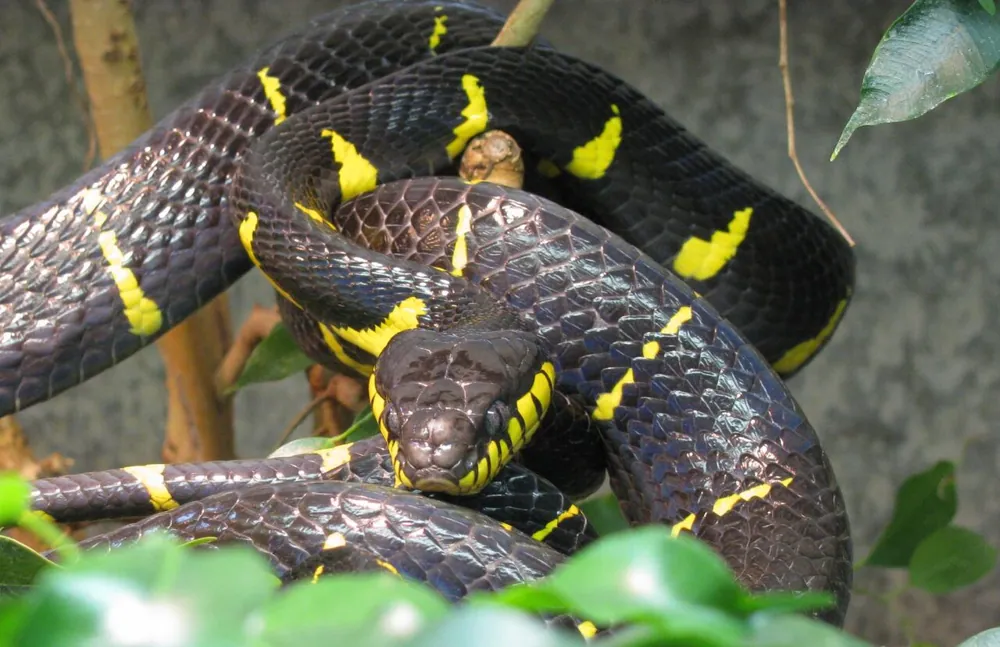
The mangrove snake is a large, tree-climbing snake with yellow and black bands. It lives in Southeast Asia and is one of the biggest cat snake species. It is mildly venomous, and it is often mistaken for a much more dangerous snake, the banded krait.1



 Uko wayimenya
- Black above, with yellow bands across the back1
- Yellow lips with black edges1
- Black or bluish underside, sometimes speckled with yellow, and a yellow throat1
- Can grow to about 240 to 270 cm long1
- Has a triangular body cross-section1
Ikunze kwitiranywa na: The mangrove snake can be confused with the banded krait, which has alternating black and yellow crossbands and a triangular body. The banded krait is extremely venomous, so treat any black and yellow banded snake with caution.1
Imbaraga z'ubumara
Ubumara busohokera mu menyo yayo y'ubumara cyangwa mu yandi menyo iyo iriye.
Ubumara bwayo bukora iki?
The snake has rear fangs and a venom gland linked to them. It has to chew to release the venom, which is released gradually. Its venom is weak, and the rear fangs are small, so it is hard for the snake to sink them into a person's arm or leg. Moderate bites have caused intense swelling.1
Iteje akaga kangana iki ku bantu?
Akaga ku bantu: IrababazaIshobora kubabaza cyane, ariko hafi ya buri gihe nta kibazo gikomeye biteza.It is considered mildly venomous. Moderate bites have caused intense swelling, but there has never been a confirmed death, as of 2016.1
Ikora iki iyo ifite ubwoba?
It is a potentially defensive snake that may strike repeatedly, even when captive bred.1
 Niba iruma
- Oza aho yarumye, umuntu agume atuje kandi ushake ubufasha bwa muganga. Amoko amwe (nka boomslang) ashobora kwica nyuma y'amasaha.
Buri gihe banza uhamagare nimero y'ubutabazi (112, 000, 911). Izi ni inama rusange z'ubutabazi bw'ibanze, si inama za muganga. Ibanze by'ubutabazi bw'ibanze
 Irinde akaga
- Ntuzigere ukora, ufata cyangwa ushotora inyamaswa yo mu gasozi, nubwo yaba ntoya, kandi nubwo yasa n'isinziriye cyangwa yapfuye.
- Yihe umwanya. Niba uhuye n'imwe, tuza, usubire inyuma buhoro buhoro kandi uyireke yigendere.
- Niba imwe ikurumye: tuza, ntunyeganyege, hamagara nimero y'ubutabazi (112, 000, 911) cyangwa ujye ku bitaro vuba. Ibuka uko yasaga, ifoto irafasha.
Ntigushakisha ngo ikugirire nabi. Ikoresha ubumara bwayo kugira ngo ifate ibyo kurya cyangwa yirinde, kandi ikunda cyane kwihisha. Ibindi ku kwirinda
Ingana gute?
Ireshya ite?
 ireshya n'imbwa 2,5 zikurikiranye kuva ku zuru kugeza ku murizo
 ireshya n'imineke 15 ikurikiranye
 yakwiruka metero 100 mu masegonda 54 (umuntu wihuta kurusha abandi akenera 9,6)
Mangrove snake ingana ite ugereranyije NAWE?
Ni imibare gusa ikorerwa muri mudasobwa yawe. Nta kintu kibikwa cyangwa cyoherezwa ahandi.
Yihuta gute?


Ibintu by'ukuri
Its venom contains denmotoxin, a three-finger toxin that is the first fully characterised bird-specific toxin.1
It is one of the biggest cat snake species.1
Despite its name, it is found more often in lowland rainforests than in mangrove swamps.1
It may refuse food for long periods if it is disturbed.1
Usenya ibinyoma
Ikinyoma: It is a dangerous killer because it looks like the banded krait.
Ukuri: It is mildly venomous, and there has never been a confirmed death from its bite. Its look can be confused with the extremely venomous banded krait.1
Aho ibintu bivugwa bituruka
- Boiga dendrophila (Wikipedia (CC BY-SA 4.0))
- Boiga dendrophila (iNaturalist): amazina n'ibyiciro.
- Venom Wiki: urwego rw'akaga, ingano isanzwe n'ikigereranyo cy'umuvuduko ni ibyacu bwite. Reba uko tubibara: Uko tugena akaga.
Buri kintu kivugwa kuri iyi paji gifite nimero yerekana aho cyavuye. Niba twibeshye, tubabarire, turi abakunzi b'inyamaswa, ntituri ikinyamakuru cya siyansi. Tubwire kuri [email protected] tuzabikosora.
 Sikorupiyo irashonje! Venom Wiki ni umushinga w'umuntu umwe: ni ubuntu, nta matangazo kandi nta bikurikirana abantu. Impano ntoya ifasha kugira ngo ikomeze kuboneka kuri interineti.Gaburira sikorupiyo
Izindi zo mu itsinda rimwe: Inzoka zifite amenyo y'ubumara inyuma
 Brown tree snakeInzoka zifite amenyo y'ubumara inyumaIrababaza gusa
 Tiger keelbackInzoka zifite amenyo y'ubumara inyumaIshobora kwica
 Red-necked keelbackInzoka zifite amenyo y'ubumara inyumaBisaba muganga
 Green cat snakeInzoka zifite amenyo y'ubumara inyumaIrababaza gusa
 Asian vine snakeInzoka zifite amenyo y'ubumara inyumaNtacyo itwaye
 Golden tree snakeInzoka zifite amenyo y'ubumara inyumaNtacyo itwaye
 Deathstalker
 Indian cobra
 Indian saw-scaled viper
 King cobra
 Puff adder
 Impiri ya Russell
.JPG)