
 Afurika
 Aziya
Aziya Uburayi
 Amerika y'Amajyepfo
 Ositaraliya na Oseyaniya
 Antaragitika
 Inyanja ya Pasifika
 Inyanja ya Atalantika
 Inyanja y'Abahinde
 Inyanja ya Arigitika
 Inyanja ya Mediterane
 Inyanja Itukura
 Inyanja ya Karayibe
 Inyanja ya Korali
 Inyanja y'Amajyepfo y'u Bushinwa
 Inyanja ya Filipine
 Inyanja ya Andamani
 Inyanja y'Amajyaruguru
 Inyanja ya Timor na Arafura
 Ikigobe cya Bengali
 Ikigobe cya Kaliforuniya
Rhombic night adder
 Iraruma
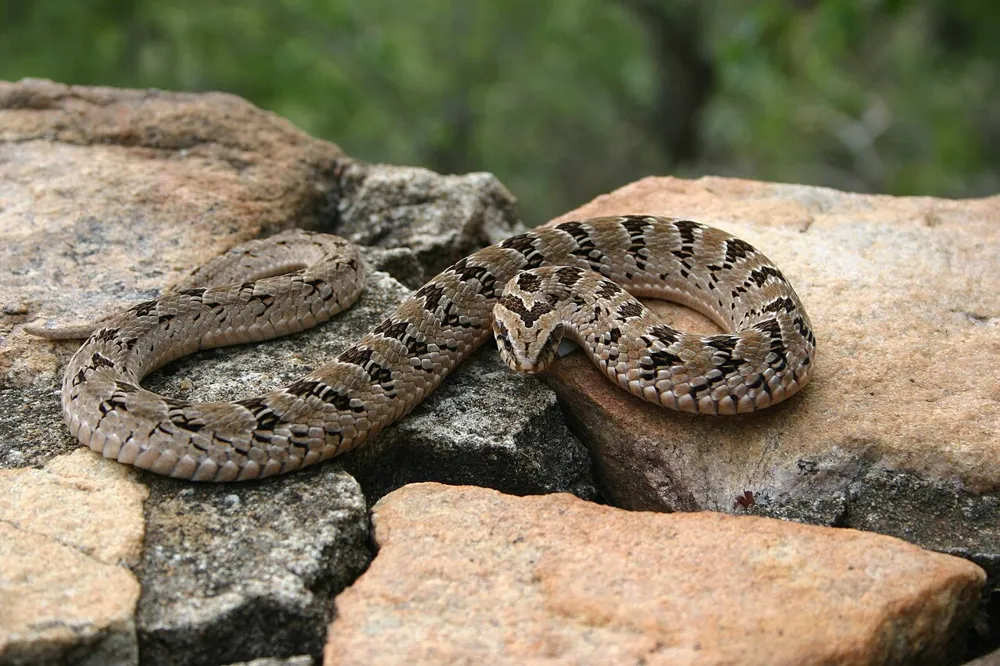
The rhombic night adder is a venomous snake found across much of Sub-Saharan Africa. It is the largest snake in its genus, Causus, and it has a striking threat display that makes it look more dangerous than its venom usually makes it.1


 Uko wayimenya
- The main colour is usually a shade of brown, sometimes pinkish or greyish, and occasionally olive green.1
- It has 20 to 30 rhombic (diamond-shaped) blotches with pale edges running along its back.1
- Oblique black bars on its sides are each topped by one or two black spots with pale centres, which look like eyes.1
- The head has a V-shaped mark that may be solid black, or brown with a black outline.1
- Northern populations may have no pattern at all, which makes them harder to identify.1
Ikunze kwitiranywa na: The common egg-eater (Dasypeltis scabra) is compared with this snake. Its colour pattern and behaviour may be a form of defensive mimicry, meaning it may resemble another animal to stay safe.1
Imbaraga z'ubumara
Ubumara busohokera mu menyo yayo y'ubumara cyangwa mu yandi menyo iyo iriye.
Ubumara bwayo bukora iki?
The venom is low in toxicity. Bites usually cause pain and minor swelling, with little tissue death (necrosis), and these symptoms usually fade within 2 to 3 days. Bites can still be serious, as in at least one case where a child needed a fasciotomy, a surgical operation to relieve pressure in a limb.1
Iteje akaga kangana iki ku bantu?
Akaga ku bantu: IrababazaIshobora kubabaza cyane, ariko hafi ya buri gihe nta kibazo gikomeye biteza.Most individuals are docile and seldom bite unless severely provoked. Bites can be serious, but there are no modern, well-documented cases of deaths from this species.1
Ikora iki iyo ifite ubwoba?
When seriously disturbed, it coils up, inflates its body so the dark markings stand out, hisses and puffs loudly, flattens the front of its body and neck, and strikes frantically.1
 Niba iruma
- Umuntu agume atanyeganyega kandi atuje, urugingo rwarumwe rugume ku rwego rumwe n'umutima, mukuremo impeta n'ibindi bintu bifashe cyane, kandi mujye ku bitaro vuba.
Buri gihe banza uhamagare nimero y'ubutabazi (112, 000, 911). Izi ni inama rusange z'ubutabazi bw'ibanze, si inama za muganga. Ibanze by'ubutabazi bw'ibanze
 Irinde akaga
- Ntuzigere ukora, ufata cyangwa ushotora inyamaswa yo mu gasozi, nubwo yaba ntoya, kandi nubwo yasa n'isinziriye cyangwa yapfuye.
- Yihe umwanya. Niba uhuye n'imwe, tuza, usubire inyuma buhoro buhoro kandi uyireke yigendere.
- Niba imwe ikurumye: tuza, ntunyeganyege, hamagara nimero y'ubutabazi (112, 000, 911) cyangwa ujye ku bitaro vuba. Ibuka uko yasaga, ifoto irafasha.
Ntigushakisha ngo ikugirire nabi. Ikoresha ubumara bwayo kugira ngo ifate ibyo kurya cyangwa yirinde, kandi ikunda cyane kwihisha. Ibindi ku kwirinda
Ingana gute?
Ireshya ite?
 ireshya n'injangwe zo mu rugo 2 zikurikiranye kuva ku zuru kugeza ku murizo
 ireshya n'imineke 5 ikurikiranye
 yakwiruka metero 100 mu masegonda 110 (umuntu wihuta kurusha abandi akenera 9,6)
Rhombic night adder ingana ite ugereranyije NAWE?
Ni imibare gusa ikorerwa muri mudasobwa yawe. Nta kintu kibikwa cyangwa cyoherezwa ahandi.
Yihuta gute?


Ibintu by'ukuri
Usenya ibinyoma
Ikinyoma: Its bite is deadly.
Ukuri: There are no modern, well-documented cases of deaths from this species. Bites usually cause pain and minor swelling that fade within 2 to 3 days, although bites can still be serious.1
Ku bahanga mu by'ubumara
- Izina rya siyansi
- Causus rhombeatus
- Itsinda
- Vipera na adder
- Umuryango
- Viperidae2
- Itsinda rinini (order)
- Squamata
- Imigabane
- Afurika
- Abana bato
- Females lay an average clutch of 24 eggs, which take about four months to hatch. The hatchlings are 10 to 12.5 cm long and feed on tiny frogs and toads.1
- Akaga ku bantu
- 2 / 5: Irababaza3
Aho ibintu bivugwa bituruka
- Causus rhombeatus (Wikipedia (CC BY-SA 4.0))
- Causus rhombeatus (iNaturalist): amazina n'ibyiciro.
- Venom Wiki: urwego rw'akaga, ingano isanzwe n'ikigereranyo cy'umuvuduko ni ibyacu bwite. Reba uko tubibara: Uko tugena akaga.
Buri kintu kivugwa kuri iyi paji gifite nimero yerekana aho cyavuye. Niba twibeshye, tubabarire, turi abakunzi b'inyamaswa, ntituri ikinyamakuru cya siyansi. Tubwire kuri [email protected] tuzabikosora.
 Sikorupiyo irashonje! Venom Wiki ni umushinga w'umuntu umwe: ni ubuntu, nta matangazo kandi nta bikurikirana abantu. Impano ntoya ifasha kugira ngo ikomeze kuboneka kuri interineti.Gaburira sikorupiyo
 Puff adder
 Gaboon viper
 Northeast African carpet viper
 West African carpet viper
 Rhinoceros viper
 West African Gaboon viper
 Black mamba
 Deathstalker
 Egyptian cobra
 Boomslang
 Fat-tailed scorpion
 Western honey bee