
 Afurika
 Aziya
Aziya Uburayi
 Amerika y'Amajyepfo
 Ositaraliya na Oseyaniya
 Antaragitika
 Inyanja ya Pasifika
 Inyanja ya Atalantika
 Inyanja y'Abahinde
 Inyanja ya Arigitika
 Inyanja ya Mediterane
 Inyanja Itukura
 Inyanja ya Karayibe
 Inyanja ya Korali
 Inyanja y'Amajyepfo y'u Bushinwa
 Inyanja ya Filipine
 Inyanja ya Andamani
 Inyanja y'Amajyaruguru
 Inyanja ya Timor na Arafura
 Ikigobe cya Bengali
 Ikigobe cya Kaliforuniya
Toxic zoanthid
 Uburozi mu ruhu rwayo
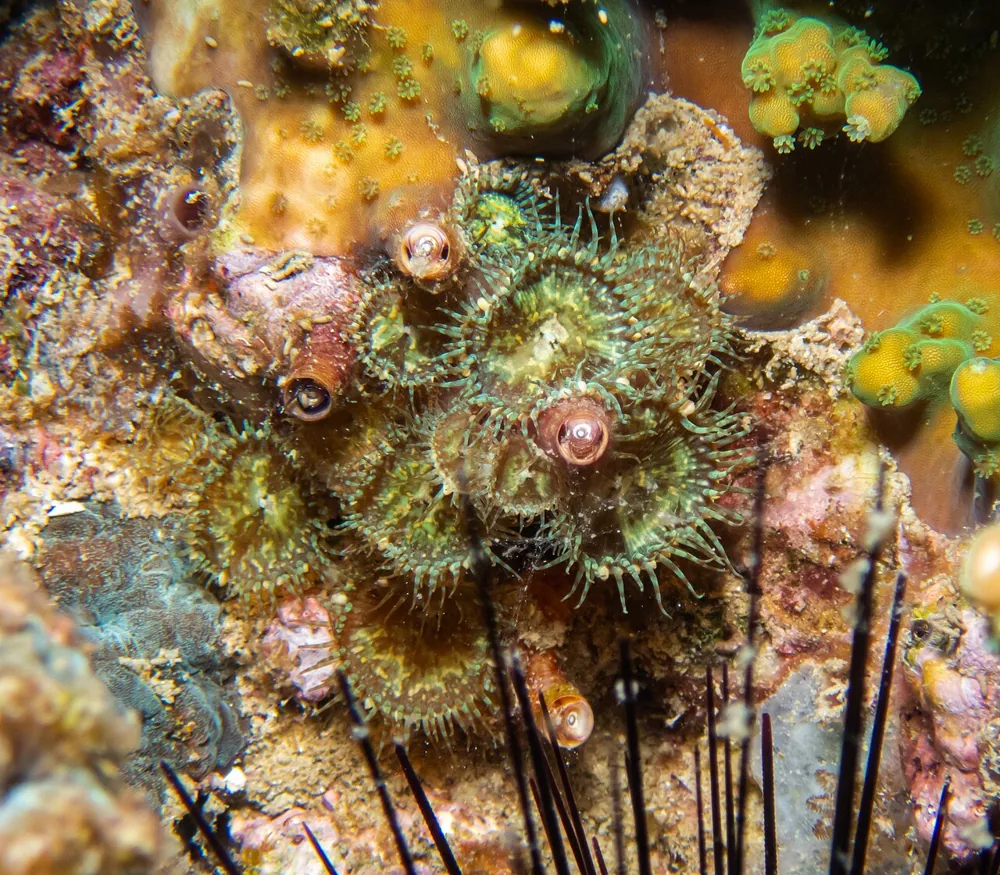
Palythoa toxica is a small, crust-like sea animal, called a zoanthid, that grows on rocks. It lives in Hawaii and is special because it is the species from which the very poisonous substance palytoxin was first discovered and isolated.1
 Uko wayimenya
- It grows as a flat, encrusting layer over rock.1
- It has a firm, tough outer covering.1
- Its polyps are partly sunk into a cushiony mat that spreads across the rock and contains sand grains and bits of debris.1
- Each polyp has a broad mouth disc with a fringe of tentacles.1
- Its colour varies but is usually cream, grey or pale brown.1
Imbaraga z'uburozi
Uruhu rwayo rufite uburozi. Ni bibi kuyikoraho, kuyirigata cyangwa kuyirya.
Uburozi bwayo bukora iki?
It is not venomous in the sense of injecting venom with a bite or sting. It contains palytoxin, one of the most poisonous substances known.1
Iteje akaga kangana iki ku bantu?
Akaga ku bantu: Iteje akaga cyaneIshobora kwica umuntu utavuwe.Palytoxin is one of the most poisonous substances known, and people have been poisoned by handling this animal in reef aquariums.1
 Niba hari uwayikozeho cyangwa uwayiriye
- Niba hari uwayiriye cyangwa afite ibimenyetso nyuma yo kuyirya: hamagara ako kanya nimero y'ubutabazi cyangwa ikigo gishinzwe uburozi.
Buri gihe banza uhamagare nimero y'ubutabazi (112, 000, 911). Izi ni inama rusange z'ubutabazi bw'ibanze, si inama za muganga. Ibanze by'ubutabazi bw'ibanze
 Irinde akaga
- Ntuzigere ukora, ufata cyangwa ushotora inyamaswa yo mu gasozi, nubwo yaba ntoya, kandi nubwo yasa n'isinziriye cyangwa yapfuye.
- Yihe umwanya. Niba uhuye n'imwe, tuza, usubire inyuma buhoro buhoro kandi uyireke yigendere.
- Niba wayikozeho cyangwa wayiriye: ntukube amaso cyangwa umunwa, karaba intoki kandi ushake ubufasha bwa muganga.
Ntigushakisha ngo ikugirire nabi. Uburozi bwayo buriho gusa kugira ngo hatagira ikiyirya. Ibindi ku kwirinda
Ni hehe ku isi?
Ingana gute?
Ireshya ite?
 ngufi kurusha agahera kawe
Toxic zoanthid ingana ite ugereranyije NAWE?
Ni imibare gusa ikorerwa muri mudasobwa yawe. Nta kintu kibikwa cyangwa cyoherezwa ahandi.
Yihuta gute?


Ibintu by'ukuri
Early Hawaiians used this animal to poison the tips of their weapons, and a legend says warriors could break a taboo and dip their spear tips into its pool when under severe threat.1
In 1961 researchers took specimens from the pool despite local advice, and the laboratories of the Hawaiian Institute of Marine Biology on Coconut Island were destroyed by fire on that same day.1
Palythoa toxica is the species in which palytoxin was first discovered and first isolated.1
Unlike a related species, P. toxica is equally toxic all year round rather than changing with the seasons.1
Palytoxin has also been found in other Palythoa species, some algae, and certain crabs and fish, and it has been suggested that a dinoflagellate in the genus Ostreopsis produces the toxin.1
Ku bahanga mu by'ubumara
Aho ibintu bivugwa bituruka
- Palythoa toxica (Wikipedia (CC BY-SA 4.0))
- Palythoa toxica (iNaturalist): amazina n'ibyiciro.
- Venom Wiki: urwego rw'akaga, ingano isanzwe n'ikigereranyo cy'umuvuduko ni ibyacu bwite. Reba uko tubibara: Uko tugena akaga.
Buri kintu kivugwa kuri iyi paji gifite nimero yerekana aho cyavuye. Niba twibeshye, tubabarire, turi abakunzi b'inyamaswa, ntituri ikinyamakuru cya siyansi. Tubwire kuri [email protected] tuzabikosora.
 Sikorupiyo irashonje! Venom Wiki ni umushinga w'umuntu umwe: ni ubuntu, nta matangazo kandi nta bikurikirana abantu. Impano ntoya ifasha kugira ngo ikomeze kuboneka kuri interineti.Gaburira sikorupiyo
Izindi zo mu itsinda rimwe: Izindi nyamaswa zifite uburozi
 Japanese pufferfishIzindi nyamaswa zifite uburoziYica
 Hawksbill sea turtleIzindi nyamaswa zifite uburoziIshobora kwica
 Greenland sharkIzindi nyamaswa zifite uburoziIrababaza gusa
 Silver-cheeked toadfishIzindi nyamaswa zifite uburoziYica
 Blackspotted pufferIzindi nyamaswa zifite uburoziIshobora kwica
 White-spotted pufferIzindi nyamaswa zifite uburoziIshobora kwica
Iba kandi muri: Inyanja ya Pasifika
 Australian box jellyfishJellyfish n'izindi nyamaswa zo mu nyanja zitera uruboriYicaNtukayikoreho
 Geography coneCone snail na octopusYica
 Greater blue-ringed octopusCone snail na octopusYica
 Southern blue-ringed octopusCone snail na octopusYica
 Irukandji jellyfishJellyfish n'izindi nyamaswa zo mu nyanja zitera uruboriIshobora kwicaNtukayikoreho
 Reef stonefishAmafi afite ubumaraIshobora kwicaNtukayikoreho