
 Afrika
 Asia
Asia Yuropu
 Amerika yeKumaodzanyemba
 Australia neOceania
 Antarctica
 Gungwa rePacific
 Gungwa reAtlantic
 Gungwa reIndia
 Gungwa reArctic
 Gungwa reMediterranean
 Gungwa Dzvuku
 Gungwa reCaribbean
 Gungwa reCoral
 Gungwa reChina yeKumaodzanyemba
 Gungwa rePhilippines
 Gungwa reAndaman
 Gungwa reKuchamhembe
 Gungwa reTimor neArafura
 Gungwa reBengal
 Gulf yeCalifornia
Brazilian yellow scorpion
 Inobaya
The Brazilian yellow scorpion is a small scorpion that lives in Brazil, often in towns and cities. Its venom is extremely toxic, and it is the most dangerous scorpion in South America.1

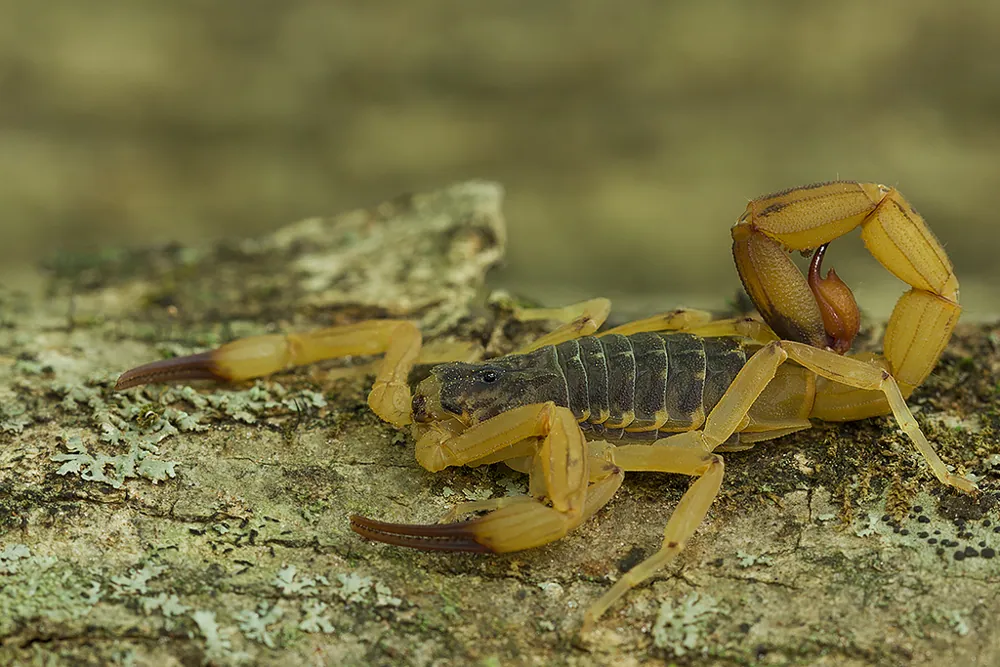
 Maziviro ayo
- Adults are usually 5 to 7 cm long.1
- Legs and pedipalps are pale yellow, while the body and the tip of the tail are a darker yellowish brown.1
- The tail is bulbous and segmented, with prominent ridges and serrations, and is often carried curved forward over the back.1
- The tail ends in a venom-injecting barb.1
Simba reuturu
Uturu hunobuda nerumbori.
Uturu hwayo hunoitei?
Its venom contains an excitatory neurotoxin, which attacks the nerves that control involuntary body functions and releases adrenaline and related chemicals. Mild cases cause mainly localised pain, while more serious cases can bring fever, sweating, tremors, vomiting, agitation, a fast heartbeat and inflammation of the pancreas. Deaths can occur within 1 to 6 hours, or 12 to 14 hours, depending on age, health and the amount of venom injected.1
Ine ngozi yakadii kuvanhu?
Ngozi kuvanhu: Ine ngozi zvikuruInogona kuuraya munhu asina kurapwa.It is responsible for more medically significant accidents than any other scorpion in Brazil, and most of the country's fatal scorpion cases. Mortality rates are 1.0 to 2.0% among children and elderly people. In a nationwide study from 2000 to 2012, Brazil recorded 482,616 scorpion accidents and 728 deaths, and this species was believed to cause most of those deaths.1
Inoitei kana yatya?
It uses its tail barb to deliver defensive strikes.1
 Kana ikabaya
- Tonhodza pakabayiwa nepakiti yechando uye chengeta munhu asingafambe. Wana rubatsiro rwechiremba nokukurumidza, kunyanya kuvana: zvimwe zvinyavada zvinouraya vana.
Gara uchitanga wafonera nhamba yechimbichimbi (112, 000, 911). Iri izano rakajairika rerubatsiro rwekutanga, kwete zano rechiremba. Zvakakosha zverubatsiro rwekutanga
 Gara wakachengeteka
- Usambobata mhuka yesango, kuedza kuitora kana kuinetsa, kunyange iri diki, uye kunyange ichiita seyakarara kana yakafa.
- Ipa nzvimbo. Kana ukasangana nayo, dzikama, dzokera shure zvishoma nezvishoma uirege iende nenzira yayo.
- Kana imwe ikakubaya: dzikama, gara wakanyarara, fonera nhamba yechimbichimbi (112, 000, 911) kana kuti enda kuchipatara nokukurumidza. Rangarira kuti yaitaridzika sei, mufananidzo unobatsira.
Haisi kukutsvaga. Inoshandisa uturu hwayo kubata chikafu kana kuzvidzivirira, uye inotonyanya kuda kuhwanda. Zvimwe pamusoro pekugara wakachengeteka
Yakakura sei?
Yakareba zvakadii?
 yakareba sezvidhinha zvematoyi 2 zvakateedzana
 inogona kumhanya mamita 100 mumasekondi 260 (munhu anomhanyisa kupfuura vose anoda 9.6)
Brazilian yellow scorpion yakakura sei kana yaenzaniswa NEWE?
Masvomhu chete mubrowser yako. Hapana chinochengetwa kana kutumirwa kupi zvako.
Inomhanya zvakadii?


Chokwadi
Reported scorpion stings in Brazil rose from 12,000 in 2000 to 140,000 by 2018.1
It has a low metabolic rate, so it can survive for months without eating.1
Scorpion numbers have grown in Brazilian cities, helped by plenty of cockroaches to eat and few predators.1
Its venom varies by region. Scorpions from Distrito Federal have an LD50 of 51.6 μg/kg, compared with 26 μg/kg for those from Minas Gerais. LD50 is the dose that kills half of the animals tested.1
Its tail is bulbous and segmented, with ridges and serrations, and it often curls forward over its back.1
Kwakabva chokwadi
- Tityus serrulatus (Wikipedia (CC BY-SA 4.0))
- Tityus serrulatus (iNaturalist): mazita nekurongwa kwemhuka.
- Venom Wiki: danho rengozi, saizi yakajairika nekufungidzira kwekumhanya ndezvedu. Ona kuti tinozviwana sei: Matinoyera ngozi.
Chokwadi chimwe nechimwe pane peji rino chine nhamba inoratidza kwachakabva. Kana takakanganisa, ruregerero, tiri vanoda mhuka, kwete magazini yesainzi. Tiudze pa[email protected] tichazvigadzirisa.
 Chinyavada chine nzara! Venom Wiki iprojekiti yemunhu mumwe: yemahara, isina kushambadza uye isina zvinokuteedzera. Chipo chidiki chinobatsira kuti irambe iri paindaneti.Fudza chinyavada
 Amazonian black scorpion
 Caracas scorpion
 Panamanian black scorpion
 Zulia scorpion
 Amazon forest scorpion
 Argentine striped scorpion
 Golden poison frog
 Terciopelo
 Brazilian wandering spider
 Eyelash viper
 Golden lancehead
 South American bushmaster