
 Afrika
 Asia
Asia Yuropu
 Amerika yeKumaodzanyemba
 Australia neOceania
 Antarctica
 Gungwa rePacific
 Gungwa reAtlantic
 Gungwa reIndia
 Gungwa reArctic
 Gungwa reMediterranean
 Gungwa Dzvuku
 Gungwa reCaribbean
 Gungwa reCoral
 Gungwa reChina yeKumaodzanyemba
 Gungwa rePhilippines
 Gungwa reAndaman
 Gungwa reKuchamhembe
 Gungwa reTimor neArafura
 Gungwa reBengal
 Gulf yeCalifornia
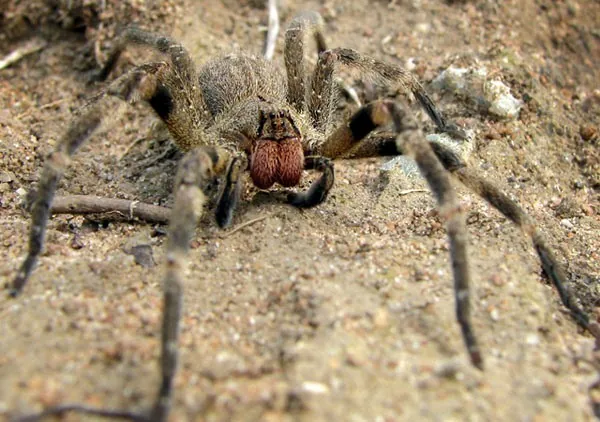
Brazilian wandering spider
 Inoruma
The Brazilian wandering spider is a large, hairy spider whose bite is medically significant. It lives in parts of South America, including Brazil, Uruguay, Paraguay and Argentina, and it is often found near homes. Its bite can cause severe pain and dangerous effects on the heart and breathing.1



 Maziviro ayo
Simba reuturu
Uturu hunobuda nemeno ayo painoruma.
Uturu hwayo hunoitei?
The venom contains neurotoxic peptides, which attack the nerves. These act as calcium channel blockers that disrupt how nerve cells send signals. The venom also causes intense pain and inflammation. At deadly concentrations it causes loss of muscle control, breathing problems, paralysis and eventual asphyxiation. Other symptoms reported include priapism, a rapid heartbeat, irregular heartbeat, cardiogenic shock, fluid in the lungs and convulsions.1
Ine ngozi yakadii kuvanhu?
Ngozi kuvanhu: Ine ngozi zvikuruInogona kuuraya munhu asina kurapwa.Its bite can be life-threatening, and several deaths are documented. Between 1925 and 1945, 415 bites by this species were recorded, and 400 of those people needed antivenom. The spider can give a dry bite with no venom, or a bite with only a small dose.1
 Mashoko akanaka: vanachiremba vane mushonga (antivenom) kana kurapwa kwechinhu ichi.1
Inoitei kana yatya?
When threatened, it raises its first two pairs of legs as a warning.1
 Kana ikaruma
- In the documented cases, victims were treated in hospital with anaesthetics, tetanus prophylaxis, antivenom and fluid replacement. Recovery could take about 36 hours after a bite.1
- Geza parumwa woisa pakiti yechando kuderedza marwadzo. Wana rubatsiro rwechiremba kana marwadzo akanyanya, achipararira kana munhu asinganzwi zvakanaka.
Gara uchitanga wafonera nhamba yechimbichimbi (112, 000, 911). Iri izano rakajairika rerubatsiro rwekutanga, kwete zano rechiremba. Zvakakosha zverubatsiro rwekutanga
 Gara wakachengeteka
- Usambobata mhuka yesango, kuedza kuitora kana kuinetsa, kunyange iri diki, uye kunyange ichiita seyakarara kana yakafa.
- Ipa nzvimbo. Kana ukasangana nayo, dzikama, dzokera shure zvishoma nezvishoma uirege iende nenzira yayo.
- Kana imwe ikakuruma: dzikama, gara wakanyarara, fonera nhamba yechimbichimbi (112, 000, 911) kana kuti enda kuchipatara nokukurumidza. Rangarira kuti yaitaridzika sei, mufananidzo unobatsira.
Haisi kukutsvaga. Inoshandisa uturu hwayo kubata chikafu kana kuzvidzivirira, uye inotonyanya kuda kuhwanda. Zvimwe pamusoro pekugara wakachengeteka
Yakakura sei?
Yakareba zvakadii?
 ipfupi kupfuura munwe wako mudiki
 inogona kumhanya mamita 100 mumasekondi 170 (munhu anomhanyisa kupfuura vose anoda 9.6)
Brazilian wandering spider yakakura sei kana yaenzaniswa NEWE?
Masvomhu chete mubrowser yako. Hapana chinochengetwa kana kutumirwa kupi zvako.
Inomhanya zvakadii?


Chokwadi
A venom component called Tx2-6 is being studied for use in treatments for erectile dysfunction.1
Humans may be about ten times more sensitive to the venom than mice.1
Females may attack males after mating.1
Males perform a dance to attract females, and males may fight each other during courtship.1
Females can store sperm in a separate chamber until they are ready to fertilise their eggs.1
The average venom yield is 1.25 mg, and 0.4 mg in winter.1
Kwakabva chokwadi
- Phoneutria nigriventer (Wikipedia (CC BY-SA 4.0))
- Phoneutria nigriventer (iNaturalist): mazita nekurongwa kwemhuka.
- Venom Wiki: danho rengozi, saizi yakajairika nekufungidzira kwekumhanya ndezvedu. Ona kuti tinozviwana sei: Matinoyera ngozi.
Chokwadi chimwe nechimwe pane peji rino chine nhamba inoratidza kwachakabva. Kana takakanganisa, ruregerero, tiri vanoda mhuka, kwete magazini yesainzi. Tiudze pa[email protected] tichazvigadzirisa.
 Chinyavada chine nzara! Venom Wiki iprojekiti yemunhu mumwe: yemahara, isina kushambadza uye isina zvinokuteedzera. Chipo chidiki chinobatsira kuti irambe iri paindaneti.Fudza chinyavada
 Amazon wandering spider
 Chilean recluse
 Golden silk orb-weaver
 Keyserling's wandering spider
 Argentine black widow
 Bahia wandering spider
 Golden poison frog
 Terciopelo
 Eyelash viper
 Golden lancehead
 South American bushmaster
 Cane toad