
 Afrika
 Asia
Asia Yuropu
 Amerika yeKumaodzanyemba
 Australia neOceania
 Antarctica
 Gungwa rePacific
 Gungwa reAtlantic
 Gungwa reIndia
 Gungwa reArctic
 Gungwa reMediterranean
 Gungwa Dzvuku
 Gungwa reCaribbean
 Gungwa reCoral
 Gungwa reChina yeKumaodzanyemba
 Gungwa rePhilippines
 Gungwa reAndaman
 Gungwa reKuchamhembe
 Gungwa reTimor neArafura
 Gungwa reBengal
 Gulf yeCalifornia
Terciopelo
 Inoruma
The terciopelo is a large pit viper, one of the biggest vipers in the world. It lives from north-east Mexico through Central America to northern South America. It is important to know because it causes more envenomated snakebites than any other snake in its range.1



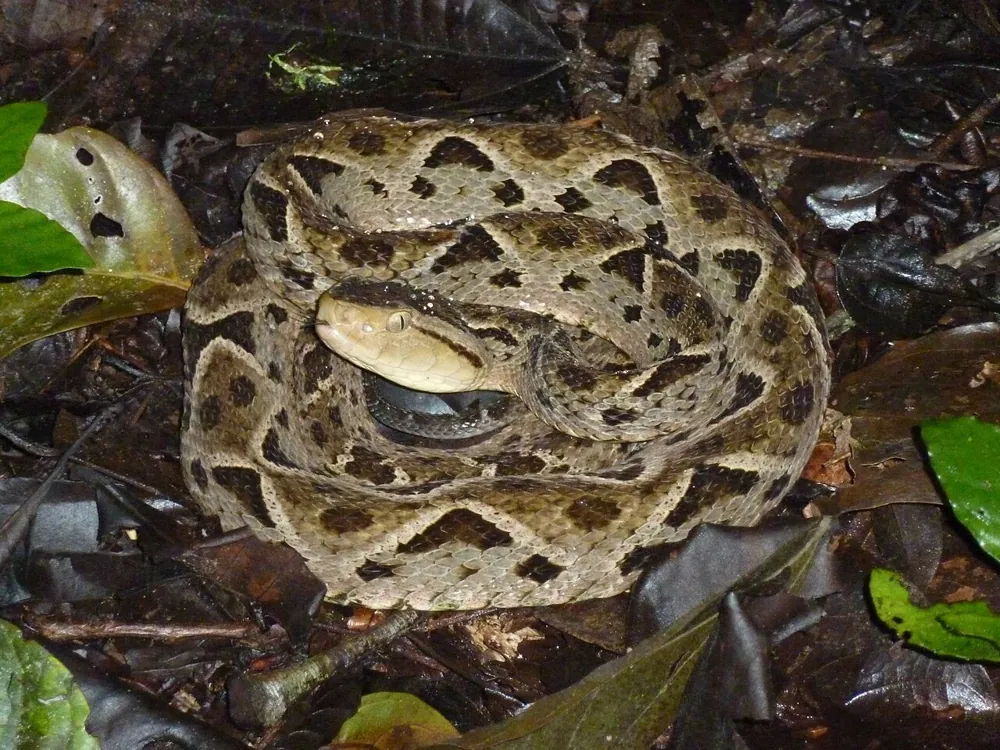
 Maziviro ayo
- Broad, flattened head that is clearly set apart from the neck1
- Light to dark brown, olive, grey or nearly black body1
- Often a yellowish zig-zag line on each side of the body1
- Dark triangles with pale edges along the sides of the body1
- Pale yellow, cream or whitish grey underside with dark blotches1
Inowanzovhiringidzwa ne: Bothrops atrox is similar in colour, but it usually has yellow or rust-like tones and rectangular or trapezoidal blotches. The terciopelo is often more uniformly brown or grey, with the zig-zag pattern on its sides.1
Simba reuturu
Uturu hunobuda nemeno ayo painoruma.
Ine ngozi yakadii kuvanhu?
Ngozi kuvanhu: InourayaImwe yemhuka dzine ngozi zvikuru pasi rose.It is considered one of the most dangerous snakes in its range because it is large, has big fangs and a potent venom, and lives close to people. It is responsible for the most envenomated snakebites within its range. Bites usually happen only when the snake is cornered, pursued or threatened.1
Inoitei kana yatya?
When cornered or threatened, it may perform an S-shaped coiled display and can be very defensive, sometimes suddenly reversing direction to attack.1
 Kana ikaruma
- Chengeta munhu asingafambe uye akadzikama, chengeta nhengo yakarumwa yakaenzana nemwoyo, bvisa mhete nezvinhu zvakasunga, uende kuchipatara nokukurumidza.
Gara uchitanga wafonera nhamba yechimbichimbi (112, 000, 911). Iri izano rakajairika rerubatsiro rwekutanga, kwete zano rechiremba. Zvakakosha zverubatsiro rwekutanga
 Gara wakachengeteka
- Usambobata mhuka yesango, kuedza kuitora kana kuinetsa, kunyange iri diki, uye kunyange ichiita seyakarara kana yakafa.
- Ipa nzvimbo. Kana ukasangana nayo, dzikama, dzokera shure zvishoma nezvishoma uirege iende nenzira yayo.
- Kana imwe ikakuruma: dzikama, gara wakanyarara, fonera nhamba yechimbichimbi (112, 000, 911) kana kuti enda kuchipatara nokukurumidza. Rangarira kuti yaitaridzika sei, mufananidzo unobatsira.
Haisi kukutsvaga. Inoshandisa uturu hwayo kubata chikafu kana kuzvidzivirira, uye inotonyanya kuda kuhwanda. Zvimwe pamusoro pekugara wakachengeteka
Yakakura sei?
Yakareba zvakadii?
Inorema zvakadii?
 yakareba seimbwa 2,5 kubva pamhuno kusvika kumuswe
 yakareba semabhanana 14 akateedzana
 inenge kurema sekatsi yepamba
 inogona kumhanya mamita 100 mumasekondi 86 (munhu anomhanyisa kupfuura vose anoda 9.6)
Terciopelo yakakura sei kana yaenzaniswa NEWE?
Masvomhu chete mubrowser yako. Hapana chinochengetwa kana kutumirwa kupi zvako.
Inomhanya zvakadii?


Chokwadi
Juveniles can lure prey by waving brightly coloured tail tips. Only males have bright tail tips, though both sexes show this behaviour.1
It is one of the largest vipers in the world, and it is often called 'the ultimate pit-viper' by herpetologists.1
Females are much bigger than males. The two sexes are born the same size, but females grow much faster from about 7 to 12 months of age.1
Its home range is small for a pit viper, averaging between about 3.7 and 6 hectares.1
Kuputsa ngano
Ngano: Fer-de-lance is the name of one single snake species.
Chokwadi: The name fer-de-lance has been used informally for several Bothrops species, including this one. Herpetologists now prefer the name terciopelo for Bothrops asper.1
Kwakabva chokwadi
- Bothrops asper (Wikipedia (CC BY-SA 4.0))
- Bothrops asper (iNaturalist): mazita nekurongwa kwemhuka.
- Venom Wiki: danho rengozi, saizi yakajairika nekufungidzira kwekumhanya ndezvedu. Ona kuti tinozviwana sei: Matinoyera ngozi.
Chokwadi chimwe nechimwe pane peji rino chine nhamba inoratidza kwachakabva. Kana takakanganisa, ruregerero, tiri vanoda mhuka, kwete magazini yesainzi. Tiudze pa[email protected] tichazvigadzirisa.
 Chinyavada chine nzara! Venom Wiki iprojekiti yemunhu mumwe: yemahara, isina kushambadza uye isina zvinokuteedzera. Chipo chidiki chinobatsira kuti irambe iri paindaneti.Fudza chinyavada
 Eyelash viper
 Golden lancehead
 South American bushmaster
 Cottonmouth
 Eastern copperhead
 Common lancehead
 Eastern coral snake
 Eastern diamondback rattlesnake
 Timber rattlesnake
 Western diamondback rattlesnake
 Arizona bark scorpion
 Brown recluse