
 Afrika
 Asia
Asia Yuropu
 Amerika yeKumaodzanyemba
 Australia neOceania
 Antarctica
 Gungwa rePacific
 Gungwa reAtlantic
 Gungwa reIndia
 Gungwa reArctic
 Gungwa reMediterranean
 Gungwa Dzvuku
 Gungwa reCaribbean
 Gungwa reCoral
 Gungwa reChina yeKumaodzanyemba
 Gungwa rePhilippines
 Gungwa reAndaman
 Gungwa reKuchamhembe
 Gungwa reTimor neArafura
 Gungwa reBengal
 Gulf yeCalifornia
European purseweb spider
 Inoruma
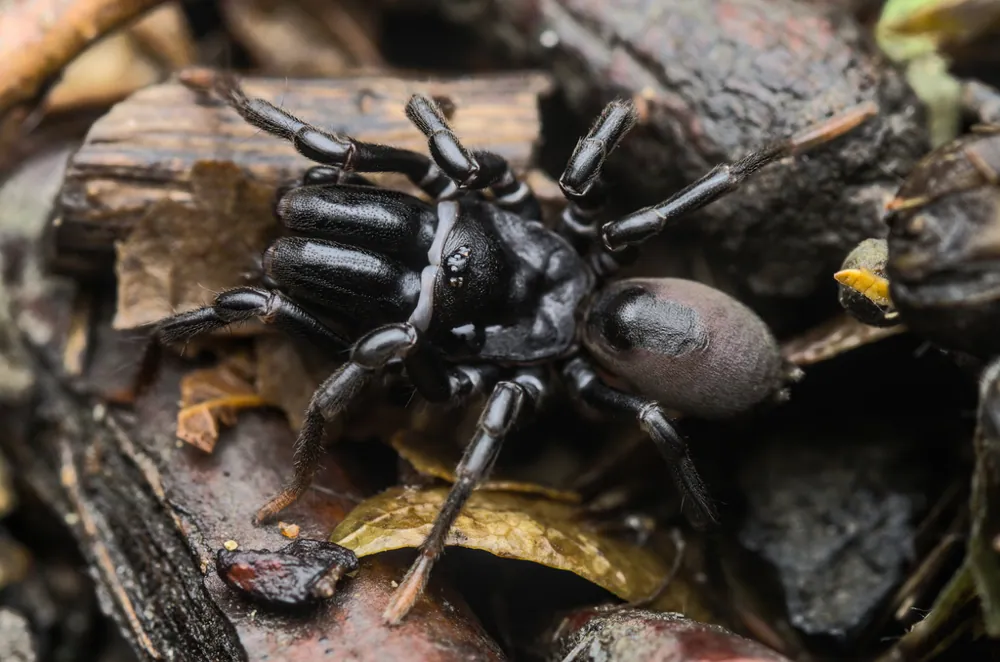
The European purseweb spider is a small, hidden spider that lives in the ground. It is found in mainland Europe, Great Britain and North Africa, and it is the only mygalomorph spider found in the Nordic countries and the United Kingdom. It is special because it builds a silk tube partly under the ground and catches insects that walk onto it.1

 Maziviro ayo
- Black or brownish in colour1
- Not particularly large: males are 7–9 mm and females are 10–15 mm long1
- Builds a silk tube that is partly underground, with the part above ground covered in leaves and other debris1
- Usually stays inside its web and does not leave except to mate1
- Young spiderlings are often very lightly coloured1
Inowanzovhiringidzwa ne: It looks much like Atypus piceus. Spiderlings of the European purseweb spider are often very lightly coloured, and its three-part posterior spinnerets do not have a light blot, which helps tell them apart.1
Simba reuturu
Uturu hunobuda nemeno ayo painoruma.
Ine ngozi yakadii kuvanhu?
Ngozi kuvanhu: Ngozi shomaSenyuchi kubaya kana kushoma. Kazhinji haina ngozi kuvanhu. Kana ikaruma
- Geza parumwa wotonhodza. Wana rubatsiro rwechiremba kana marwadzo akanyanya kana munhu asinganzwi zvakanaka.
Gara uchitanga wafonera nhamba yechimbichimbi (112, 000, 911). Iri izano rakajairika rerubatsiro rwekutanga, kwete zano rechiremba. Zvakakosha zverubatsiro rwekutanga
 Gara wakachengeteka
- Usambobata mhuka yesango, kuedza kuitora kana kuinetsa, kunyange iri diki, uye kunyange ichiita seyakarara kana yakafa.
- Ipa nzvimbo. Kana ukasangana nayo, dzikama, dzokera shure zvishoma nezvishoma uirege iende nenzira yayo.
- Kana imwe ikakuruma: dzikama, gara wakanyarara, fonera nhamba yechimbichimbi (112, 000, 911) kana kuti enda kuchipatara nokukurumidza. Rangarira kuti yaitaridzika sei, mufananidzo unobatsira.
Haisi kukutsvaga. Inoshandisa uturu hwayo kubata chikafu kana kuzvidzivirira, uye inotonyanya kuda kuhwanda. Zvimwe pamusoro pekugara wakachengeteka
Yakakura sei?
Yakareba zvakadii?
 ipfupi kupfuura munwe wako mudiki
 inogona kumhanya mamita 100 mumasekondi 330 (munhu anomhanyisa kupfuura vose anoda 9.6)
European purseweb spider yakakura sei kana yaenzaniswa NEWE?
Masvomhu chete mubrowser yako. Hapana chinochengetwa kana kutumirwa kupi zvako.
Inomhanya zvakadii?


Chokwadi
Its fangs point straight down rather than crossing, as in other mygalomorph spiders.1
Autumn is its mating season. The male enters the female's burrow, where they live together until the male dies soon after mating.1
It is a mygalomorph spider, and it is the only mygalomorph spider found in the Nordic countries and the United Kingdom.1
It becomes sexually mature at about 4 years old.1
Kuputsa ngano
Ngano: The European purseweb spider lives in Ireland.
Chokwadi: It was once listed for Ireland, based on a single silk tube found in 1896. This is now thought to be most likely from a plant nursery import, and the species is no longer recognised as living on the island.1
Kune nyanzvi dzeuturu
Kwakabva chokwadi
- Atypus affinis (Wikipedia (CC BY-SA 4.0))
- Atypus affinis (iNaturalist): mazita nekurongwa kwemhuka.
- Venom Wiki: danho rengozi, saizi yakajairika nekufungidzira kwekumhanya ndezvedu. Ona kuti tinozviwana sei: Matinoyera ngozi.
Chokwadi chimwe nechimwe pane peji rino chine nhamba inoratidza kwachakabva. Kana takakanganisa, ruregerero, tiri vanoda mhuka, kwete magazini yesainzi. Tiudze pa[email protected] tichazvigadzirisa.
 Chinyavada chine nzara! Venom Wiki iprojekiti yemunhu mumwe: yemahara, isina kushambadza uye isina zvinokuteedzera. Chipo chidiki chinobatsira kuti irambe iri paindaneti.Fudza chinyavada
Zvimwe kubva muboka rimwe chete: Matarantula nemafunnel-web
 Gibraltar funnel-web spiderMatarantula nemafunnel-webInongorwadza
 Andalusian tarantulaMatarantula nemafunnel-webIsina ngozi
 Sydney funnel-web spiderMatarantula nemafunnel-webInouraya
 Goliath birdeaterMatarantula nemafunnel-webInongorwadza
 Mexican redknee tarantulaMatarantula nemafunnel-webIsina ngozi
 Northern tree-dwelling funnel-web spiderMatarantula nemafunnel-webInouraya
Inogarawo mu: Yuropu
 Common European adderMavhaipa nemaadderInoda chiremba
 Spanish flyDzimwe mhuka dzine chepfuInoda chirembaUsabata
 Common waspNyuchi, mago nemahornetInongorwadza
 European hornetNyuchi, mago nemahornetInongorwadza
 Fire salamanderMatatya ane chepfu, matoad nemanewtInongorwadzaUsabata
 Western honey beeNyuchi, mago nemahornetInongorwadza