
 Afrika
 Asia
Asia Yuropu
 Amerika yeKumaodzanyemba
 Australia neOceania
 Antarctica
 Gungwa rePacific
 Gungwa reAtlantic
 Gungwa reIndia
 Gungwa reArctic
 Gungwa reMediterranean
 Gungwa Dzvuku
 Gungwa reCaribbean
 Gungwa reCoral
 Gungwa reChina yeKumaodzanyemba
 Gungwa rePhilippines
 Gungwa reAndaman
 Gungwa reKuchamhembe
 Gungwa reTimor neArafura
 Gungwa reBengal
 Gulf yeCalifornia
Fea's viper
 Inoruma
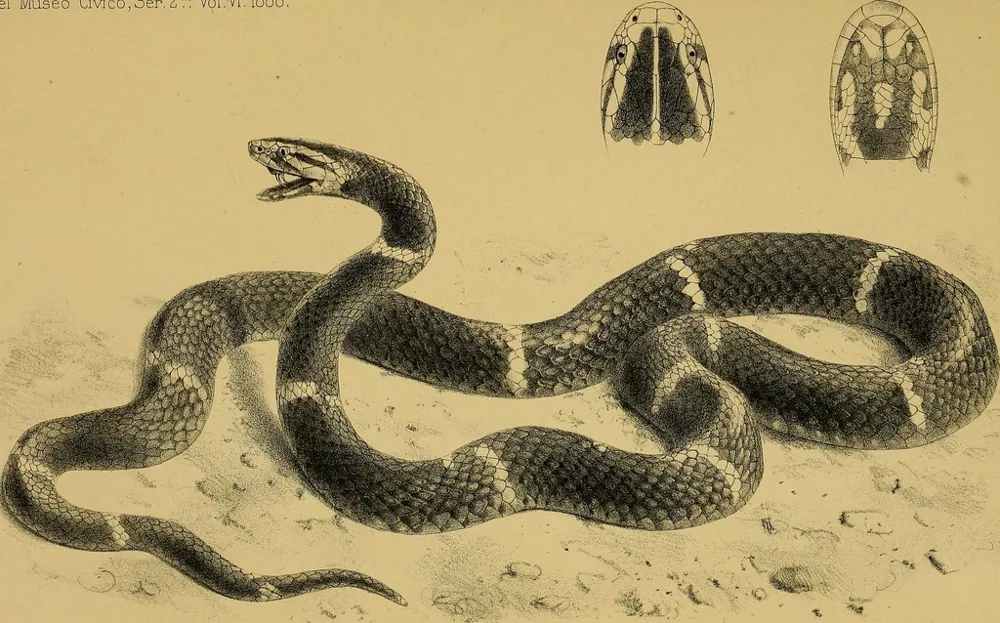
Fea's viper is a venomous snake that lives in the mountains of Southeast Asia. It is special because scientists once thought it was one of the most primitive vipers, but later studies showed it is more closely related to the pit vipers. It can also be found on roadsides, in rice fields and around homes.1

 Maziviro ayo
- The body is shiny, deep blue-grey to black, with several widely spaced, thin white-orange crossbands.1
- The head is orange to slightly yellow, with a cross-pattern outlined in grey.1
- The eyes are yellowish with vertical pupils.1
- The scales are smooth, not keeled, and arranged in 17 rows at midbody.1
- Adults are no longer than about 77 cm.1
Simba reuturu
Uturu hunobuda nemeno ayo painoruma.
Uturu hwayo hunoitei?
Its venom is remarkably similar to that of Wagler's viper. Its venom does not cause blood clotting, bleeding or muscle breakdown, according to the studies described. One toxin, azemiopsin, blocks nicotinic acetylcholine receptors in muscles, which interferes with signals that tell muscles to move.1
Ine ngozi yakadii kuvanhu?
Ngozi kuvanhu: YakakombaKurumwa kunoda chiremba. Kufa hakuwanzoitiki zvachose.Inoitei kana yatya?
When disturbed, it flattens its body to look wider, flares its jaws so the head looks triangular, sometimes vibrates its tail, and then may strike.1
 Kana ikaruma
- Chengeta munhu asingafambe uye akadzikama, chengeta nhengo yakarumwa yakaenzana nemwoyo, bvisa mhete nezvinhu zvakasunga, uende kuchipatara nokukurumidza.
Gara uchitanga wafonera nhamba yechimbichimbi (112, 000, 911). Iri izano rakajairika rerubatsiro rwekutanga, kwete zano rechiremba. Zvakakosha zverubatsiro rwekutanga
 Gara wakachengeteka
- Usambobata mhuka yesango, kuedza kuitora kana kuinetsa, kunyange iri diki, uye kunyange ichiita seyakarara kana yakafa.
- Ipa nzvimbo. Kana ukasangana nayo, dzikama, dzokera shure zvishoma nezvishoma uirege iende nenzira yayo.
- Kana imwe ikakuruma: dzikama, gara wakanyarara, fonera nhamba yechimbichimbi (112, 000, 911) kana kuti enda kuchipatara nokukurumidza. Rangarira kuti yaitaridzika sei, mufananidzo unobatsira.
Haisi kukutsvaga. Inoshandisa uturu hwayo kubata chikafu kana kuzvidzivirira, uye inotonyanya kuda kuhwanda. Zvimwe pamusoro pekugara wakachengeteka
Yakakura sei?
Yakareba zvakadii?
 yakareba semabhanana 4 akateedzana
 inogona kumhanya mamita 100 mumasekondi 100 (munhu anomhanyisa kupfuura vose anoda 9.6)
Fea's viper yakakura sei kana yaenzaniswa NEWE?
Masvomhu chete mubrowser yako. Hapana chinochengetwa kana kutumirwa kupi zvako.
Inomhanya zvakadii?


Chokwadi
Its fangs are hollow and rotate, but they are short. It also has a blade-like structure on the underside of the fang, which is seen only in a few other snake groups.1
It has large head shields like colubrids and elapids, instead of the many small scales found on most vipers.1
It hibernates during the winter, which is unusual for most vipers.1
It is thought to be crepuscular, which means it is most active at dusk and dawn, and it is active from early March into late November.1
Kuputsa ngano
Ngano: It is one of the most primitive vipers.
Chokwadi: It was once thought to be among the most primitive vipers, but molecular studies show it is the sister group to the pit vipers, Crotalinae.1
Kwakabva chokwadi
- Azemiops (Wikipedia (CC BY-SA 4.0))
- Azemiops feae (iNaturalist): mazita nekurongwa kwemhuka.
- Venom Wiki: danho rengozi, saizi yakajairika nekufungidzira kwekumhanya ndezvedu. Ona kuti tinozviwana sei: Matinoyera ngozi.
Chokwadi chimwe nechimwe pane peji rino chine nhamba inoratidza kwachakabva. Kana takakanganisa, ruregerero, tiri vanoda mhuka, kwete magazini yesainzi. Tiudze pa[email protected] tichazvigadzirisa.
 Chinyavada chine nzara! Venom Wiki iprojekiti yemunhu mumwe: yemahara, isina kushambadza uye isina zvinokuteedzera. Chipo chidiki chinobatsira kuti irambe iri paindaneti.Fudza chinyavada
 Indian saw-scaled viper
 Puff adder
 Bvumbi raRussell
 Common European adder
 Eastern Russell's viper
 Northeast African carpet viper
 Deathstalker
 Indian cobra
 King cobra
 Asian giant hornet
 Komodo dragon
 Spanish fly