
 Afrika
 Asia
Asia Yuropu
 Amerika yeKumaodzanyemba
 Australia neOceania
 Antarctica
 Gungwa rePacific
 Gungwa reAtlantic
 Gungwa reIndia
 Gungwa reArctic
 Gungwa reMediterranean
 Gungwa Dzvuku
 Gungwa reCaribbean
 Gungwa reCoral
 Gungwa reChina yeKumaodzanyemba
 Gungwa rePhilippines
 Gungwa reAndaman
 Gungwa reKuchamhembe
 Gungwa reTimor neArafura
 Gungwa reBengal
 Gulf yeCalifornia
Hickory tussock moth
 Mvere dzinobaya
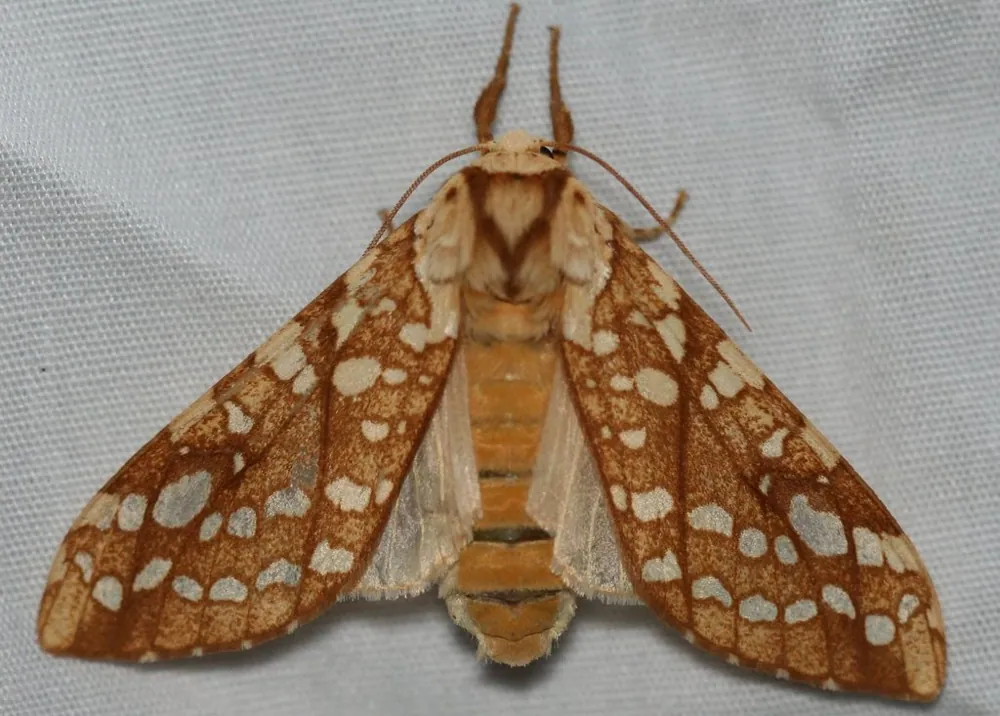
The hickory tussock moth is a moth whose caterpillars are covered in long, hairy tufts. It lives across the eastern half of North America. Its hairs can cause an itchy rash, but no venom has been found in it.1

 Maziviro ayo
- The caterpillar is completely covered in long, hairlike setae arranged in spreading tufts, and most are white.1
- The caterpillar has black tufts along the middle of its back and four long black hair pencils, two near the front and two near the back.1
- The caterpillar has black spots along its sides and a black head capsule.1
- The adult moth has yellowish-brown forewings marked with white splotches, which look like stained glass.1
- The adult moth has mostly white hindwings and a hairy, pale brown body.1
Simba reuturu
Mvere diki dzinodimbukira muganda dzichibaya.
Uturu hwayo hunoitei?
No venom has yet been isolated or identified in this moth. Its hairs cause irritant contact dermatitis, an itchy rash, in many people, especially those prone to allergies. The rash can resemble exposure to urushiol, the irritant found in poison ivy.1
Ine ngozi yakadii kuvanhu?
Ngozi kuvanhu: Ngozi shomaSenyuchi kubaya kana kushoma. Kazhinji haina ngozi kuvanhu.In over 350 documented cases, most people had no symptoms within 24 hours. No case involved anaphylaxis, a severe allergic reaction. The hairs are microscopically barbed, and if they are transferred from the hands to the eyes they may rarely cause serious medical complications.1
 Kana ukabata mvere dzayo
- Kune mvere dzemakonye anobaya: dzibvise nekamatepi kanonamira, wozogeza ganda. Usakwesha.
- Kana yakuruma: geza parumwa wotonhodza. Wana rubatsiro rwechiremba kana munhu asinganzwi zvakanaka kana achibuda ropa zviri nyore.
Gara uchitanga wafonera nhamba yechimbichimbi (112, 000, 911). Iri izano rakajairika rerubatsiro rwekutanga, kwete zano rechiremba. Zvakakosha zverubatsiro rwekutanga
 Gara wakachengeteka
- Usambobata mhuka yesango, kuedza kuitora kana kuinetsa, kunyange iri diki, uye kunyange ichiita seyakarara kana yakafa.
- Ipa nzvimbo. Kana ukasangana nayo, dzikama, dzokera shure zvishoma nezvishoma uirege iende nenzira yayo.
- Kana ukabata mvere dzayo: dzikama, gara wakanyarara, fonera nhamba yechimbichimbi (112, 000, 911) kana kuti enda kuchipatara nokukurumidza. Rangarira kuti yaitaridzika sei, mufananidzo unobatsira.
Haisi kukutsvaga. Inoshandisa uturu hwayo kubata chikafu kana kuzvidzivirira, uye inotonyanya kuda kuhwanda. Zvimwe pamusoro pekugara wakachengeteka
Yakakura sei?
Yakareba zvakadii?
 ipfupi kupfuura munwe wako mudiki
 inononoka kupfuura hozhwa yemugadheni
Hickory tussock moth yakakura sei kana yaenzaniswa NEWE?
Masvomhu chete mubrowser yako. Hapana chinochengetwa kana kutumirwa kupi zvako.
Inomhanya zvakadii?

Chokwadi
The hairs of the caterpillar are microscopically barbed, which is why they can irritate the skin.1
Young caterpillars feed in groups of about 100, but older caterpillars are solitary.1
The adult's forewings are marked with white splotches that look like stained glass.1
The loose cocoon has hairs woven into it and overwinters in leaf litter.1
Kuputsa ngano
Ngano: The hickory tussock moth is venomous, as some anecdotal claims say.
Chokwadi: No venom has been isolated or identified in this species. Its hairs cause an irritant skin rash in many people.1
Kwakabva chokwadi
- Lophocampa caryae (Wikipedia (CC BY-SA 4.0))
- Lophocampa caryae (iNaturalist): mazita nekurongwa kwemhuka.
- Venom Wiki: danho rengozi, saizi yakajairika nekufungidzira kwekumhanya ndezvedu. Ona kuti tinozviwana sei: Matinoyera ngozi.
Chokwadi chimwe nechimwe pane peji rino chine nhamba inoratidza kwachakabva. Kana takakanganisa, ruregerero, tiri vanoda mhuka, kwete magazini yesainzi. Tiudze pa[email protected] tichazvigadzirisa.
 Chinyavada chine nzara! Venom Wiki iprojekiti yemunhu mumwe: yemahara, isina kushambadza uye isina zvinokuteedzera. Chipo chidiki chinobatsira kuti irambe iri paindaneti.Fudza chinyavada
Zvimwe kubva muboka rimwe chete: Makonye nezvipukanana
 Giant water bugMakonye nezvipukananaInongorwadza
 Puss caterpillarMakonye nezvipukananaInongorwadzaUsabata
 Saddleback caterpillarMakonye nezvipukananaInongorwadzaUsabata
 Wheel bugMakonye nezvipukananaInongorwadza
 Giant vinegaroonMakonye nezvipukananaIsina ngozi
 Rhodnius kissing bugMakonye nezvipukananaInoda chiremba
 Terciopelo
 Eastern coral snake
 Eastern diamondback rattlesnake
 Eyelash viper
 Timber rattlesnake
 Western diamondback rattlesnake