
 Afrika
 Asia
Asia Yuropu
 Amerika yeKumaodzanyemba
 Australia neOceania
 Antarctica
 Gungwa rePacific
 Gungwa reAtlantic
 Gungwa reIndia
 Gungwa reArctic
 Gungwa reMediterranean
 Gungwa Dzvuku
 Gungwa reCaribbean
 Gungwa reCoral
 Gungwa reChina yeKumaodzanyemba
 Gungwa rePhilippines
 Gungwa reAndaman
 Gungwa reKuchamhembe
 Gungwa reTimor neArafura
 Gungwa reBengal
 Gulf yeCalifornia
Eastern diamondback rattlesnake
 Inoruma
The eastern diamondback rattlesnake is a pit viper that lives in the southeastern United States. It is the largest rattlesnake species and one of the heaviest venomous snakes in the Americas. Its diamond-patterned back and loud rattle make it easy to recognise, and it is widely regarded as one of the most dangerous venomous snakes in North America.1



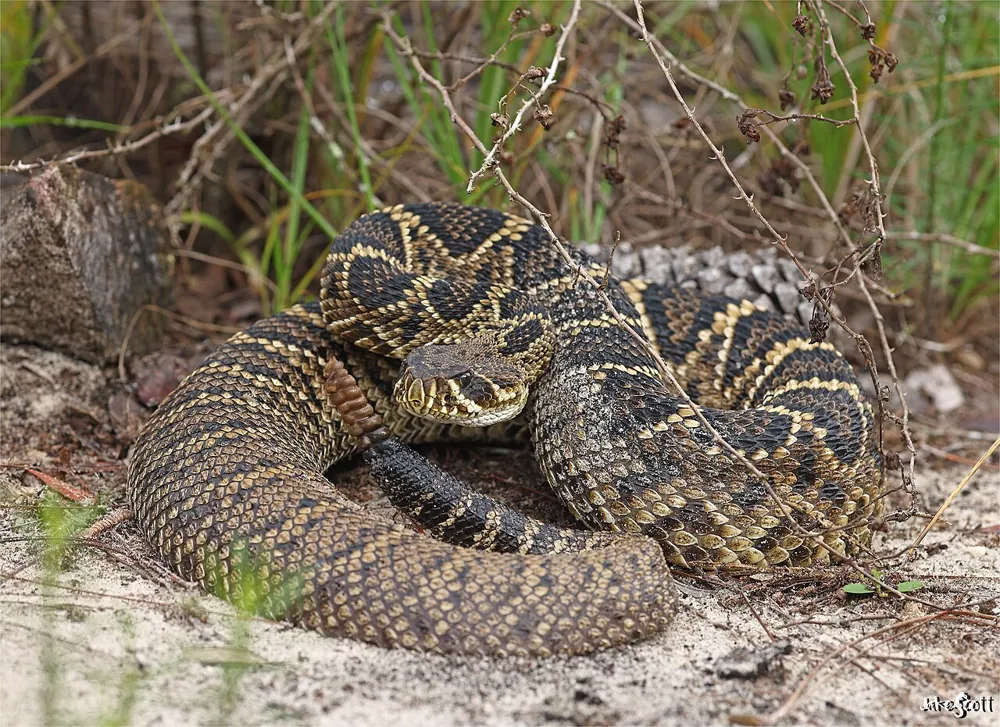
 Maziviro ayo
- Dark brown to black diamond-shaped blotches on a brownish, grey or olive background, each outlined with cream or yellowish scales1
- A dark stripe runs from behind each eye to the mouth corner, edged above and below by white or yellow stripes1
- A rattle of hollow segments at the tail tip, which break off and are replaced when the snake sheds1
- Five to ten bands around the tail, below the diamond pattern1
- A large, heavy body, with adults often around 1.1 to 1.7 m long1
Simba reuturu
Uturu hunobuda nemeno ayo painoruma.
Uturu hwayo hunoitei?
Its venom contains more than 100 different toxins, and about 40 have been identified, making it one of the most studied snake venoms. The venom contains a thrombin-like enzyme called crotalase, which clots fibrinogen, a protein needed for blood clotting. The estimated human lethal dose is 100 to 150 mg.1
Ine ngozi yakadii kuvanhu?
Ngozi kuvanhu: Ine ngozi zvikuruInogona kuuraya munhu asina kurapwa.It has a reputation as the most dangerous venomous snake in North America. It is not usually aggressive, but it is large and powerful. Reported mortality from untreated bites is 10 to 20% in some studies and 30% in another, and it is a major cause of fatal snakebites within its range.1
Inoitei kana yatya?
When threatened, it raises the front half of its body in an S-shaped coil, rattles loudly, and can strike to at least a third of its body length.1
 Kana ikaruma
- Chengeta munhu asingafambe uye akadzikama, chengeta nhengo yakarumwa yakaenzana nemwoyo, bvisa mhete nezvinhu zvakasunga, uende kuchipatara nokukurumidza.
Gara uchitanga wafonera nhamba yechimbichimbi (112, 000, 911). Iri izano rakajairika rerubatsiro rwekutanga, kwete zano rechiremba. Zvakakosha zverubatsiro rwekutanga
 Gara wakachengeteka
- Usambobata mhuka yesango, kuedza kuitora kana kuinetsa, kunyange iri diki, uye kunyange ichiita seyakarara kana yakafa.
- Ipa nzvimbo. Kana ukasangana nayo, dzikama, dzokera shure zvishoma nezvishoma uirege iende nenzira yayo.
- Kana imwe ikakuruma: dzikama, gara wakanyarara, fonera nhamba yechimbichimbi (112, 000, 911) kana kuti enda kuchipatara nokukurumidza. Rangarira kuti yaitaridzika sei, mufananidzo unobatsira.
Haisi kukutsvaga. Inoshandisa uturu hwayo kubata chikafu kana kuzvidzivirira, uye inotonyanya kuda kuhwanda. Zvimwe pamusoro pekugara wakachengeteka
Yakakura sei?
Yakareba zvakadii?
Inorema zvakadii?
 yakareba sekatsi dzepamba 5 kubva pamhuno kusvika kumuswe
 yakareba semabhanana 13 akateedzana
 inogona kumhanya mamita 100 mumasekondi 86 (munhu anomhanyisa kupfuura vose anoda 9.6)
Eastern diamondback rattlesnake yakakura sei kana yaenzaniswa NEWE?
Masvomhu chete mubrowser yako. Hapana chinochengetwa kana kutumirwa kupi zvako.
Inomhanya zvakadii?


Chokwadi
It is the largest rattlesnake species. One specimen shot in 1946 measured 2.4 m and weighed 15.4 kg.1
In proportion to its length, it has the longest fangs of any rattlesnake, with fangs of over 25 mm expected in a 2.4 m adult.1
It can strike its prey within a tenth of a second.1
It can swim well and has been seen crossing water sometimes miles from land.1
Although mainly ground-dwelling, it has been spotted up to 10 m above the ground in bushes and trees.1
Males are usually larger than females, which is a rare pattern called reverse sexual size dimorphism.1
Kuputsa ngano
Ngano: The eastern diamondback must rattle before it strikes.
Chokwadi: It can strike while completely silent. Some individuals stay quiet even when approached closely.1
Kune nyanzvi dzeuturu
- Zita resainzi
- Crotalus adamanteus
- Boka
- Marattlesnake
- Mhuri
- Viperidae2
- Odha
- Squamata
- Makondinendi
- Amerika yeKuchamhembe
- Vacheche
- It gives birth to live young, between 4 and 28 at a time, usually from July to early October. The newborns are 30 to 36 cm long and look like adults, except they have a small button instead of a rattle.1
- Iri kurarama sei musango
- Least Concern on the IUCN Red List (2001), but its population trend is down. It is under review for the US Endangered Species List, and it is considered endangered in North Carolina.1
- Ngozi kuvanhu
- 4 / 5: Ine ngozi zvikuru3
Kwakabva chokwadi
- Eastern diamondback rattlesnake (Wikipedia (CC BY-SA 4.0))
- Crotalus adamanteus (iNaturalist): mazita nekurongwa kwemhuka.
- Venom Wiki: danho rengozi, saizi yakajairika nekufungidzira kwekumhanya ndezvedu. Ona kuti tinozviwana sei: Matinoyera ngozi.
Chokwadi chimwe nechimwe pane peji rino chine nhamba inoratidza kwachakabva. Kana takakanganisa, ruregerero, tiri vanoda mhuka, kwete magazini yesainzi. Tiudze pa[email protected] tichazvigadzirisa.
 Chinyavada chine nzara! Venom Wiki iprojekiti yemunhu mumwe: yemahara, isina kushambadza uye isina zvinokuteedzera. Chipo chidiki chinobatsira kuti irambe iri paindaneti.Fudza chinyavada
 Timber rattlesnake
 Western diamondback rattlesnake
 Sidewinder
 Mojave rattlesnake
 Aruba rattlesnake
 Black-tailed rattlesnake
 Terciopelo
 Eastern coral snake
 Eyelash viper
 Arizona bark scorpion
 Brown recluse
 Cane toad