
 Afrika
 Asia
Asia Yuropu
 Amerika yeKumaodzanyemba
 Australia neOceania
 Antarctica
 Gungwa rePacific
 Gungwa reAtlantic
 Gungwa reIndia
 Gungwa reArctic
 Gungwa reMediterranean
 Gungwa Dzvuku
 Gungwa reCaribbean
 Gungwa reCoral
 Gungwa reChina yeKumaodzanyemba
 Gungwa rePhilippines
 Gungwa reAndaman
 Gungwa reKuchamhembe
 Gungwa reTimor neArafura
 Gungwa reBengal
 Gulf yeCalifornia
Indian ornamental tarantula
 Inoruma
The Indian ornamental tarantula is a large spider that lives high in trees in southeastern India. It is known for its striking patterned body and is a popular spider among tarantula keepers. It has a medically significant bite, though no death from any tarantula bite has ever been recorded.1

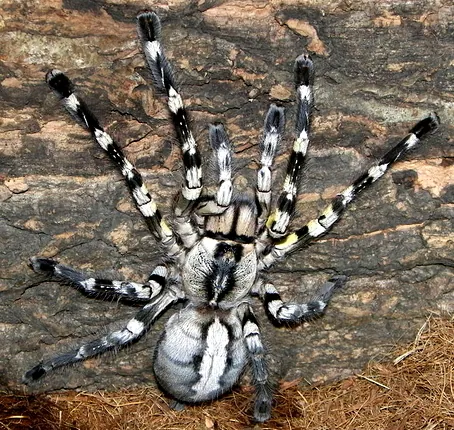
 Maziviro ayo
Simba reuturu
Uturu hunobuda nemeno ayo painoruma.
Uturu hwayo hunoitei?
The venom may cause intense pain. This is judged from the experience of keepers bitten by other spiders in the same genus, so the exact effects are not fully known for this species. The large fangs also make puncture wounds that can become infected.1
Ine ngozi yakadii kuvanhu?
Ngozi kuvanhu: YakakombaKurumwa kunoda chiremba. Kufa hakuwanzoitiki zvachose.No death has ever been recorded from any tarantula bite. The species is still considered to have a medically significant bite. It generally prefers flight to fight but may attack when cornered.1
Inoitei kana yatya?
It tends to be quite defensive, and may attack when cornered, though it generally prefers to escape.1
 Kana ikaruma
- Bites need proper treatment, because the fang punctures can lead to a secondary bacterial infection if they are not treated properly.1
- Geza parumwa wotonhodza. Wana rubatsiro rwechiremba kana marwadzo akanyanya kana munhu asinganzwi zvakanaka.
Gara uchitanga wafonera nhamba yechimbichimbi (112, 000, 911). Iri izano rakajairika rerubatsiro rwekutanga, kwete zano rechiremba. Zvakakosha zverubatsiro rwekutanga
 Gara wakachengeteka
- Usambobata mhuka yesango, kuedza kuitora kana kuinetsa, kunyange iri diki, uye kunyange ichiita seyakarara kana yakafa.
- Ipa nzvimbo. Kana ukasangana nayo, dzikama, dzokera shure zvishoma nezvishoma uirege iende nenzira yayo.
- Kana imwe ikakuruma: dzikama, gara wakanyarara, fonera nhamba yechimbichimbi (112, 000, 911) kana kuti enda kuchipatara nokukurumidza. Rangarira kuti yaitaridzika sei, mufananidzo unobatsira.
Haisi kukutsvaga. Inoshandisa uturu hwayo kubata chikafu kana kuzvidzivirira, uye inotonyanya kuda kuhwanda. Zvimwe pamusoro pekugara wakachengeteka
Yakakura sei?
Yakareba zvakadii?
 yakareba sezvidhinha zvematoyi 6 zvakateedzana
 inogona kumhanya mamita 100 mumasekondi 190 (munhu anomhanyisa kupfuura vose anoda 9.6)
Indian ornamental tarantula yakakura sei kana yaenzaniswa NEWE?
Masvomhu chete mubrowser yako. Hapana chinochengetwa kana kutumirwa kupi zvako.
Inomhanya zvakadii?


Chokwadi
No case of anaphylactic shock, a severe allergic reaction, has ever been reported from tarantula venom.1
Some individuals of this genus live communally when territory is limited, sharing a tree with several holes.1
Females can live upwards of 12 years, while males usually live only 3 to 5 years.1
In captivity, it is usually fed crickets and grasshoppers, and adults can occasionally be fed small rodents.1
It is one of the most popular arboreal tarantulas among amateur collectors.1
Kuputsa ngano
Ngano: Tarantula bites are always deadly.
Chokwadi: No death has ever been recorded from any tarantula bite, although the bite of this species can still be medically significant and cause intense pain.1
Kwakabva chokwadi
- Poecilotheria regalis (Wikipedia (CC BY-SA 4.0))
- Poecilotheria regalis (iNaturalist): mazita nekurongwa kwemhuka.
- Venom Wiki: danho rengozi, saizi yakajairika nekufungidzira kwekumhanya ndezvedu. Ona kuti tinozviwana sei: Matinoyera ngozi.
Chokwadi chimwe nechimwe pane peji rino chine nhamba inoratidza kwachakabva. Kana takakanganisa, ruregerero, tiri vanoda mhuka, kwete magazini yesainzi. Tiudze pa[email protected] tichazvigadzirisa.
 Chinyavada chine nzara! Venom Wiki iprojekiti yemunhu mumwe: yemahara, isina kushambadza uye isina zvinokuteedzera. Chipo chidiki chinobatsira kuti irambe iri paindaneti.Fudza chinyavada
Zvimwe kubva muboka rimwe chete: Matarantula nemafunnel-web
 Gooty sapphire tarantulaMatarantula nemafunnel-webInoda chiremba
 Cobalt blue tarantulaMatarantula nemafunnel-webInongorwadza
 Chinese bird spiderMatarantula nemafunnel-webInoda chiremba
 Chinese black earth tiger tarantulaMatarantula nemafunnel-webInoda chiremba
 Fringed ornamental tarantulaMatarantula nemafunnel-webInoda chiremba
 Japanese funnel-web spiderMatarantula nemafunnel-webInoda chiremba
 Deathstalker
 Indian cobra
 Indian saw-scaled viper
 King cobra
 Puff adder
 Bvumbi raRussell