
 Afrika
 Asia
Asia Yuropu
 Amerika yeKumaodzanyemba
 Australia neOceania
 Antarctica
 Gungwa rePacific
 Gungwa reAtlantic
 Gungwa reIndia
 Gungwa reArctic
 Gungwa reMediterranean
 Gungwa Dzvuku
 Gungwa reCaribbean
 Gungwa reCoral
 Gungwa reChina yeKumaodzanyemba
 Gungwa rePhilippines
 Gungwa reAndaman
 Gungwa reKuchamhembe
 Gungwa reTimor neArafura
 Gungwa reBengal
 Gulf yeCalifornia
Largespot river stingray
 Inobaya
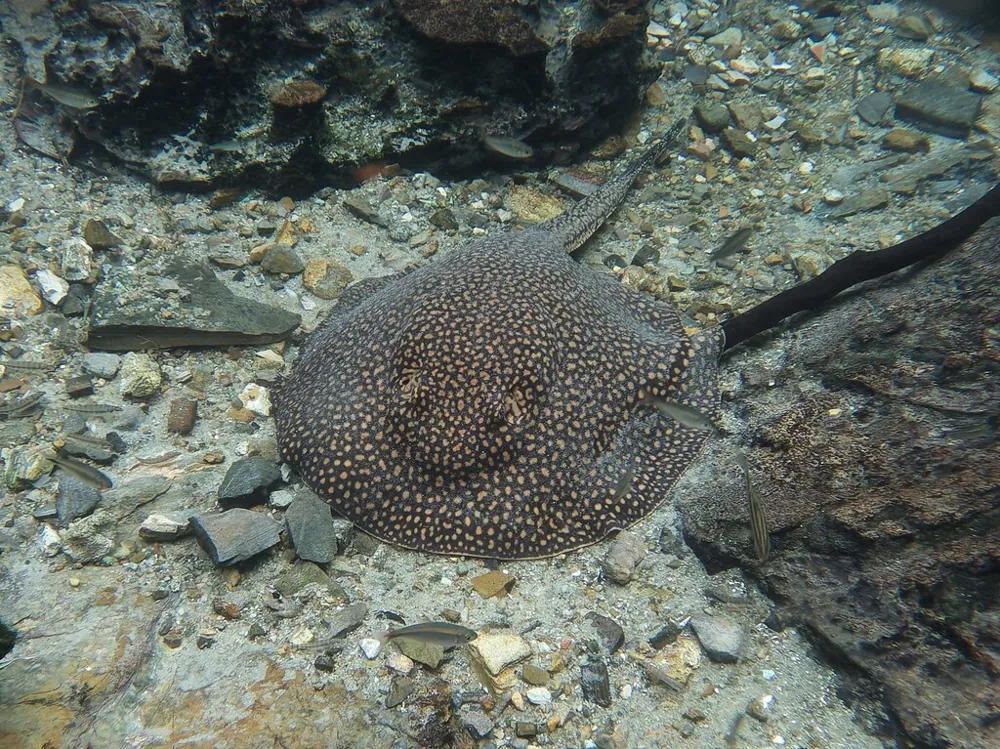
The largespot river stingray is a freshwater stingray with a flat, round body covered in dense spots. It lives in the rivers of tropical and subtropical South America, mainly the Paraná-Paraguay river basin and parts of the upper Amazon. It is sometimes kept in aquariums, but it needs a very large tank.1
 Maziviro ayo
- It is densely spotted on its upper side.1
- The exact colour and pattern vary a lot between individuals, and many intermediate patterns exist.1
- The disc (the flat body) reaches a width of up to 52 cm.1
- Its total length, including the tail, reaches up to 89 cm.1
Inowanzovhiringidzwa ne: The so-called 'tiger stingray' has often been mistaken for this species. It is a separate species, P. tigrina, which was only scientifically described in 2011.1
Simba reuturu
Uturu hunobuda nerumbori.
Ine ngozi yakadii kuvanhu?
Ngozi kuvanhu: YakakombaKubayiwa kunoda chiremba. Kufa hakuwanzoitiki zvachose. Kana ikabaya
- Isa ronda mumvura inopisa, inopisa sezvinokwanisa munhu asina kutsva (iedze neruoko rwako), kwemaminitsi 30 kusvika 90. Wana rubatsiro rwechiremba, kunyanya kustonefish nemastingray.
Gara uchitanga wafonera nhamba yechimbichimbi (112, 000, 911). Iri izano rakajairika rerubatsiro rwekutanga, kwete zano rechiremba. Zvakakosha zverubatsiro rwekutanga
 Gara wakachengeteka
- Usambobata mhuka yesango, kuedza kuitora kana kuinetsa, kunyange iri diki, uye kunyange ichiita seyakarara kana yakafa.
- Ipa nzvimbo. Kana ukasangana nayo, dzikama, dzokera shure zvishoma nezvishoma uirege iende nenzira yayo.
- Kana imwe ikakubaya: dzikama, gara wakanyarara, fonera nhamba yechimbichimbi (112, 000, 911) kana kuti enda kuchipatara nokukurumidza. Rangarira kuti yaitaridzika sei, mufananidzo unobatsira.
Haisi kukutsvaga. Inoshandisa uturu hwayo kubata chikafu kana kuzvidzivirira, uye inotonyanya kuda kuhwanda. Zvimwe pamusoro pekugara wakachengeteka
Yakakura sei?
Yakareba zvakadii?
 yakareba sekatsi dzepamba 2 kubva pamhuno kusvika kumuswe
 yakareba semabhanana 5 akateedzana
 inogona kushambira kureba kwedziva guru rekushambira (50 m) mumasekondi 11
Largespot river stingray yakakura sei kana yaenzaniswa NEWE?
Masvomhu chete mubrowser yako. Hapana chinochengetwa kana kutumirwa kupi zvako.
Inomhanya zvakadii?

Chokwadi
Its natural range was once cut off from the upper Paraná basin by the Guaíra Falls. After the Itaipu Dam was built, the falls disappeared, which let this species and several others spread into that area.1
Its spotted pattern is so variable that one pattern was once described as a separate species, P. castexi, and another as P. menchacai. All of these are now treated as variants of this species.1
It is sometimes kept in aquariums, but it needs a very large tank because of its size.1
Kuputsa ngano
Ngano: The 'tiger stingray' is the same animal as the largespot river stingray.
Chokwadi: The tiger stingray is a separate species, P. tigrina, which was only scientifically described in 2011. It was earlier mistaken for P. menchacai, which is a name for this species.1
Kwakabva chokwadi
- Potamotrygon falkneri (Wikipedia (CC BY-SA 4.0))
- Potamotrygon falkneri (iNaturalist): mazita nekurongwa kwemhuka.
- Venom Wiki: danho rengozi, saizi yakajairika nekufungidzira kwekumhanya ndezvedu. Ona kuti tinozviwana sei: Matinoyera ngozi.
Chokwadi chimwe nechimwe pane peji rino chine nhamba inoratidza kwachakabva. Kana takakanganisa, ruregerero, tiri vanoda mhuka, kwete magazini yesainzi. Tiudze pa[email protected] tichazvigadzirisa.
 Chinyavada chine nzara! Venom Wiki iprojekiti yemunhu mumwe: yemahara, isina kushambadza uye isina zvinokuteedzera. Chipo chidiki chinobatsira kuti irambe iri paindaneti.Fudza chinyavada
 Ocellate river stingray
 Xingu River ray
 Discus ray
 Smooth back river stingray
 Amazon toadfish
 Reef stonefish
 Golden poison frog
 Terciopelo
 Brazilian wandering spider
 Eyelash viper
 Golden lancehead
 South American bushmaster