
 Afrika
 Asia
Asia Yuropu
 Amerika yeKumaodzanyemba
 Australia neOceania
 Antarctica
 Gungwa rePacific
 Gungwa reAtlantic
 Gungwa reIndia
 Gungwa reArctic
 Gungwa reMediterranean
 Gungwa Dzvuku
 Gungwa reCaribbean
 Gungwa reCoral
 Gungwa reChina yeKumaodzanyemba
 Gungwa rePhilippines
 Gungwa reAndaman
 Gungwa reKuchamhembe
 Gungwa reTimor neArafura
 Gungwa reBengal
 Gulf yeCalifornia
Noble false widow
 Inoruma
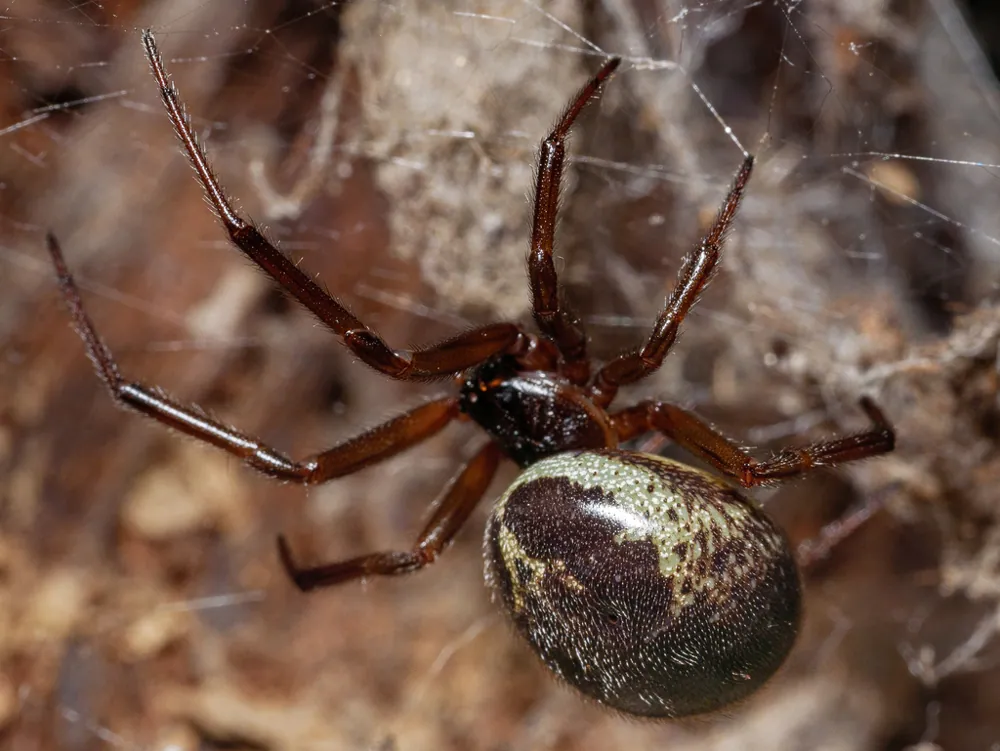
The noble false widow is a spider that looks a lot like the black widow, which is why it has its name. It is now found in many parts of the world, including Europe, the United States and New Zealand, and it is one of the world's most invasive spiders. Its bite can be painful, so it is worth knowing what it looks like.1


 Maziviro ayo
- The abdomen (rear body) is brown and rounded, with cream markings that are often said to look like a skull.1
- The legs are reddish-orange.1
- Adult females are about 9.5 to 14 mm in size, and males are about 7 to 11 mm.1
- It is larger than other spiders in its genus, Steatoda, and has a typical colour pattern.1
Inowanzovhiringidzwa ne: It is often mistaken for the black widow (Latrodectus) and other false widow species. It can be told apart from the black widow by its larger size within its genus and its typical colouring, though many spiders in this group look similar.1
Simba reuturu
Uturu hunobuda nemeno ayo painoruma.
Uturu hwayo hunoitei?
Most of its venom is made of toxins similar to those of the widow spiders, mainly alpha-latrotoxin. This toxin makes holes in nerve cells, which releases chemical messengers and blocks the signals between nerves and muscles, causing paralysis. In people, the venom is most noticeable as pain at the bite site, along with swelling, redness and fever.1
Ine ngozi yakadii kuvanhu?
Ngozi kuvanhu: InorwadzaInogona kurwadza chaizvo, asi kazhinji haisi njodzi huru.It is considered moderately medically significant. Most bites cause symptoms similar to a bee or wasp sting, but some can be more serious, partly because of bacteria. It is considered one of the most dangerous spiders in western Europe. Bites from males are less severe than bites from females, and the bite itself is usually painless, with pain coming from the venom.1
 Kana ikaruma
- Without proper treatment, a bite wound can become infected and develop into gangrene or sepsis, so medical care should be sought.1
- Geza parumwa woisa pakiti yechando kuderedza marwadzo. Wana rubatsiro rwechiremba kana marwadzo akanyanya, achipararira kana munhu asinganzwi zvakanaka.
Gara uchitanga wafonera nhamba yechimbichimbi (112, 000, 911). Iri izano rakajairika rerubatsiro rwekutanga, kwete zano rechiremba. Zvakakosha zverubatsiro rwekutanga
 Gara wakachengeteka
- Usambobata mhuka yesango, kuedza kuitora kana kuinetsa, kunyange iri diki, uye kunyange ichiita seyakarara kana yakafa.
- Ipa nzvimbo. Kana ukasangana nayo, dzikama, dzokera shure zvishoma nezvishoma uirege iende nenzira yayo.
- Kana imwe ikakuruma: dzikama, gara wakanyarara, fonera nhamba yechimbichimbi (112, 000, 911) kana kuti enda kuchipatara nokukurumidza. Rangarira kuti yaitaridzika sei, mufananidzo unobatsira.
Haisi kukutsvaga. Inoshandisa uturu hwayo kubata chikafu kana kuzvidzivirira, uye inotonyanya kuda kuhwanda. Zvimwe pamusoro pekugara wakachengeteka
Yakakura sei?
Yakareba zvakadii?
 diki zvekuti inokwana panzara yako
Noble false widow yakakura sei kana yaenzaniswa NEWE?
Masvomhu chete mubrowser yako. Hapana chinochengetwa kana kutumirwa kupi zvako.
Inomhanya zvakadii?


Chokwadi
The spider often catches prey much larger than itself, including bats, because its venom works quickly.1
It can survive without drinking water, getting all its liquid from its prey.1
Males court females by tapping the web and vibrating their bodies, and they can make scraping sounds with their abdomens.1
It has poor eyesight and relies mainly on vibrations travelling through its web.1
It produces three-dimensional cobwebs, and its silk is unusually strong for its genus.1
One adult female lived almost five and a half years in captivity, and adult females are long-lived.1
Kuputsa ngano
Ngano: It is the same spider as the black widow.
Chokwadi: It only looks similar to the black widow. It belongs to the genus Steatoda, while the black widow belongs to the genus Latrodectus.1
Kune nyanzvi dzeuturu
- Zita resainzi
- Steatoda nobilis
- Boka
- Madandemutande
- Mhuri
- Theridiidae2
- Odha
- Araneae
- Makondinendi
- Yuropu, Afrika
- Vacheche
- Females make egg sacs containing an average of 94 eggs, with a range of 34 to 208 eggs. The young hatch inside the egg sac about 18 days after the eggs are laid.1
- Makore ekurarama
- kunenge makore 51
- Ngozi kuvanhu
- 2 / 5: Inorwadza3
Kwakabva chokwadi
- Steatoda nobilis (Wikipedia (CC BY-SA 4.0))
- Steatoda nobilis (iNaturalist): mazita nekurongwa kwemhuka.
- Venom Wiki: danho rengozi, saizi yakajairika nekufungidzira kwekumhanya ndezvedu. Ona kuti tinozviwana sei: Matinoyera ngozi.
Chokwadi chimwe nechimwe pane peji rino chine nhamba inoratidza kwachakabva. Kana takakanganisa, ruregerero, tiri vanoda mhuka, kwete magazini yesainzi. Tiudze pa[email protected] tichazvigadzirisa.
 Chinyavada chine nzara! Venom Wiki iprojekiti yemunhu mumwe: yemahara, isina kushambadza uye isina zvinokuteedzera. Chipo chidiki chinobatsira kuti irambe iri paindaneti.Fudza chinyavada
Zvimwe kubva muboka rimwe chete: Madandemutande
 Mediterranean black widow
 Six-eyed sand spider
 Brown widow
 Diving bell spider
 European yellow sac spider
 Tarantula wolf spider
Inogarawo mu: Yuropu
 Common European adderMavhaipa nemaadderInoda chiremba
 Spanish flyDzimwe mhuka dzine chepfuInoda chirembaUsabata
 Common waspNyuchi, mago nemahornetInongorwadza
 European hornetNyuchi, mago nemahornetInongorwadza
 Fire salamanderMatatya ane chepfu, matoad nemanewtInongorwadzaUsabata
 Western honey beeNyuchi, mago nemahornetInongorwadza