
 Afrika
 Asia
Asia Yuropu
 Amerika yeKumaodzanyemba
 Australia neOceania
 Antarctica
 Gungwa rePacific
 Gungwa reAtlantic
 Gungwa reIndia
 Gungwa reArctic
 Gungwa reMediterranean
 Gungwa Dzvuku
 Gungwa reCaribbean
 Gungwa reCoral
 Gungwa reChina yeKumaodzanyemba
 Gungwa rePhilippines
 Gungwa reAndaman
 Gungwa reKuchamhembe
 Gungwa reTimor neArafura
 Gungwa reBengal
 Gulf yeCalifornia
Pelagic stingray
 Inobaya
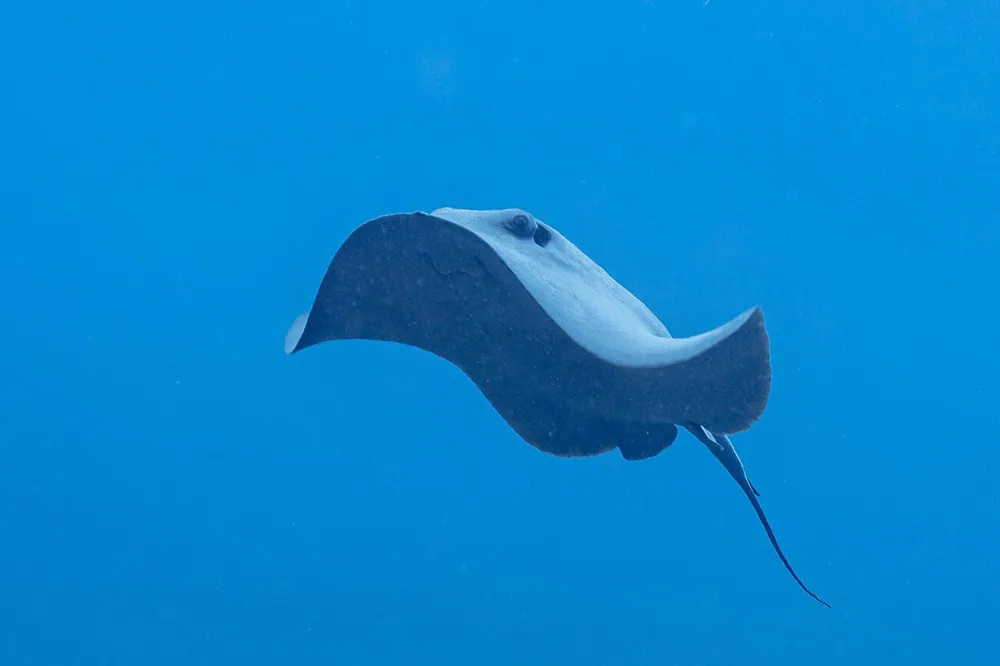
The pelagic stingray is a ray that lives in the open ocean rather than on the sea floor, which sets it apart from almost all other stingrays. It is found in warm waters around much of the world. It can give a severe sting with its tail spine, so it matters most to people who work on fishing boats.1



 Maziviro ayo
- The pectoral fin disc is a thick, wedge-shaped wing that is about one-third wider than it is long.1
- It is a plain dark purple to blue-green above, with a slightly lighter shade below.1
- The tail is whip-like, up to twice as long as the disc, with an extremely long, serrated spine about a third to halfway along it.1
- Young rays are smooth-skinned, and small prickles and thorns appear with age.1
Simba reuturu
Uturu hunobuda nerumbori.
Uturu hwayo hunoitei?
The venom is on the tail spine and is quite potent, which is why other fishes avoid it.1
Ine ngozi yakadii kuvanhu?
Ngozi kuvanhu: YakakombaKubayiwa kunoda chiremba. Kufa hakuwanzoitiki zvachose.It is rarely encountered except by fishery workers. Its tail spine can inflict a severe wound that can be fatal.1
Inoitei kana yatya?
When captured and handled, it releases a thick black mucus that covers its body, and its tail spine delivers venom.1
 Kana ikabaya
- Isa ronda mumvura inopisa, inopisa sezvinokwanisa munhu asina kutsva (iedze neruoko rwako), kwemaminitsi 30 kusvika 90. Wana rubatsiro rwechiremba, kunyanya kustonefish nemastingray.
Gara uchitanga wafonera nhamba yechimbichimbi (112, 000, 911). Iri izano rakajairika rerubatsiro rwekutanga, kwete zano rechiremba. Zvakakosha zverubatsiro rwekutanga
 Gara wakachengeteka
- Usambobata mhuka yesango, kuedza kuitora kana kuinetsa, kunyange iri diki, uye kunyange ichiita seyakarara kana yakafa.
- Ipa nzvimbo. Kana ukasangana nayo, dzikama, dzokera shure zvishoma nezvishoma uirege iende nenzira yayo.
- Kana imwe ikakubaya: dzikama, gara wakanyarara, fonera nhamba yechimbichimbi (112, 000, 911) kana kuti enda kuchipatara nokukurumidza. Rangarira kuti yaitaridzika sei, mufananidzo unobatsira.
Haisi kukutsvaga. Inoshandisa uturu hwayo kubata chikafu kana kuzvidzivirira, uye inotonyanya kuda kuhwanda. Zvimwe pamusoro pekugara wakachengeteka
Kupi pasi rose?
Yakakura sei?
Yakareba zvakadii?
Inorema zvakadii?

 yakareba sekatsi dzepamba 2,5 kubva pamhuno kusvika kumuswe
 yakareba semabhanana 7 akateedzana
 inogona kushambira kureba kwedziva guru rekushambira (50 m) mumasekondi 8,6
Pelagic stingray yakakura sei kana yaenzaniswa NEWE?
Masvomhu chete mubrowser yako. Hapana chinochengetwa kana kutumirwa kupi zvako.
Inomhanya zvakadii?

,_Cabo_de_Palos,_Espa%C3%B1a,_2022-07-16,_DD_68.jpg)
Chokwadi
It is the only stingray that almost exclusively lives in the open ocean rather than on the sea floor.1
Instead of rippling the edges of its disc like other stingrays, it swims by flapping its pectoral fins, similar to eagle rays.1
Both sexes have pointed teeth, which is unusual among stingrays. Only the teeth of adult males are longer and sharper.1
Females can store sperm inside their bodies for more than a year, waiting for good conditions before their young develop.1
A captive female reached 94 cm across and 49 kg, the largest individual on record from a rearing experiment.1
Oceanic whitetip sharks, great white sharks and toothed whales prey on it.1
Kune nyanzvi dzeuturu
- Zita resainzi
- Pteroplatytrygon violacea
- Boka
- Hove dzine uturu
- Mhuri
- Dasyatidae2
- Odha
- Myliobatiformes
- Makondinendi
- Gungwa reAtlantic, Gungwa rePacific, Gungwa reIndia, Gungwa reMediterranean, Gungwa reCaribbean, Makungwa makuru
- Vacheche
- It gives birth to live young. Females may bear two litters of 4 to 13 pups per year after a gestation of 2 to 4 months.1
- Iri kurarama sei musango
- Least Concern1
- Ngozi kuvanhu
- 3 / 5: Yakakomba3
Kwakabva chokwadi
- Pelagic stingray (Wikipedia (CC BY-SA 4.0))
- Pteroplatytrygon violacea (iNaturalist): mazita nekurongwa kwemhuka.
- Venom Wiki: danho rengozi, saizi yakajairika nekufungidzira kwekumhanya ndezvedu. Ona kuti tinozviwana sei: Matinoyera ngozi.
Chokwadi chimwe nechimwe pane peji rino chine nhamba inoratidza kwachakabva. Kana takakanganisa, ruregerero, tiri vanoda mhuka, kwete magazini yesainzi. Tiudze pa[email protected] tichazvigadzirisa.
 Chinyavada chine nzara! Venom Wiki iprojekiti yemunhu mumwe: yemahara, isina kushambadza uye isina zvinokuteedzera. Chipo chidiki chinobatsira kuti irambe iri paindaneti.Fudza chinyavada
Zvimwe kubva muboka rimwe chete: Hove dzine uturu
 Reef stonefishHove dzine uturuInogona kuurayaUsabata
 Red lionfishHove dzine uturuInoda chirembaUsabata
 Estuarine stonefishHove dzine uturuInogona kuurayaUsabata
 Short-tail stingrayHove dzine uturuInogona kuuraya
 Striped eel catfishHove dzine uturuInogona kuurayaUsabata
 Bluespotted ribbontail rayHove dzine uturuInoda chiremba
Inogarawo mu: Gungwa reAtlantic
 Hawksbill sea turtleDzimwe mhuka dzine chepfuInogona kuuraya
 Portuguese man o' warMajellyfish nezvimwe zvinobaya zvegungwaInoda chirembaUsabata
 Blue sea dragonHozhwa dzecone nemaoctopusInongorwadza
 Greenland sharkDzimwe mhuka dzine chepfuInongorwadza
 Lion's mane jellyfishMajellyfish nezvimwe zvinobaya zvegungwaInongorwadzaUsabata
 Common octopusHozhwa dzecone nemaoctopusIsina ngozi