
 Afrika
 Asia
Asia Yuropu
 Amerika yeKumaodzanyemba
 Australia neOceania
 Antarctica
 Gungwa rePacific
 Gungwa reAtlantic
 Gungwa reIndia
 Gungwa reArctic
 Gungwa reMediterranean
 Gungwa Dzvuku
 Gungwa reCaribbean
 Gungwa reCoral
 Gungwa reChina yeKumaodzanyemba
 Gungwa rePhilippines
 Gungwa reAndaman
 Gungwa reKuchamhembe
 Gungwa reTimor neArafura
 Gungwa reBengal
 Gulf yeCalifornia
Spotted eagle ray
 Inobaya
The spotted eagle ray is a flat, disc-shaped fish with dark blue or black skin covered in white spots and a snout shaped like a duck's bill. It lives in warm coastal waters, often near coral reefs and bays. It is known for leaping out of the water, sometimes onto boats.1
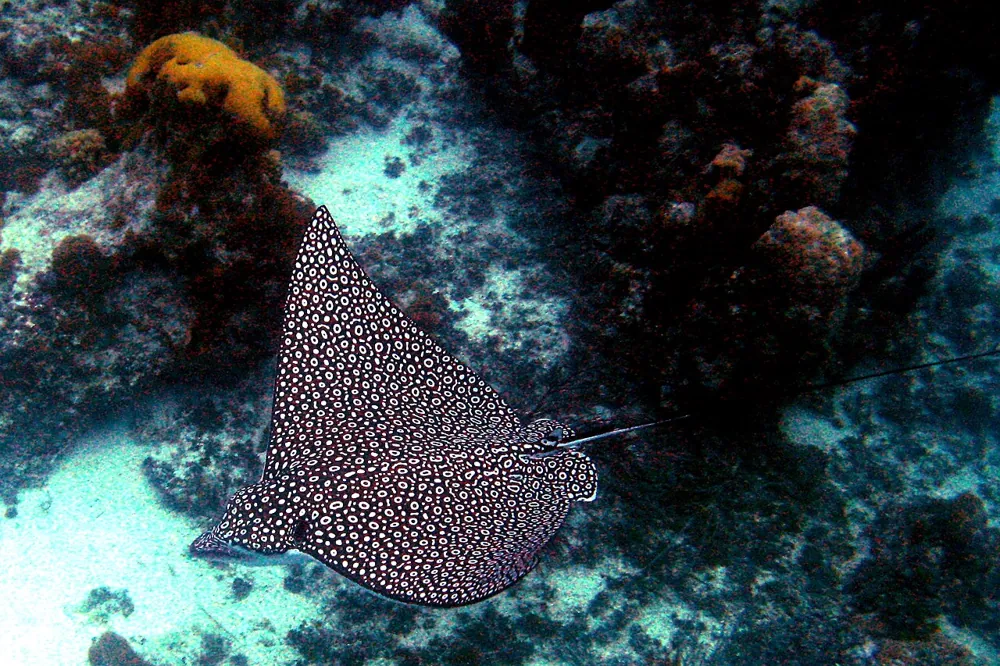
 Maziviro ayo
Simba reuturu
Uturu hunobuda nerumbori.
Ine ngozi yakadii kuvanhu?
Ngozi kuvanhu: InorwadzaInogona kurwadza chaizvo, asi kazhinji haisi njodzi huru.Spotted eagle rays are shy and generally avoid human contact, so they do not pose a significant threat to people. There have been several reports of them leaping onto boats and landing on people. In one incident in the Florida Keys, a woman died.1
Inoitei kana yatya?
When threatened, it can leap out of the water, and it avoids human contact.1
 Kana ikabaya
- Isa ronda mumvura inopisa, inopisa sezvinokwanisa munhu asina kutsva (iedze neruoko rwako), kwemaminitsi 30 kusvika 90. Wana rubatsiro rwechiremba, kunyanya kustonefish nemastingray.
Gara uchitanga wafonera nhamba yechimbichimbi (112, 000, 911). Iri izano rakajairika rerubatsiro rwekutanga, kwete zano rechiremba. Zvakakosha zverubatsiro rwekutanga
 Gara wakachengeteka
- Usambobata mhuka yesango, kuedza kuitora kana kuinetsa, kunyange iri diki, uye kunyange ichiita seyakarara kana yakafa.
- Ipa nzvimbo. Kana ukasangana nayo, dzikama, dzokera shure zvishoma nezvishoma uirege iende nenzira yayo.
- Kana imwe ikakubaya: dzikama, gara wakanyarara, fonera nhamba yechimbichimbi (112, 000, 911) kana kuti enda kuchipatara nokukurumidza. Rangarira kuti yaitaridzika sei, mufananidzo unobatsira.
Haisi kukutsvaga. Inoshandisa uturu hwayo kubata chikafu kana kuzvidzivirira, uye inotonyanya kuda kuhwanda. Zvimwe pamusoro pekugara wakachengeteka
Kupi pasi rose?
Yakakura sei?
Yakareba zvakadii?
Inorema zvakadii?
 yakareba seimbwa 5 kubva pamhuno kusvika kumuswe
 yakareba semabhanana 28 akateedzana
 inogona kushambira kureba kwedziva guru rekushambira (50 m) mumasekondi 6
Spotted eagle ray yakakura sei kana yaenzaniswa NEWE?
Masvomhu chete mubrowser yako. Hapana chinochengetwa kana kutumirwa kupi zvako.
Inomhanya zvakadii?


Chokwadi
The largest spotted eagle rays have a wingspan of up to 3 metres and can weigh 230 kilograms.1
When digging for food, a cloud of sand surrounds the ray and sand is blown out through its gills.1
Sharks such as the tiger shark, bull shark and great hammerhead hunt spotted eagle rays. Sharks have also been seen following females during birth to eat the newborn pups.1
Spotted eagle rays are most often seen alone, but they sometimes swim in groups of 6 or more.1
The Great Barrier Reef protects this ray, and in Florida it is illegal to fish for, land, buy or trade it.1
Newborn pups have discs measuring 17 to 35 centimetres across, and they mature in 4 to 6 years.1
Kuputsa ngano
Ngano: Spotted eagle rays are a major danger to people.
Chokwadi: They are shy and generally avoid human contact, so they do not pose a significant threat to humans. Leaping onto boats is rare but has caused harm.1
Kune nyanzvi dzeuturu
- Zita resainzi
- Aetobatus narinari
- Boka
- Hove dzine uturu
- Mhuri
- Aetobatidae2
- Odha
- Myliobatiformes
- Makondinendi
- Gungwa reAtlantic, Gungwa rePacific, Gungwa reIndia, Gungwa reCaribbean, Gulf yeMexico, Gungwa Dzvuku, Gungwa reTimor neArafura, Gungwa reBengal, Gulf yeCalifornia, Makungwa makuru
- Vacheche
- They give birth to live young. The eggs hatch inside the mother after a gestation period of one year, and she gives birth to a maximum of four pups.1
- Iri kurarama sei musango
- Near Threatened1
- Ngozi kuvanhu
- 2 / 5: Inorwadza3
Kwakabva chokwadi
- Spotted eagle ray (Wikipedia (CC BY-SA 4.0))
- Aetobatus narinari (iNaturalist): mazita nekurongwa kwemhuka.
- Venom Wiki: danho rengozi, saizi yakajairika nekufungidzira kwekumhanya ndezvedu. Ona kuti tinozviwana sei: Matinoyera ngozi.
Chokwadi chimwe nechimwe pane peji rino chine nhamba inoratidza kwachakabva. Kana takakanganisa, ruregerero, tiri vanoda mhuka, kwete magazini yesainzi. Tiudze pa[email protected] tichazvigadzirisa.
 Chinyavada chine nzara! Venom Wiki iprojekiti yemunhu mumwe: yemahara, isina kushambadza uye isina zvinokuteedzera. Chipo chidiki chinobatsira kuti irambe iri paindaneti.Fudza chinyavada
Zvimwe kubva muboka rimwe chete: Hove dzine uturu
 Reef stonefishHove dzine uturuInogona kuurayaUsabata
 Red lionfishHove dzine uturuInoda chirembaUsabata
 Estuarine stonefishHove dzine uturuInogona kuurayaUsabata
 Short-tail stingrayHove dzine uturuInogona kuuraya
 Striped eel catfishHove dzine uturuInogona kuurayaUsabata
 Bluespotted ribbontail rayHove dzine uturuInoda chiremba
Inogarawo mu: Gungwa reAtlantic
 Hawksbill sea turtleDzimwe mhuka dzine chepfuInogona kuuraya
 Portuguese man o' warMajellyfish nezvimwe zvinobaya zvegungwaInoda chirembaUsabata
 Blue sea dragonHozhwa dzecone nemaoctopusInongorwadza
 Greenland sharkDzimwe mhuka dzine chepfuInongorwadza
 Lion's mane jellyfishMajellyfish nezvimwe zvinobaya zvegungwaInongorwadzaUsabata
 Common octopusHozhwa dzecone nemaoctopusIsina ngozi