
 Afrika
 Asia
Asia Yuropa
 Amerika Borwa
 Australia le Oceania
 Antarctica
 Lewatle la Pacific
 Lewatle la Atlantic
 Lewatle la India
 Lewatle la Arctic
 Lewatle la Mediterranean
 Lewatle le Lefubedu
 Lewatle la Caribbean
 Lewatle la Coral
 Lewatle la China Borwa
 Lewatle la Philippine
 Lewatle la Andaman
 Lewatle la Leboya
 Lewatle la Timor le Arafura
 Kgwohlo ya Bengal
 Kgwohlo ya California
Channel catfish
 Meutlwa e nang le chefo
The channel catfish is a freshwater fish native to North America, and it is the continent's most common catfish. It lives in rivers, lakes, ponds and reservoirs, and it is a popular fish for anglers to catch and eat. It has spines on some of its fins that can cause a small injury if it is handled badly.1



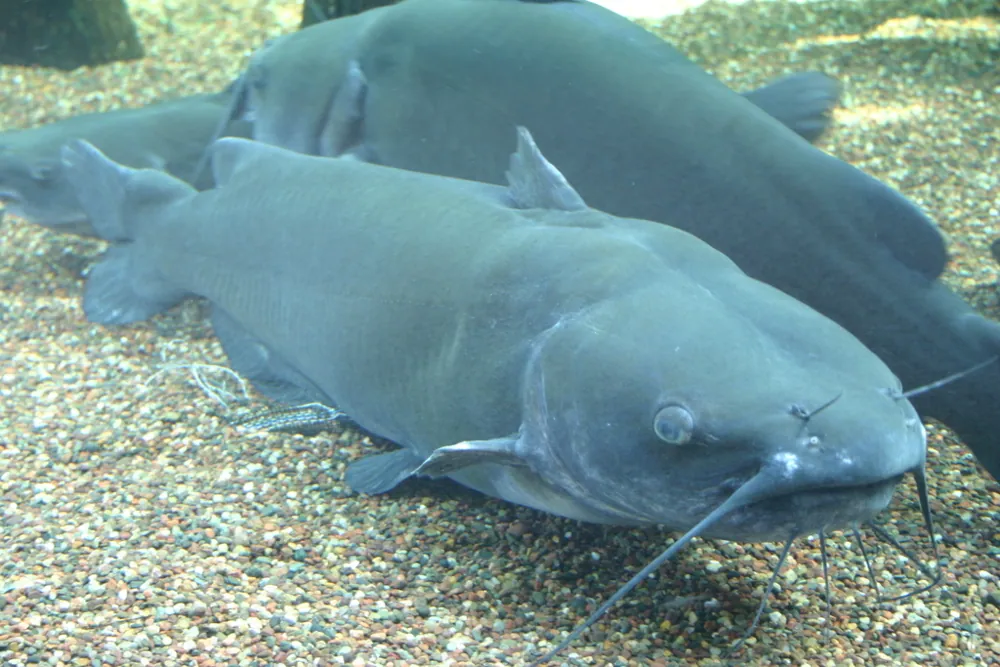
 Ho e tseba jwang
Matla a chefo
Meutlwa e bohale e nka chefo. Ho e hata kapa ho e tshwara ho bohloko.
Chefo ya yona (eo e e kenyang ka ho loma kapa ho hlaba) e etsang?
The pectoral spine has poisonous tissues that help deter predators.1
E kotsi hakae ho batho?
Kotsi ho batho: E bohlokoE ka utlwisa bohloko haholo, empa hoo e batlang e le kamehla ha e kotsi haholo.Its fin spines may cause injury if the fish is handled improperly. A prick from a spine is no more dangerous than a mosquito sting.1
E etsang ha e tshohile?
It can lock its pectoral spine as a defence, and the serrated, poison-bearing spine helps to deter predators.1
 Haeba meutlwa ya yona e o hlaba
- Kenya leqeba metsing a tjhesang, a tjhesang hoo motho a ka a mamellang ntle le ho tjha (a leke ka letsoho la hao pele), metsotso e 30 ho isa ho e 90. Fumana thuso ya bongaka, haholoholo bakeng sa di-stonefish le di-stingray.
Kamehla letsetsa nomoro ya tshohanyetso pele (112, 000, 911). Ena ke tataiso e akaretsang ya thuso ya pele, hase keletso ya bongaka. Metheo ya thuso ya pele
 Dula o bolokehile
- O se ke wa ama, wa tshwara kapa wa tena phoofolo ya naheng, leha e le e nyenyane, le leha e shebahala e robetse kapa e shwele.
- E fe sebaka. Ha o kopana le yona, dula o kgutsitse, kgutlela morao butle mme o e tlohele e tsamaye ka tsela ya yona.
- Haeba meutlwa ya yona e o hlaba: dula o kgutsitse, o se ke wa sisinyeha, letsetsa nomoro ya tshohanyetso (112, 000, 911) kapa o ye sepetlele kapele. Hopola hore e ne e shebahala jwang, foto e a thusa.
Ha e o batle. E sebedisa chefo ya yona ho tshwara dijo kapa ho itshireletsa, mme e kgetha ho ipata. Ho eketsehileng ka ho dula o bolokehile
Hokae lefatsheng?
E kgolo hakae?
E telele hakae?
E boima hakae?

 e telele jwaloka diboloko tsa ho bapala tse 9 moleng
 e ka sesa bolelele ba letangwane le leholo la ho sesa (50 m) ka metsotswana e 21
Channel catfish e kgolo hakae ha e bapiswa le WENA?
Ke dipalo feela ka hara sebatli sa hao. Ha ho letho le bolokwang kapa le romelwang kae kapa kae.
E potlaka hakae?

Dintlha
Taste buds cover the whole body, and they are most dense on the four pairs of barbels around the mouth.1
They can sense certain amino acids in water at about one part per 100 million, which helps them find food in murky water.1
The largest channel catfish on record weighed 26 kg and was caught in South Carolina in 1964.1
Channel catfish are the most fished catfish in the United States, with around 8 million anglers catching them each year.1
Fossils of this species have been found in central North America from the Miocene onwards, and the species has lasted for nearly 20 million years.1
Kansas, Missouri, Nebraska and Tennessee have made the channel catfish their official state fish.1
Ho senya ditshomo
Tshomo: Channel catfish barbels can sting when touched.
Nnete: The barbels cannot sting. The spines on the pectoral and dorsal fins are the only part that can cause injury.1
Bakeng sa ditsebi tsa chefo
Moo dintlha di tswang teng
- Channel catfish (Wikipedia (CC BY-SA 4.0))
- Ictalurus punctatus (iNaturalist): mabitso le tlhophiso.
- Venom Wiki: boemo ba kotsi, boholo bo tlwaelehileng le kakanyo ya lebelo ke tsa rona. Bona kamoo re di balang ka teng: Kamoo re lekanyang kotsi ka teng.
Taba e nngwe le e nngwe leqepheng lena e na le nomoro e bontshang mohlodi wa yona. Haeba re entse phoso, re kopa tshwarelo, re barati ba diphoofolo, hase makasine wa saense. Re bolelle ho [email protected] mme re tla e lokisa.
 Phepheng e lapile! Venom Wiki ke projeke ya motho a le mong: ke mahala, ha e na dipapatso ebile ha e na di-tracker. Thuso e nyenyane ya tjhelete e e boloka e ntse e le inthaneteng.Fepa phepheng
Tse ding tsa sehlopha se le seng: Ditlhapi tse nang le chefo
 Brown bullheadDitlhapi tse nang le chefoE utlwisa bohloko feelaO se ke wa ama
 Carolina madtomDitlhapi tse nang le chefoE utlwisa bohloko feelaO se ke wa ama
 Margined madtomDitlhapi tse nang le chefoE utlwisa bohloko feelaO se ke wa ama
 StonecatDitlhapi tse nang le chefoE utlwisa bohloko feelaO se ke wa ama
 Tadpole madtomDitlhapi tse nang le chefoE utlwisa bohloko feelaO se ke wa ama
 Reef stonefishDitlhapi tse nang le chefoE ka bolayaO se ke wa ama
 Terciopelo
 Eastern coral snake
 Eastern diamondback rattlesnake
 Eyelash viper
 Timber rattlesnake
 Western diamondback rattlesnake