
 Afrika
 Asia
Asia Yuropa
 Amerika Borwa
 Australia le Oceania
 Antarctica
 Lewatle la Pacific
 Lewatle la Atlantic
 Lewatle la India
 Lewatle la Arctic
 Lewatle la Mediterranean
 Lewatle le Lefubedu
 Lewatle la Caribbean
 Lewatle la Coral
 Lewatle la China Borwa
 Lewatle la Philippine
 Lewatle la Andaman
 Lewatle la Leboya
 Lewatle la Timor le Arafura
 Kgwohlo ya Bengal
 Kgwohlo ya California
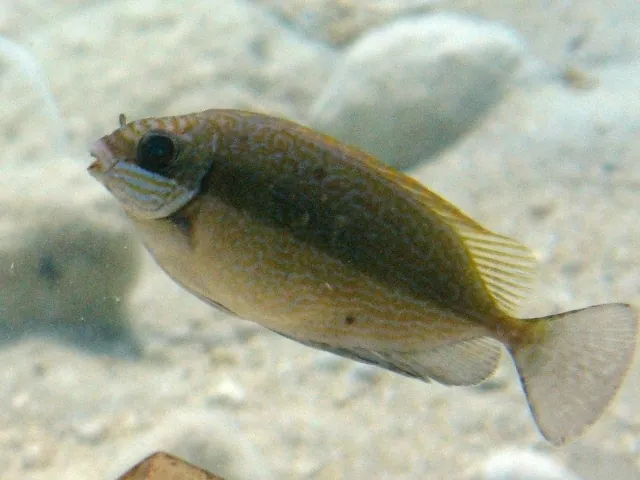
Dusky spinefoot
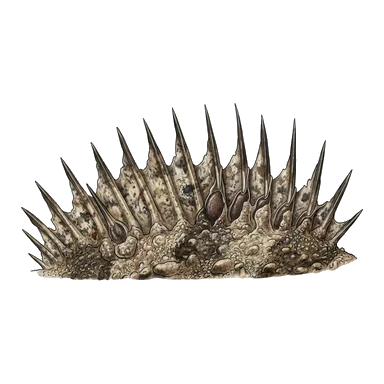 Meutlwa e nang le chefo
The dusky spinefoot is a rabbitfish with venomous spines on its fins. It is native to the western Indian Ocean and has spread into the Mediterranean Sea through the Suez Canal. People also catch it as a food fish.1

 Ho e tseba jwang
Matla a chefo
Meutlwa e bohale e nka chefo. Ho e hata kapa ho e tshwara ho bohloko.
Chefo ya yona (eo e e kenyang ka ho loma kapa ho hlaba) e etsang?
The spines on its fins produce venom. In a study of a related rabbitfish, the venom was found to be similar to stonefish venom.1
E kotsi hakae ho batho?
Kotsi ho batho: E bohlokoE ka utlwisa bohloko haholo, empa hoo e batlang e le kamehla ha e kotsi haholo.When eaten, it has been linked to cases of mild ciguatera-like poisoning. Ciguatera is a form of food poisoning caused by toxins in some reef fish.1
E etsang ha e tshohile?
When threatened, it stops suddenly and raises its dorsal, anal and pelvic fins, showing an array of venomous spines around its body.1
 Haeba meutlwa ya yona e o hlaba
- Kenya leqeba metsing a tjhesang, a tjhesang hoo motho a ka a mamellang ntle le ho tjha (a leke ka letsoho la hao pele), metsotso e 30 ho isa ho e 90. Fumana thuso ya bongaka, haholoholo bakeng sa di-stonefish le di-stingray.
Kamehla letsetsa nomoro ya tshohanyetso pele (112, 000, 911). Ena ke tataiso e akaretsang ya thuso ya pele, hase keletso ya bongaka. Metheo ya thuso ya pele
 Dula o bolokehile
- O se ke wa ama, wa tshwara kapa wa tena phoofolo ya naheng, leha e le e nyenyane, le leha e shebahala e robetse kapa e shwele.
- E fe sebaka. Ha o kopana le yona, dula o kgutsitse, kgutlela morao butle mme o e tlohele e tsamaye ka tsela ya yona.
- Haeba meutlwa ya yona e o hlaba: dula o kgutsitse, o se ke wa sisinyeha, letsetsa nomoro ya tshohanyetso (112, 000, 911) kapa o ye sepetlele kapele. Hopola hore e ne e shebahala jwang, foto e a thusa.
Ha e o batle. E sebedisa chefo ya yona ho tshwara dijo kapa ho itshireletsa, mme e kgetha ho ipata. Ho eketsehileng ka ho dula o bolokehile
Hokae lefatsheng?
E kgolo hakae?
E telele hakae?
 e telele jwaloka diboloko tsa ho bapala tse 9 moleng
 e ka sesa bolelele ba letangwane le leholo la ho sesa (50 m) ka metsotswana e 36
Dusky spinefoot e kgolo hakae ha e bapiswa le WENA?
Ke dipalo feela ka hara sebatli sa hao. Ha ho letho le bolokwang kapa le romelwang kae kapa kae.
E potlaka hakae?
Dintlha
Its spines are mainly a defence against predators. The highest predation pressure falls on its larvae and planktonic stages.1
It came to the Mediterranean through the Suez Canal. It was first recorded off Israel in 1955 and has since spread as far west as the French Mediterranean coast and the Adriatic Sea.1
It is a daytime feeder. At night it hides in cavities in the reef.1
It is an important fish for fisheries in the Mediterranean. In Kenya, it is caught mainly as bycatch.1
Bakeng sa ditsebi tsa chefo
- Lebitso la saense
- Siganus luridus
- Sehlopha
- Ditlhapi tse nang le chefo
- Lelapa
- Siganidae2
- Tatelano
- Acanthuriformes
- Dikontinente
- Lewatle la India, Lewatle le Lefubedu, Lewatle la Mediterranean, Lewatle la Arabia le Kgwohlo ya Persia, Mawatle
- Masea
- It spawns in April and from June to August, when seawater is between 24 and 29 °C. The eggs and larvae drift in the plankton near the surface.1
- Kotsi ho batho
- 2 / 5: E bohloko3
Moo dintlha di tswang teng
- Dusky spinefoot (Wikipedia (CC BY-SA 4.0))
- Siganus luridus (iNaturalist): mabitso le tlhophiso.
- Venom Wiki: boemo ba kotsi, boholo bo tlwaelehileng le kakanyo ya lebelo ke tsa rona. Bona kamoo re di balang ka teng: Kamoo re lekanyang kotsi ka teng.
Taba e nngwe le e nngwe leqepheng lena e na le nomoro e bontshang mohlodi wa yona. Haeba re entse phoso, re kopa tshwarelo, re barati ba diphoofolo, hase makasine wa saense. Re bolelle ho [email protected] mme re tla e lokisa.
 Phepheng e lapile! Venom Wiki ke projeke ya motho a le mong: ke mahala, ha e na dipapatso ebile ha e na di-tracker. Thuso e nyenyane ya tjhelete e e boloka e ntse e le inthaneteng.Fepa phepheng
Tse ding tsa sehlopha se le seng: Ditlhapi tse nang le chefo
 Reef stonefishDitlhapi tse nang le chefoE ka bolayaO se ke wa ama
 Red lionfishDitlhapi tse nang le chefoE hloka ngakaO se ke wa ama
 Estuarine stonefishDitlhapi tse nang le chefoE ka bolayaO se ke wa ama
 Short-tail stingrayDitlhapi tse nang le chefoE ka bolaya
 Striped eel catfishDitlhapi tse nang le chefoE ka bolayaO se ke wa ama
 Bluespotted ribbontail rayDitlhapi tse nang le chefoE hloka ngaka
E boetse e phela: Lewatle la India
 Australian box jellyfishDi-jellyfish le diphoofolo tsa lewatle tse hlabangE a bolayaO se ke wa ama
 Geography coneDikgofu tsa cone le di-octopusE a bolaya
 Greater blue-ringed octopusDikgofu tsa cone le di-octopusE a bolaya
 Southern blue-ringed octopusDikgofu tsa cone le di-octopusE a bolaya
 Hawksbill sea turtleDiphoofolo tse ding tse chefangE ka bolaya
 Irukandji jellyfishDi-jellyfish le diphoofolo tsa lewatle tse hlabangE ka bolayaO se ke wa ama