
 Afrika
 Asia
Asia Yuropa
 Amerika Borwa
 Australia le Oceania
 Antarctica
 Lewatle la Pacific
 Lewatle la Atlantic
 Lewatle la India
 Lewatle la Arctic
 Lewatle la Mediterranean
 Lewatle le Lefubedu
 Lewatle la Caribbean
 Lewatle la Coral
 Lewatle la China Borwa
 Lewatle la Philippine
 Lewatle la Andaman
 Lewatle la Leboya
 Lewatle la Timor le Arafura
 Kgwohlo ya Bengal
 Kgwohlo ya California
Eastern bloodsucking conenose
 Ho loma
The eastern bloodsucking conenose is a winged insect that feeds on blood. It belongs to the group called kissing bugs and lives across North America and Latin America, especially in the southeastern United States. It matters because it can carry the parasite that causes Chagas disease.1



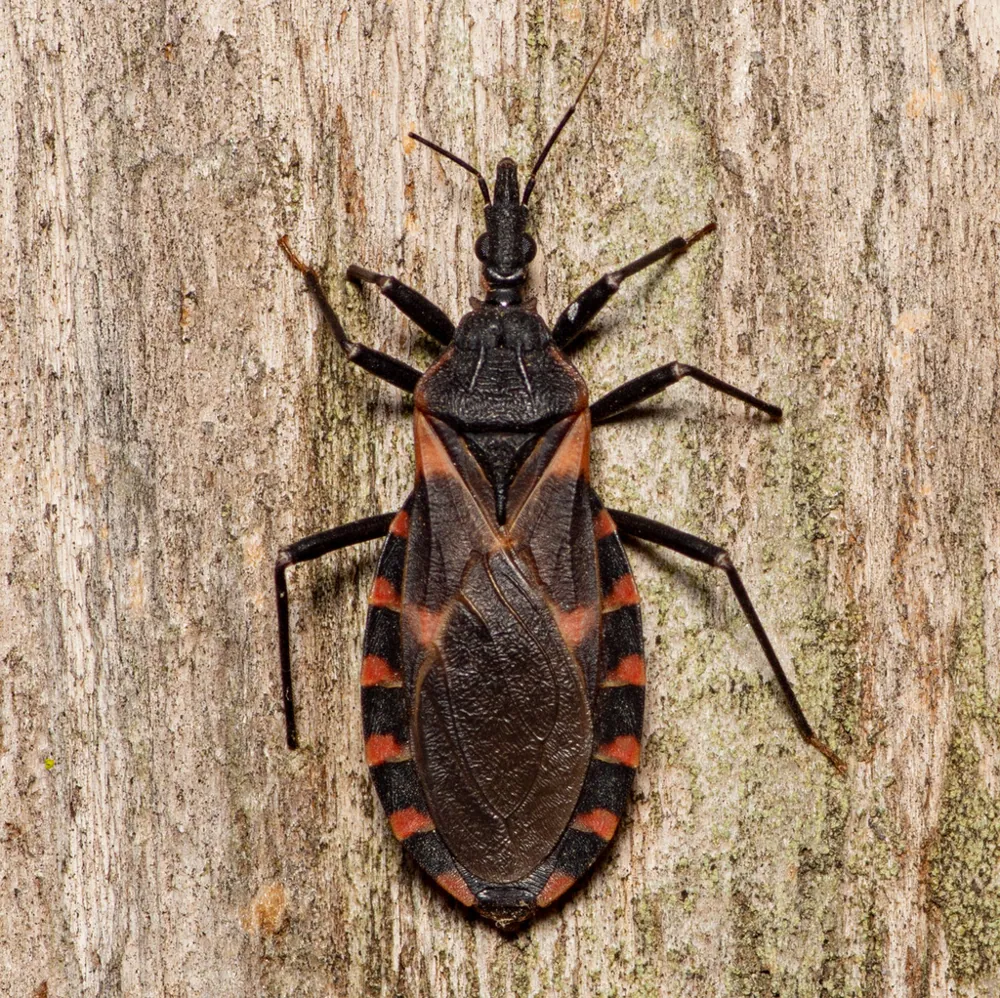
 Ho e tseba jwang
Matla a chefo
Chefo e tswa ka meno a yona a chefo (fangs) kapa ka meno a mang ha e loma.
E kotsi hakae ho batho?
Kotsi ho batho: E bohlokoE ka utlwisa bohloko haholo, empa hoo e batlang e le kamehla ha e kotsi haholo.Its bites are usually not particularly painful, but they are irritating. Bites can spread Trypanosoma cruzi, which causes Chagas disease. An estimated six to eight million people are currently infected, mainly in South America, with around 28,000 new cases each year. Documented cases in the United States are rare, with seven human infections from any Triatoma species reported in Texas, California, Tennessee and Louisiana.1
 Haeba e loma
- Bakeng sa boya bo hlabang ba diboko: bo tlose ka theipi e kgomarelang, ebe o hlatswa letlalo. O se ke wa hohla.
- Bakeng sa ho longwa: hlatswa mme o pholise. Fumana thuso ya bongaka haeba motho a ikutlwa a kula kapa a tswa madi habonolo.
Kamehla letsetsa nomoro ya tshohanyetso pele (112, 000, 911). Ena ke tataiso e akaretsang ya thuso ya pele, hase keletso ya bongaka. Metheo ya thuso ya pele
 Dula o bolokehile
- O se ke wa ama, wa tshwara kapa wa tena phoofolo ya naheng, leha e le e nyenyane, le leha e shebahala e robetse kapa e shwele.
- E fe sebaka. Ha o kopana le yona, dula o kgutsitse, kgutlela morao butle mme o e tlohele e tsamaye ka tsela ya yona.
- Haeba e nngwe e o loma: dula o kgutsitse, o se ke wa sisinyeha, letsetsa nomoro ya tshohanyetso (112, 000, 911) kapa o ye sepetlele kapele. Hopola hore e ne e shebahala jwang, foto e a thusa.
Ha e o batle. E sebedisa chefo ya yona ho tshwara dijo kapa ho itshireletsa, mme e kgetha ho ipata. Ho eketsehileng ka ho dula o bolokehile
Hokae lefatsheng?
E kgolo hakae?
E telele hakae?
 e telele jwaloka klipi ya pampiri
Eastern bloodsucking conenose e kgolo hakae ha e bapiswa le WENA?
Ke dipalo feela ka hara sebatli sa hao. Ha ho letho le bolokwang kapa le romelwang kae kapa kae.
E potlaka hakae?


Dintlha
It bites people in the face, usually around the mouth or eyes, most often while they are asleep.1
At one location in Louisiana, 40% of these bugs were found to carry Trypanosoma cruzi, and 38% of those had fed on humans.1
Annual new cases of Chagas disease fell from about 700,000 in 1990 to around 28,000 today.1
Ho senya ditshomo
Tshomo: A bite from this bug directly gives you Chagas disease.
Nnete: Infection usually happens when the bug's faeces get into the bite site, for example when a sleeping person scratches or rubs their face. This species does not defecate while feeding, which makes transmission much less likely.1
Bakeng sa ditsebi tsa chefo
- Lebitso la saense
- Triatoma sanguisuga
- Sehlopha
- Diboko le dikokoanyana
- Lelapa
- Reduviidae2
- Tatelano
- Hemiptera
- Dikontinente
- Amerika Leboya
- Masea
- The female typically lays eggs four to six days after a blood meal, and one female may lay hundreds of eggs in her lifetime. After hatching, the young bug feeds on blood and moults eight times before it becomes an adult.1
- Kotsi ho batho
- 2 / 5: E bohloko3
Moo dintlha di tswang teng
- Triatoma sanguisuga (Wikipedia (CC BY-SA 4.0))
- Triatoma sanguisuga (iNaturalist): mabitso le tlhophiso.
- Venom Wiki: boemo ba kotsi, boholo bo tlwaelehileng le kakanyo ya lebelo ke tsa rona. Bona kamoo re di balang ka teng: Kamoo re lekanyang kotsi ka teng.
Taba e nngwe le e nngwe leqepheng lena e na le nomoro e bontshang mohlodi wa yona. Haeba re entse phoso, re kopa tshwarelo, re barati ba diphoofolo, hase makasine wa saense. Re bolelle ho [email protected] mme re tla e lokisa.
 Phepheng e lapile! Venom Wiki ke projeke ya motho a le mong: ke mahala, ha e na dipapatso ebile ha e na di-tracker. Thuso e nyenyane ya tjhelete e e boloka e ntse e le inthaneteng.Fepa phepheng
Tse ding tsa sehlopha se le seng: Diboko le dikokoanyana
 Giant water bugDiboko le dikokoanyanaE utlwisa bohloko feela
 Puss caterpillarDiboko le dikokoanyanaE utlwisa bohloko feelaO se ke wa ama
 Saddleback caterpillarDiboko le dikokoanyanaE utlwisa bohloko feelaO se ke wa ama
 Wheel bugDiboko le dikokoanyanaE utlwisa bohloko feela
 Giant vinegaroonDiboko le dikokoanyanaHa e na kotsi
 Rhodnius kissing bugDiboko le dikokoanyanaE hloka ngaka
 Terciopelo
 Eastern coral snake
 Eastern diamondback rattlesnake
 Eyelash viper
 Timber rattlesnake
 Western diamondback rattlesnake