
 Afrika
 Asia
Asia Yuropa
 Amerika Borwa
 Australia le Oceania
 Antarctica
 Lewatle la Pacific
 Lewatle la Atlantic
 Lewatle la India
 Lewatle la Arctic
 Lewatle la Mediterranean
 Lewatle le Lefubedu
 Lewatle la Caribbean
 Lewatle la Coral
 Lewatle la China Borwa
 Lewatle la Philippine
 Lewatle la Andaman
 Lewatle la Leboya
 Lewatle la Timor le Arafura
 Kgwohlo ya Bengal
 Kgwohlo ya California
Mali cobra
 E a fafatsa kapa e a tshwela
The Mali cobra is a spitting cobra from West Africa. It lives in grasslands, open forests and savannas, and it can spit venom at anything it sees as a threat. Knowing what it looks like and how it behaves helps people keep a safe distance.1
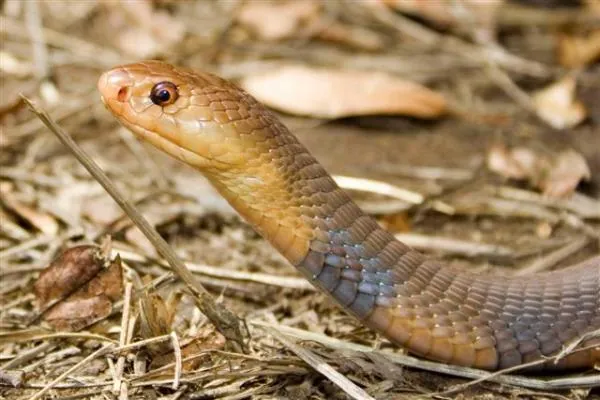
 Ho e tseba jwang
Matla a chefo
E fafatsa kapa e tshwela mokedikedi o hlabang ho ba e hlaselang.
Chefo ya yona (eo e e kenyang ka ho loma kapa ho hlaba) e etsang?
Its venom is spat towards opponents, rather than being delivered only by a bite. The venom contains postsynaptic neurotoxins, which attack the nerves, and cardiotoxins, which harm the heart. Together they cause cytotoxic activity, meaning they damage cells.1
E kotsi hakae ho batho?
Kotsi ho batho: E kotsi haholoE ka bolaya motho ya sa fumaneng kalafo.It will bite if it is handled or accidentally stepped on, and it will spit venom if it is provoked further.1
E etsang ha e tshohile?
When disturbed it tries to escape quickly to cover. If cornered, it rears up and spreads its hood, and if provoked further it spits venom.1
 Haeba e loma kapa e tshwela
- Boloka motho a sa sisinyehe ebile a kgutsitse, tlosa mesale le dintho tse tiileng, mme o mo ise sepetlele kapele: antivenom ke yona kalafo.
- Haeba chefo e tshwetswe mahlong, a hlatswe ka metsi a mangata a hlwekileng hang-hang.
Kamehla letsetsa nomoro ya tshohanyetso pele (112, 000, 911). Ena ke tataiso e akaretsang ya thuso ya pele, hase keletso ya bongaka. Metheo ya thuso ya pele
 Dula o bolokehile
- O se ke wa ama, wa tshwara kapa wa tena phoofolo ya naheng, leha e le e nyenyane, le leha e shebahala e robetse kapa e shwele.
- E fe sebaka. Ha o kopana le yona, dula o kgutsitse, kgutlela morao butle mme o e tlohele e tsamaye ka tsela ya yona.
- Haeba e nngwe e o loma kapa e o tshwela chefo mahlong: dula o kgutsitse, o se ke wa sisinyeha, letsetsa nomoro ya tshohanyetso (112, 000, 911) kapa o ye sepetlele kapele. Hopola hore e ne e shebahala jwang, foto e a thusa.
Ha e o batle. E sebedisa chefo ya yona ho tshwara dijo kapa ho itshireletsa, mme e kgetha ho ipata. Ho eketsehileng ka ho dula o bolokehile
Hokae lefatsheng?
E kgolo hakae?
E telele hakae?
 e telele jwaloka dikatse tsa lapeng tse 1,5 ho tloha nkong ho isa mohatleng
 e telele jwaloka dibanana tse 4 tse latellanang
 e ka matha metara e 100 ka metsotswana e 55 (motho ya potlakang ka ho fetisisa o hloka 9,6)
Mali cobra e kgolo hakae ha e bapiswa le WENA?
Ke dipalo feela ka hara sebatli sa hao. Ha ho letho le bolokwang kapa le romelwang kae kapa kae.
E potlaka hakae?


Dintlha
The Mali cobra spits its venom at its opponents rather than relying only on biting.1
Its venom contains two kinds of toxin: one that attacks the nerves and one that harms the heart.1
Adults are active by both day and night, while juveniles come out only in daylight.1
It often climbs into small bushes, so it is not only a ground-dweller.1
Moo dintlha di tswang teng
- Mali cobra (Wikipedia (CC BY-SA 4.0))
- Naja katiensis (iNaturalist): mabitso le tlhophiso.
- Venom Wiki: boemo ba kotsi, boholo bo tlwaelehileng le kakanyo ya lebelo ke tsa rona. Bona kamoo re di balang ka teng: Kamoo re lekanyang kotsi ka teng.
Taba e nngwe le e nngwe leqepheng lena e na le nomoro e bontshang mohlodi wa yona. Haeba re entse phoso, re kopa tshwarelo, re barati ba diphoofolo, hase makasine wa saense. Re bolelle ho [email protected] mme re tla e lokisa.
 Phepheng e lapile! Venom Wiki ke projeke ya motho a le mong: ke mahala, ha e na dipapatso ebile ha e na di-tracker. Thuso e nyenyane ya tjhelete e e boloka e ntse e le inthaneteng.Fepa phepheng
Tse ding tsa sehlopha se le seng: Di-cobra, di-mamba le di-krait
 Black mambaDi-cobra, di-mamba le di-kraitE a bolaya
 Egyptian cobraDi-cobra, di-mamba le di-kraitE a bolaya
 Cape cobraDi-cobra, di-mamba le di-kraitE a bolaya
 Eastern green mambaDi-cobra, di-mamba le di-kraitE a bolaya
 Jameson's mambaDi-cobra, di-mamba le di-kraitE a bolaya
 Western green mambaDi-cobra, di-mamba le di-kraitE a bolaya
 Deathstalker
 Puff adder
 Boomslang
 Fat-tailed scorpion
 Gaboon viper
 Western honey bee