
 Afrika
 Asia
Asia Yuropa
 Amerika Borwa
 Australia le Oceania
 Antarctica
 Lewatle la Pacific
 Lewatle la Atlantic
 Lewatle la India
 Lewatle la Arctic
 Lewatle la Mediterranean
 Lewatle le Lefubedu
 Lewatle la Caribbean
 Lewatle la Coral
 Lewatle la China Borwa
 Lewatle la Philippine
 Lewatle la Andaman
 Lewatle la Leboya
 Lewatle la Timor le Arafura
 Kgwohlo ya Bengal
 Kgwohlo ya California
Night anemone
 Di-tentacle tse hlabang
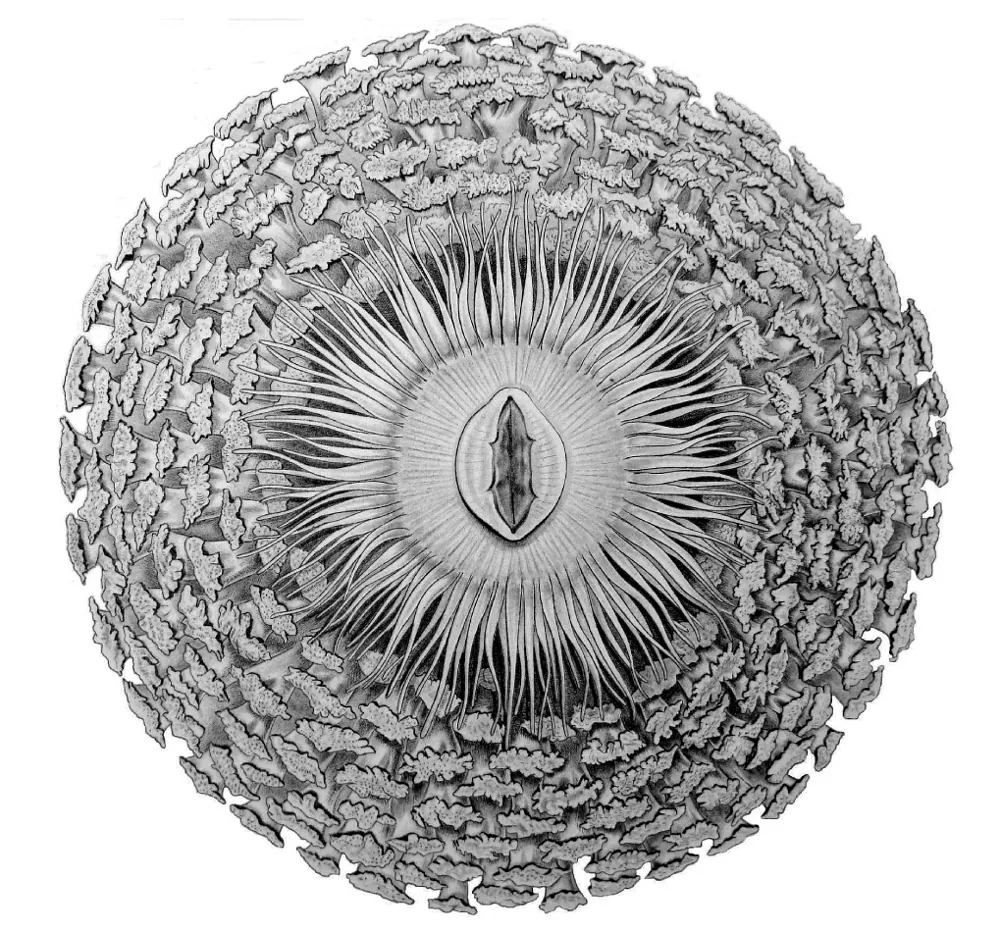
The night anemone is a sea anemone, a soft animal related to jellyfish that attaches itself to the seabed. It lives in shallow seas in the central Indo-West Pacific, including Indonesia, the Philippines and southern Japan. It is venomous, and its sting can cause a painful injury that lasts a long time.1

 Ho e tseba jwang
- Has a broad base that attaches it to the seabed.1
- Has branching, stalked outgrowths called pseudo-tentacles, which vary a lot between individuals.1
- Some individuals look like smooth discs, branching coral, or dead coral rock covered in algae.1
- The mouth ring has up to 160 long tentacles, seen when it is feeding at night.1
Hangata e ferekanngwa le: It is often mistaken for corals, algae or dead coral rock, because it copies their shape and colour. During the day it pulls its mouth and tentacles inside, so it may not look like a sea anemone at all.1
Matla a chefo
Dikete tsa disele tse nyenyane tse hlabang di thunya ha ho na le se di amang.
Chefo ya yona (eo e e kenyang ka ho loma kapa ho hlaba) e etsang?
Its venom contains several haemolytic toxins, which break down red blood cells. Human contact can cause severe dermatitis, with swelling and ulceration of the affected skin that may last for months. On rare occasions it causes acute kidney damage, and it is the first sea anemone whose venom has been shown to do this. The venom does not appear to affect other major organs.1
E kotsi hakae ho batho?
Kotsi ho batho: E kotsi haholoE ka bolaya motho ya sa fumaneng kalafo.Its sting is painful and long-lasting. On rare occasions it can cause acute kidney damage.1
E etsang ha e tshohile?
It uses camouflage, mimicry and masquerade to blend into its surroundings, which helps it deceive prey and confuse predators.1
 Haeba e hlaba
- Tswa metsing mme o tlose di-tentacle tsohle (ka ditlelafo kapa ka lesela).
- Bakeng sa box jellyfish tsa tropike: tshela asene (vinegar) moo e hlabileng teng bonyane metsotswana e 30, bitsa thuso mme o itokisetse ho etsa CPR. Bakeng sa di-bluebottle le tse ding tse ngata: hlatswa ka metsi a lewatle, ebe ka metsi a tjhesang bakeng sa bohloko.
Kamehla letsetsa nomoro ya tshohanyetso pele (112, 000, 911). Ena ke tataiso e akaretsang ya thuso ya pele, hase keletso ya bongaka. Metheo ya thuso ya pele
 Dula o bolokehile
- O se ke wa ama, wa tshwara kapa wa tena phoofolo ya naheng, leha e le e nyenyane, le leha e shebahala e robetse kapa e shwele.
- E fe sebaka. Ha o kopana le yona, dula o kgutsitse, kgutlela morao butle mme o e tlohele e tsamaye ka tsela ya yona.
- Haeba e nngwe e o hlaba: dula o kgutsitse, o se ke wa sisinyeha, letsetsa nomoro ya tshohanyetso (112, 000, 911) kapa o ye sepetlele kapele. Hopola hore e ne e shebahala jwang, foto e a thusa.
Ha e o batle. E sebedisa chefo ya yona ho tshwara dijo kapa ho itshireletsa, mme e kgetha ho ipata. Ho eketsehileng ka ho dula o bolokehile
Hokae lefatsheng?
E kgolo hakae?
E telele hakae?
 e telele jwaloka diboloko tsa ho bapala tse 5 moleng
 e dieha ho feta kgofu ya serapeng
Night anemone e kgolo hakae ha e bapiswa le WENA?
Ke dipalo feela ka hara sebatli sa hao. Ha ho letho le bolokwang kapa le romelwang kae kapa kae.
E potlaka hakae?


Dintlha
It was the first sea anemone found to have venom that damages the kidneys and can cause acute renal failure.1
Its venom kills shrimp and breaks down sheep red blood cells in laboratory tests.1
Its pseudo-tentacles contain symbiotic dinoflagellates, tiny organisms that photosynthesise, so it gets some energy from light.1
It hides its tentacles and mouth during the day, when it spreads out its pseudo-tentacles to catch sunlight.1
Bakeng sa ditsebi tsa chefo
- Lebitso la saense
- Phyllodiscus semoni
- Sehlopha
- Di-jellyfish le diphoofolo tsa lewatle tse hlabang
- Lelapa
- Aliciidae2
- Tatelano
- Actiniaria
- Dikontinente
- Lewatle la India, Lewatle la Pacific, Lewatle le Lefubedu, Lewatle la Timor le Arafura, Mawatle
- Masea
- Colonies are likely clones formed by asexual reproduction, possibly by fragmentation when the anemone moves across the seabed.1
- Kotsi ho batho
- 4 / 5: E kotsi haholo3
Moo dintlha di tswang teng
- Phyllodiscus (Wikipedia (CC BY-SA 4.0))
- Phyllodiscus semoni (iNaturalist): mabitso le tlhophiso.
- Venom Wiki: boemo ba kotsi, boholo bo tlwaelehileng le kakanyo ya lebelo ke tsa rona. Bona kamoo re di balang ka teng: Kamoo re lekanyang kotsi ka teng.
Taba e nngwe le e nngwe leqepheng lena e na le nomoro e bontshang mohlodi wa yona. Haeba re entse phoso, re kopa tshwarelo, re barati ba diphoofolo, hase makasine wa saense. Re bolelle ho [email protected] mme re tla e lokisa.
 Phepheng e lapile! Venom Wiki ke projeke ya motho a le mong: ke mahala, ha e na dipapatso ebile ha e na di-tracker. Thuso e nyenyane ya tjhelete e e boloka e ntse e le inthaneteng.Fepa phepheng
Tse ding tsa sehlopha se le seng: Di-jellyfish le diphoofolo tsa lewatle tse hlabang
 Australian box jellyfishDi-jellyfish le diphoofolo tsa lewatle tse hlabangE a bolayaO se ke wa ama
 Irukandji jellyfishDi-jellyfish le diphoofolo tsa lewatle tse hlabangE ka bolayaO se ke wa ama
 Portuguese man o' warDi-jellyfish le diphoofolo tsa lewatle tse hlabangE hloka ngakaO se ke wa ama
 Lion's mane jellyfishDi-jellyfish le diphoofolo tsa lewatle tse hlabangE utlwisa bohloko feelaO se ke wa ama
 Moon jellyfishDi-jellyfish le diphoofolo tsa lewatle tse hlabangHa e na kotsi
 Common kingslayerDi-jellyfish le diphoofolo tsa lewatle tse hlabangE ka bolayaO se ke wa ama
E boetse e phela: Lewatle la India
 Geography coneDikgofu tsa cone le di-octopusE a bolaya
 Greater blue-ringed octopusDikgofu tsa cone le di-octopusE a bolaya
 Southern blue-ringed octopusDikgofu tsa cone le di-octopusE a bolaya
 Hawksbill sea turtleDiphoofolo tse ding tse chefangE ka bolaya
 Reef stonefishDitlhapi tse nang le chefoE ka bolayaO se ke wa ama
 Crown-of-thorns starfishDi-sea urchin, dinaledi tsa lewatle le dibokoE hloka ngakaO se ke wa ama