
 Afrika
 Asia
Asia Yuropa
 Amerika Borwa
 Australia le Oceania
 Antarctica
 Lewatle la Pacific
 Lewatle la Atlantic
 Lewatle la India
 Lewatle la Arctic
 Lewatle la Mediterranean
 Lewatle le Lefubedu
 Lewatle la Caribbean
 Lewatle la Coral
 Lewatle la China Borwa
 Lewatle la Philippine
 Lewatle la Andaman
 Lewatle la Leboya
 Lewatle la Timor le Arafura
 Kgwohlo ya Bengal
 Kgwohlo ya California
Paulista wasp
 Ho hlaba
The Paulista wasp is a social wasp that lives in colonies of thousands of wasps. It is found in Brazil, Paraguay and Argentina. Scientists are studying its venom because some of its peptides (small protein-like molecules) may one day help treat cancer and epilepsy.1



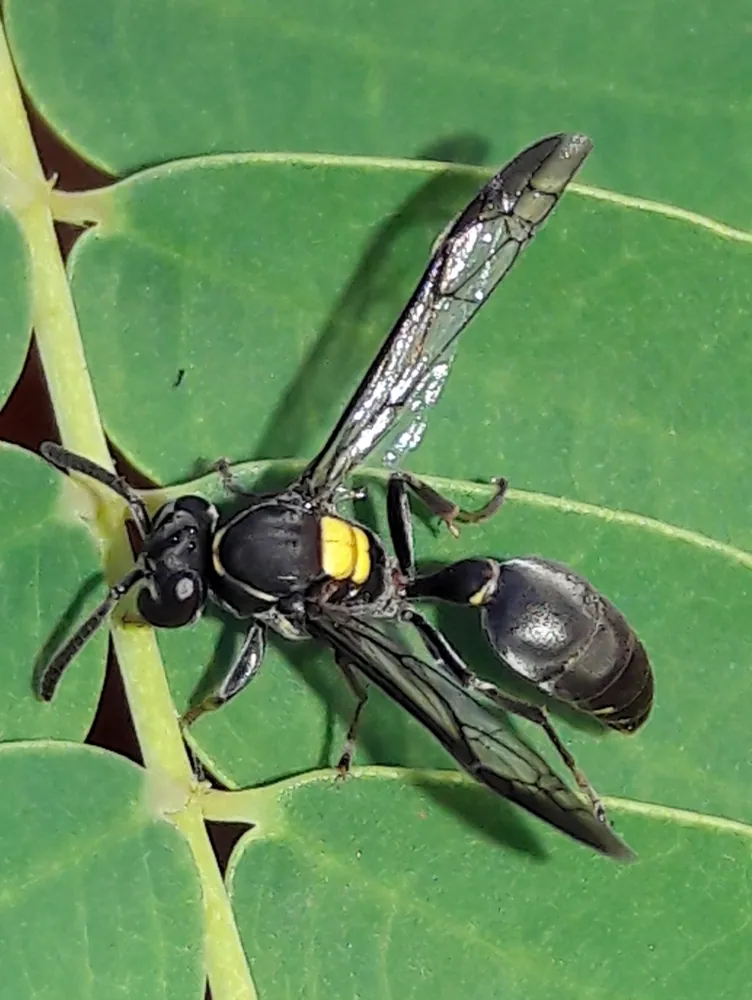
 Ho e tseba jwang
- Lives in a colony with a division of labour between young, middle-aged and older wasps1
- Builds a nest with combs and envelopes, which are fixed to a surface1
- Forms a tight cluster of wasps on the outside of a new nest while the inside has little room1
- Found in tropical areas of Brazil, Paraguay and Argentina1
Matla a chefo
Chefo e tswa ka lemao le hlabang.
Chefo ya yona (eo e e kenyang ka ho loma kapa ho hlaba) e etsang?
The venom contains several peptides. These cause pain, swelling (oedema) and haemolysis, which means they break down red blood cells. They also trigger an inflammatory response, which causes physical discomfort.1
E kotsi hakae ho batho?
Kotsi ho batho: E bohlokoE ka utlwisa bohloko haholo, empa hoo e batlang e le kamehla ha e kotsi haholo.E etsang ha e tshohile?
Wasps use venom to defend themselves and their colony against predators, and workers defend the nest.1
 Haeba e hlaba
- Kgwaratla lemao la notshi o le ntshe mme o pholise sebaka seo.
- Haeba motho a hema ka thata, sefahleho kapa qoqotho di ruruha, kapa a ikutlwa a tla idibala, ke tshohanyetso ya aletjhi (allergy): letsetsa nomoro ya tshohanyetso mme o sebedise pene ya hae ya adrenaline (adrenaline auto-injector) haeba a na le yona.
Kamehla letsetsa nomoro ya tshohanyetso pele (112, 000, 911). Ena ke tataiso e akaretsang ya thuso ya pele, hase keletso ya bongaka. Metheo ya thuso ya pele
 Dula o bolokehile
- O se ke wa ama, wa tshwara kapa wa tena phoofolo ya naheng, leha e le e nyenyane, le leha e shebahala e robetse kapa e shwele.
- E fe sebaka. Ha o kopana le yona, dula o kgutsitse, kgutlela morao butle mme o e tlohele e tsamaye ka tsela ya yona.
- Haeba e nngwe e o hlaba: dula o kgutsitse, o se ke wa sisinyeha, letsetsa nomoro ya tshohanyetso (112, 000, 911) kapa o ye sepetlele kapele. Hopola hore e ne e shebahala jwang, foto e a thusa.
Ha e o batle. E sebedisa chefo ya yona ho tshwara dijo kapa ho itshireletsa, mme e kgetha ho ipata. Ho eketsehileng ka ho dula o bolokehile
Hokae lefatsheng?
E kgolo hakae?
E telele hakae?
 e nyenyane hoo e ka dulang lenalong la hao
 e ka fofa ho tshela lebala lohle la bolo ya maoto ka metsotswana e 17
Paulista wasp e kgolo hakae ha e bapiswa le WENA?
Ke dipalo feela ka hara sebatli sa hao. Ha ho letho le bolokwang kapa le romelwang kae kapa kae.
E potlaka hakae?


Dintlha
A peptide in the venom, called Polybia-MP1, kills cancer cells while leaving healthy cells intact, according to research so far. Further studies are needed to confirm it is safe as a chemotherapy drug.1
The venom contains mastoparan, which has been shown to inhibit the parasite Trypanosoma cruzi, the cause of Chagas disease.1
Workers cool the nest by fanning their wings and spreading water on the combs, so the water evaporates and lowers the temperature.1
Colonies can contain from 10 to 94 queens, because young queens are constantly recruited.1
A colony can hold about 4,500 wasps during its early stage, and up to 13,000 wasps while males are being produced.1
Bakeng sa ditsebi tsa chefo
Moo dintlha di tswang teng
- Polybia paulista (Wikipedia (CC BY-SA 4.0))
- Polybia paulista (iNaturalist): mabitso le tlhophiso.
- Venom Wiki: boemo ba kotsi, boholo bo tlwaelehileng le kakanyo ya lebelo ke tsa rona. Bona kamoo re di balang ka teng: Kamoo re lekanyang kotsi ka teng.
Taba e nngwe le e nngwe leqepheng lena e na le nomoro e bontshang mohlodi wa yona. Haeba re entse phoso, re kopa tshwarelo, re barati ba diphoofolo, hase makasine wa saense. Re bolelle ho [email protected] mme re tla e lokisa.
 Phepheng e lapile! Venom Wiki ke projeke ya motho a le mong: ke mahala, ha e na dipapatso ebile ha e na di-tracker. Thuso e nyenyane ya tjhelete e e boloka e ntse e le inthaneteng.Fepa phepheng
Tse ding tsa sehlopha se le seng: Dinotshi, di-wasp le di-hornet
 Tarantula hawkDinotshi, di-wasp le di-hornetE utlwisa bohloko feela
 Executioner waspDinotshi, di-wasp le di-hornetE hloka ngaka
 Warrior waspDinotshi, di-wasp le di-hornetE hloka ngaka
 Armadillo waspDinotshi, di-wasp le di-hornetE hloka ngaka
 Giant tarantula hawkDinotshi, di-wasp le di-hornetE utlwisa bohloko feela
 Red paper waspDinotshi, di-wasp le di-hornetE utlwisa bohloko feela
 Golden poison frog
 Terciopelo
 Brazilian wandering spider
 Eyelash viper
 Golden lancehead
 South American bushmaster