
 Afrika
 Asia
Asia Ulaya
Ulaya Amerika Kusini
 Australia na Oceania
 Antaktika
 Bahari ya Pasifiki
 Bahari ya Atlantiki
 Bahari ya Hindi
 Bahari ya Aktiki
 Bahari ya Mediterania
 Bahari ya Shamu
 Bahari ya Karibi
 Bahari ya Matumbawe
 Bahari ya Kusini ya China
 Bahari ya Ufilipino
 Bahari ya Andaman
 Bahari ya Kaskazini
 Bahari ya Timor na Arafura
 Ghuba ya Bengal
 Ghuba ya California
Aerial yellowjacket
 Kudungwa
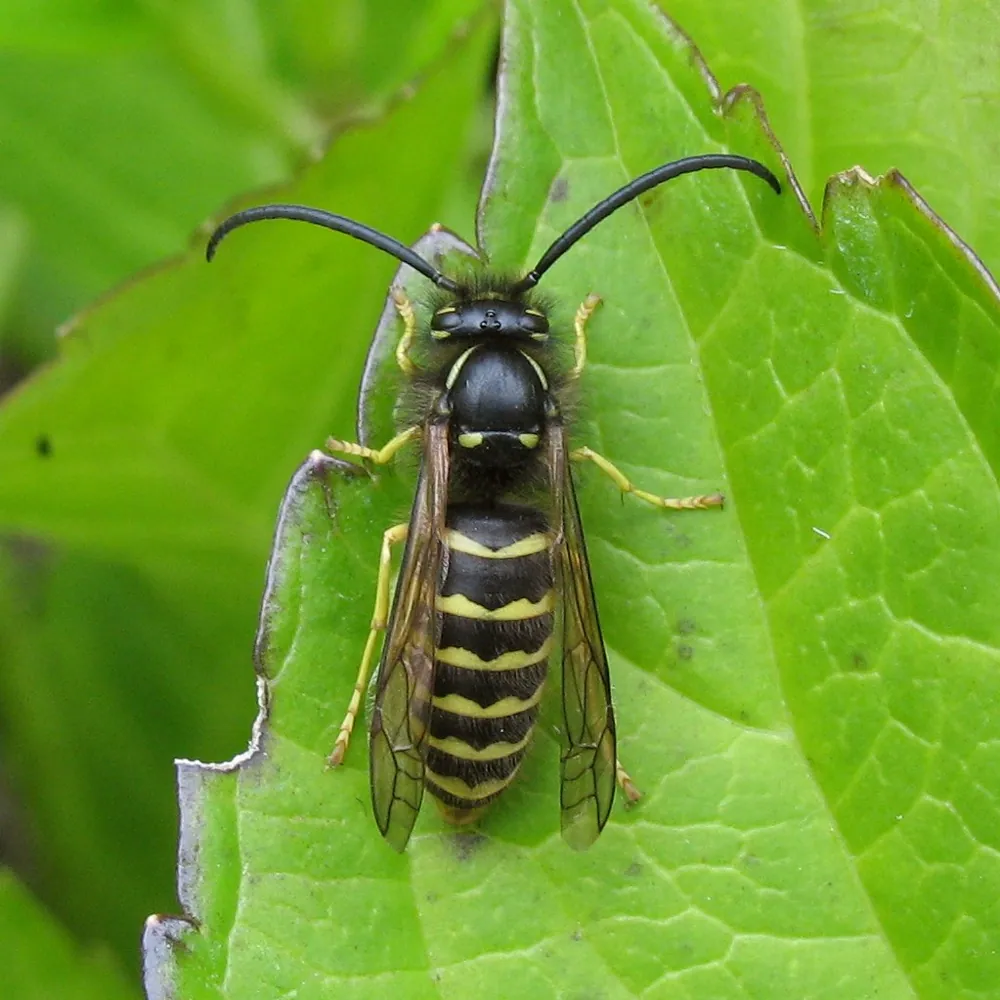
The aerial yellowjacket is a yellow and black wasp that lives across Canada and the United States. It builds grey paper nests, often high in trees, and it can deliver a sting. Its nests can be found on buildings in towns and cities.1



 Jinsi ya kumtambua
- Yellow in colour, with bands on the abdomen (the rear part of the body)1
- No black markings on the ocular sinus (the area of the face around the eye)1
- Queens have large black spots on the abdomen, with smaller spots towards the front1
- Males have larger antennae and an abdomen that ends in a flat, fuzzy tip instead of a pointed sting1
- Nests are made of dull grey paper, with 1 to 6 combs1
Mara nyingi huchanganywa na: It is often confused with other yellow wasps in its genus, such as Dolichovespula adulterina. The aerial yellowjacket can be told apart by the lack of black markings in the ocular sinus.1
Nguvu ya sumu
Sumu hutoka kupitia mdungo.
Ana hatari gani kwa watu?
Hatari kwa watu: InaumaInaweza kuuma sana, lakini karibu kamwe si jambo zito.Hufanya nini akiogopa?
When a nest is threatened, workers can spray venom out of their sting, which releases an alarm pheromone that draws other wasps into attack.1
 Akidunga
- Kwangua mwiba wa nyuki na upoze mahali hapo.
- Mtu akipata shida ya kupumua, uso au koo likivimba, au akijisikia kuzimia, hiyo ni dharura ya mzio: piga namba ya dharura na umtumie kalamu yake ya adrenalini kama anayo.
Daima piga namba ya dharura kwanza (112, 000, 911). Huu ni mwongozo wa jumla wa huduma ya kwanza, si ushauri wa kitabibu. Misingi ya huduma ya kwanza
 Kaa salama
- Kamwe usimguse, kumkamata wala kumchokoza mnyama wa porini, hata akiwa mdogo, na hata akionekana amelala au amekufa.
- Mpe nafasi. Ukikutana naye, tulia, rudi nyuma polepole na umwache aende zake.
- Akikudunga: tulia, usitikisike, piga namba yako ya dharura (112, 000, 911) au nenda hospitali haraka. Kumbuka alivyoonekana, picha husaidia.
Hakuwindi wewe. Hutumia sumu yake kukamata chakula au kujilinda, na hupendelea zaidi kujificha. Zaidi kuhusu kukaa salama
Ana ukubwa gani?
Ana urefu gani?
 mfupi kuliko kidole chako kidogo
 angeweza kuruka kuvuka uwanja mzima wa mpira kwa sekunde 16
Aerial yellowjacket ana ukubwa gani ukilinganisha na WEWE?
Ni hesabu tu kwenye kivinjari chako. Hakuna kinachohifadhiwa wala kutumwa popote.
Ana kasi gani?


Ukweli
Unlike many of its relatives, this wasp is known to spray venom out of its sting, a behaviour seen in workers from large colonies.1
Female bee moths (Aphomia sociella) sometimes lay their eggs in these nests, and their larvae can destroy large parts of the nest as they feed.1
Because nests are built high in trees, birds and other wasps are among the few predators that reach them. Skunks, opossums, raccoons and bears sometimes raid low or badly placed nests for the nutrient-rich larvae.1
Small colonies can behave unpredictably and erratically when defending their nest.1
Colonies usually last about a year before they die out as winter arrives.1
Kwa wataalamu wa sumu
- Jina la kisayansi
- Dolichovespula arenaria
- Kundi
- Nyuki, nyigu na mavu
- Familia
- Vespidae2
- Mpangilio
- Hymenoptera
- Mabara
- Amerika Kaskazini
- Watoto
- A queen starts a new colony each spring by building a small paper nest and laying eggs. The larvae grow into workers, and the colony peaks in summer.1
- Hatari kwa watu
- 2 / 5: Inauma3
Ukweli unatoka wapi
- Dolichovespula arenaria (Wikipedia (CC BY-SA 4.0))
- Dolichovespula arenaria (iNaturalist): majina na uainishaji.
- Venom Wiki: kiwango cha hatari, ukubwa wa kawaida na makadirio ya kasi ni yetu wenyewe. Ona jinsi tunavyovipata: Jinsi tunavyopima hatari.
Kila ukweli kwenye ukurasa huu una namba inayoonyesha chanzo chake. Kama tumekosea kitu, samahani, sisi ni wapenzi wa wanyama, si jarida la kisayansi. Tuambie kupitia [email protected] nasi tutarekebisha.
 Nge ana njaa! Venom Wiki ni mradi wa mtu mmoja: bure, bila matangazo na bila vifuatiliaji. Mchango mdogo husaidia kuiweka hewani.Mlishe nge
 Tarantula hawk
 Executioner wasp
 Warrior wasp
 Bald-faced hornet
 Cow killer velvet ant
 Eastern cicada killer
 Terciopelo
 Eastern coral snake
 Eastern diamondback rattlesnake
 Eyelash viper
 Timber rattlesnake
 Western diamondback rattlesnake
.jpg)