
 Afrika
 Asia
Asia Ulaya
Ulaya Amerika Kusini
 Australia na Oceania
 Antaktika
 Bahari ya Pasifiki
 Bahari ya Atlantiki
 Bahari ya Hindi
 Bahari ya Aktiki
 Bahari ya Mediterania
 Bahari ya Shamu
 Bahari ya Karibi
 Bahari ya Matumbawe
 Bahari ya Kusini ya China
 Bahari ya Ufilipino
 Bahari ya Andaman
 Bahari ya Kaskazini
 Bahari ya Timor na Arafura
 Ghuba ya Bengal
 Ghuba ya California
Taylor's cantil
 Kuumwa
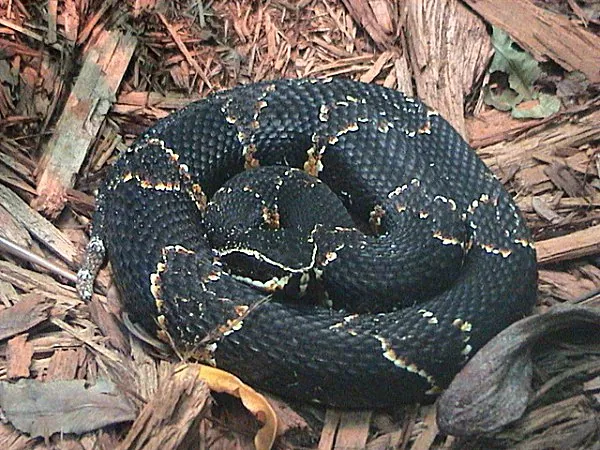
Taylor's cantil is a stout, venomous pitviper that lives only in northeastern Mexico. It is rare in the wild, and it is known to be very defensive when approached or restrained. Its name honours Edward Harrison Taylor, a herpetologist who studied the reptiles and amphibians of Mexico.1
 Jinsi ya kumtambua
- Two bold white or yellowish stripes run along each side of the face.1
- The body has a pattern of black and grey-brown bands, accented with white, yellow and orange.1
- Males are noticeably darker than females, and some older males become nearly black.1
- The tail ends in a small, downturned, spine-like scale.1
- Adults are stout and medium-sized, usually 64 to 90 cm long.1
Mara nyingi huchanganywa na: Other members of the genus Agkistrodon differ in several ways. The cottonmouth and Conant's cantil lack the loreal scale that Taylor's cantil has, and the copperhead and broad-banded cantil lack its face stripes. Taylor's cantil also has fewer subcaudal scales than the other cantils, 45 to 56 in males and 40 to 47 in females.1
Nguvu ya sumu
Sumu hutoka kupitia meno yake ya sumu au meno anapouma.
Sumu yake hufanya nini?
Its venom is believed to be similar to that of its close relative, the cantil Agkistrodon bilineatus. The venom is considered potentially fatal.1
Ana hatari gani kwa watu?
Hatari kwa watu: Hatari sanaAnaweza kumuua mtu asiyepata matibabu.No case reports of human envenomations have been published. Because the snake is rare and its venom is thought to be potentially fatal, it is treated with caution.1
Hufanya nini akiogopa?
It is not overtly aggressive, but it is very defensive, with a volatile temper, and may be quick to strike when approached, threatened or restrained.1
 Akiuma
- Mweke mtu bila kutikisika na mtulivu, weka kiungo kilichoumwa usawa wa moyo, ondoa pete na vitu vinavyobana, na umpeleke hospitali haraka.
Daima piga namba ya dharura kwanza (112, 000, 911). Huu ni mwongozo wa jumla wa huduma ya kwanza, si ushauri wa kitabibu. Misingi ya huduma ya kwanza
 Kaa salama
- Kamwe usimguse, kumkamata wala kumchokoza mnyama wa porini, hata akiwa mdogo, na hata akionekana amelala au amekufa.
- Mpe nafasi. Ukikutana naye, tulia, rudi nyuma polepole na umwache aende zake.
- Akikuuma: tulia, usitikisike, piga namba yako ya dharura (112, 000, 911) au nenda hospitali haraka. Kumbuka alivyoonekana, picha husaidia.
Hakuwindi wewe. Hutumia sumu yake kukamata chakula au kujilinda, na hupendelea zaidi kujificha. Zaidi kuhusu kukaa salama
Ana ukubwa gani?
Ana urefu gani?
 urefu sawa na paka wa nyumbani 2 kutoka pua hadi mkia
 urefu sawa na ndizi 5 zilizopangwa mstari
 angeweza kukimbia mita 100 kwa sekunde 100 (binadamu mwenye kasi zaidi anahitaji 9.6)
Taylor's cantil ana ukubwa gani ukilinganisha na WEWE?
Ni hesabu tu kwenye kivinjari chako. Hakuna kinachohifadhiwa wala kutumwa popote.
Ana kasi gani?


Ukweli
Only a handful of specimens were known for decades. A 1948 to 1953 field study in Tamaulipas yielded just three specimens over 14 months of fieldwork.1
It is the only species in its genus with an obvious difference in colour between males and females.1
It was first collected in 1938 crawling on a highway, and it was not formally described as a subspecies until 1951.1
Its tail is proportionately shorter than in other cantils, making up 16 to 19% of total length in males and 13 to 18% in females.1
Kwa wataalamu wa sumu
Ukweli unatoka wapi
- Agkistrodon taylori (Wikipedia (CC BY-SA 4.0))
- Agkistrodon taylori (iNaturalist): majina na uainishaji.
- Venom Wiki: kiwango cha hatari, ukubwa wa kawaida na makadirio ya kasi ni yetu wenyewe. Ona jinsi tunavyovipata: Jinsi tunavyopima hatari.
Kila ukweli kwenye ukurasa huu una namba inayoonyesha chanzo chake. Kama tumekosea kitu, samahani, sisi ni wapenzi wa wanyama, si jarida la kisayansi. Tuambie kupitia [email protected] nasi tutarekebisha.
 Nge ana njaa! Venom Wiki ni mradi wa mtu mmoja: bure, bila matangazo na bila vifuatiliaji. Mchango mdogo husaidia kuiweka hewani.Mlishe nge
 Terciopelo
 Eyelash viper
 Cottonmouth
 Eastern copperhead
 Cantil
 Central American bushmaster
 Eastern coral snake
 Eastern diamondback rattlesnake
 Timber rattlesnake
 Western diamondback rattlesnake
 Arizona bark scorpion
 Brown recluse