
 Aprika
 Asya
Asya Europa
 Timog Amerika
 Australia at Oceania
 Antarctica
 Karagatang Pasipiko
 Karagatang Atlantiko
 Karagatang Indiyano
 Karagatang Artiko
 Dagat Mediteraneo
 Dagat Pula
 Dagat Caribe
 Dagat Coral
 Dagat Timog Tsina
 Dagat Pilipinas
 Dagat Andaman
 Dagat Hilaga
 Dagat Timor at Arafura
 Look ng Bengal
 Golpo ng California
German wasp
 Mga tusok
The German wasp is a black and yellow social wasp that lives in colonies. It is native to Europe, Northern Africa and temperate Asia, but it has spread to many other parts of the world. Because it competes with local wildlife, it is treated as a pest in most areas outside its native range.1


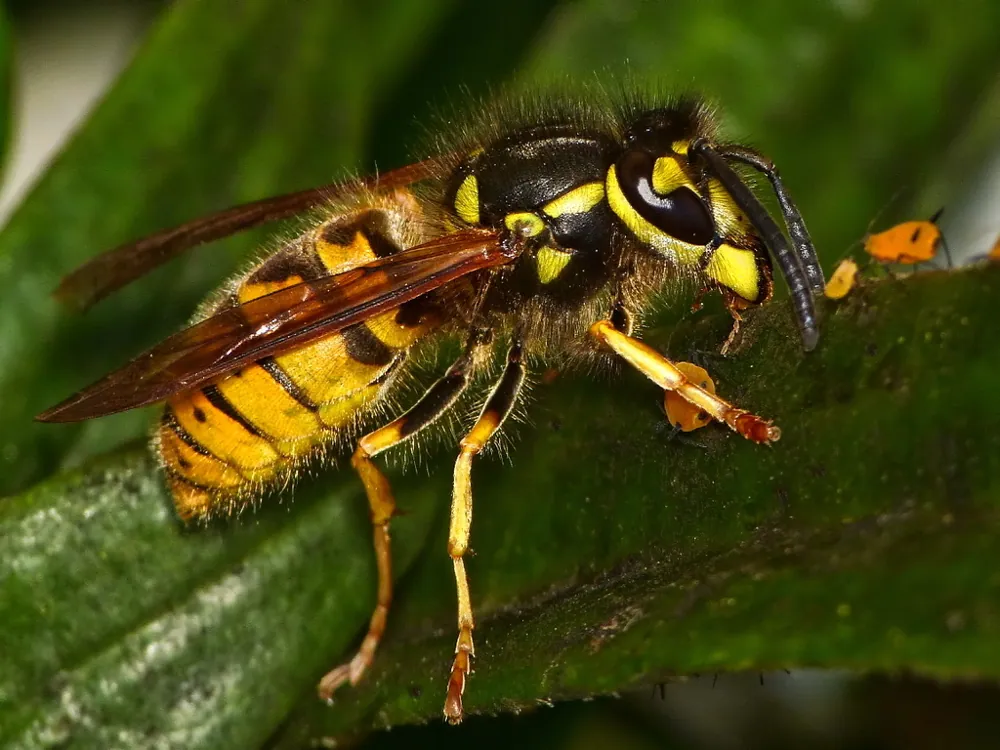
 Paano ito makikilala
- About 13 mm long, with typical wasp colours of black and yellow1
- Workers have three tiny black dots on the clypeus (the front part of the head, between the eyes and mouthparts)1
- Black marks on the abdomen are highly variable, so they are not a reliable way to identify it1
- Grey paper nests, often in the soil or in attics1
Madalas mapagkamalang: The German wasp is very similar to the common wasp (Vespula vulgaris). Unlike the common wasp, it has three tiny black dots on the clypeus, but this only applies to workers. In males, the normally unbroken black mark on the common wasp's clypeus can look broken, which makes it hard to tell the two apart. Members of Vespula are also often confused with the paper wasp Polistes dominula.1
Lakas ng kamandag
Lumalabas ang kamandag sa pamamagitan ng pantusok.
Gaano ito kapanganib sa tao?
Panganib sa tao: MasakitTalagang masakit, pero halos hindi kailanman malala. Kung tumusok ito
- Kayurin palabas ang naiwang pantusok ng bubuyog at palamigin ang lugar.
- Kung nahihirapang huminga ang tao, namamaga ang mukha o lalamunan, o parang hihimatayin, ito ay emergency sa allergy: tawagan ang numero pang-emergency at gamitin ang adrenaline pen niya kung mayroon siya.
Laging tawagan muna ang numero pang-emergency (112, 000, 911). Ito ay pangkalahatang gabay sa pangunang lunas, hindi payong medikal. Mga batayan ng pangunang lunas
 Mag-ingat
- Huwag kailanman hawakan, hulihin o asarin ang ligaw na hayop, kahit maliit, at kahit mukha itong tulog o patay.
- Bigyan ito ng espasyo. Kung makasalubong ka ng isa, manatiling kalmado, dahan-dahang umatras at hayaan itong umalis.
- Kung tusukin ka ng isa: manatiling kalmado, huwag gumalaw, tawagan ang numero pang-emergency (112, 000, 911) o pumunta agad sa ospital. Tandaan ang itsura nito, makakatulong ang litrato.
Hindi ka nito hinahabol. Ginagamit nito ang kamandag para manghuli ng pagkain o ipagtanggol ang sarili, at mas gusto pa nitong magtago. Higit pa tungkol sa pag-iingat
Gaano ito kalaki?
Gaano ito kahaba?
Gaano ito kabigat?
 sapat na maliit para umupo sa kuko mo
 sobrang gaan na hindi mo ito mararamdaman sa kamay mo
 kayang lumipad sa buong football field sa loob ng 16 segundo
Gaano kalaki si German wasp kumpara sa IYO?
Math lang sa browser mo. Walang sine-save o ipinapadala kahit saan.
Gaano ito kabilis?


Mga fact
German wasps are invasive. They have spread to many continents and are especially successful at colonising new areas.1
They can outcompete many other animals for food, which has caused considerable harm to native wildlife where they have invaded.1
Female bee moths (Aphomia sociella) sometimes lay eggs in German wasp nests. Their larvae feed on the eggs, larvae and pupae, and can destroy large parts of the nest.1
In Australia, nests can grow very large and some survive the winter. In England, none of the nests in the study survive the winter.1
Queens mate with between one and seven males, and workers can lay eggs, although worker policing keeps most of their sons from reaching adulthood.1
Colonies grow rapidly over summer, with a large increase in worker numbers and nest size. In late summer, the colony focuses on producing new queens and males.1
Myth buster
Mito: German wasps are paper wasps because they build grey paper nests.
Totoo: The name is used by mistake. Strictly speaking, paper wasps belong to the subfamily Polistinae, while German wasps belong to the genus Vespula.1
Para sa mga eksperto sa kamandag
- Pangalang siyentipiko
- Vespula germanica
- Grupo
- Mga bubuyog, putakti at hornet
- Pamilya
- Vespidae2
- Ayos
- Hymenoptera
- Mga kontinente
- Europa, Asya, Aprika
- Mga sanggol
- A single queen starts a nest in spring and lays eggs in hexagonal cells, with one wasp developing in each cell through the egg, larva and pupa stages.1
- Panganib sa tao
- 2 / 5: Masakit3
Saan galing ang mga fact
- Vespula germanica (Wikipedia (CC BY-SA 4.0))
- Vespula germanica (iNaturalist): mga pangalan at klasipikasyon.
- Venom Wiki: sarili naming tantiya ang antas ng panganib, karaniwang laki at hula sa bilis. Tingnan kung paano namin ito kinukuwenta: Paano namin sinusukat ang panganib.
Bawat fact sa pahinang ito ay may numerong tumuturo sa pinagmulan nito. Kung may mali kami, pasensya na, mahilig lang kami sa hayop, hindi kami science journal. Sabihin sa amin sa [email protected] at aayusin namin.
 Gutom ang alakdan! Ang Venom Wiki ay proyekto ng iisang tao: libre, walang ads at walang trackers. Nakatutulong ang maliit na tip para manatili itong online.Pakainin ang alakdan
Higit pa mula sa parehong grupo: Mga bubuyog, putakti at hornet
 Asian giant hornetMga bubuyog, putakti at hornetPuwedeng pumatay
 Common waspMga bubuyog, putakti at hornetMasakit lang
 European hornetMga bubuyog, putakti at hornetMasakit lang
 Western honey beeMga bubuyog, putakti at hornetMasakit lang
 Giant honey beeMga bubuyog, putakti at hornetKailangan ng doktor
 Asian hornetMga bubuyog, putakti at hornetMasakit lang
Nakatira rin sa: Europa
 Common European adderMga viper at adderKailangan ng doktor
 Spanish flyIba pang nakalalasong hayopKailangan ng doktorHuwag hawakan
 Fire salamanderMga poison frog, palaka at newtMasakit langHuwag hawakan
 Blunt-nosed viperMga viper at adderPuwedeng pumatay
 Nose-horned viperMga viper at adderPuwedeng pumatay
 Ottoman viperMga viper at adderPuwedeng pumatay