
 Aprika
 Asya
Asya Europa
 Timog Amerika
 Australia at Oceania
 Antarctica
 Karagatang Pasipiko
 Karagatang Atlantiko
 Karagatang Indiyano
 Karagatang Artiko
 Dagat Mediteraneo
 Dagat Pula
 Dagat Caribe
 Dagat Coral
 Dagat Timog Tsina
 Dagat Pilipinas
 Dagat Andaman
 Dagat Hilaga
 Dagat Timor at Arafura
 Look ng Bengal
 Golpo ng California
Oak processionary
 Nanunusok na balahibo
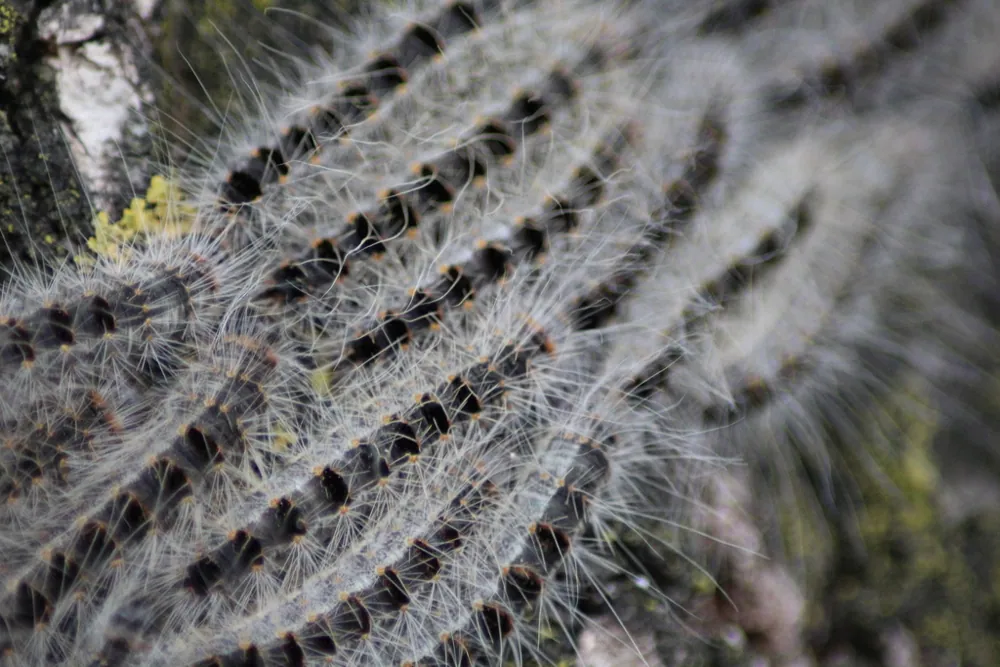
The oak processionary is a moth whose caterpillars feed on oak leaves and can strip trees bare. The caterpillars travel in long, nose-to-tail lines, which is how they got their name. Their fine, hair-like bristles can irritate skin and breathing, so they matter a lot to people.1

 Paano ito makikilala
- Adult moths have a wingspan of 25 to 35 mm and are tan, brown and white, which makes them hard to see against oak bark.1
- Caterpillars have very long, white hairs that contrast with shorter hairs.1
- Caterpillars march in lines, often arrow-shaped, with a leader and rows of several caterpillars side by side.1
- Nests are white and silk-like when new, and become discoloured and hard to see over time.1
- Nests can be round, teardrop-shaped, bag-like or blanket-like, and can be found at any height on an oak tree.1
Madalas mapagkamalang: Caterpillars of several other species may be mistaken for the oak processionary. Unlike other caterpillars, the oak processionary does not live on fences or walls, so it is mostly found in oak trees or on the ground beneath them in late spring and early summer.1
Lakas ng kamandag
Maliliit na balahibo o buhok ang nababali sa balat at nanunusok.
Ano ang epekto ng kamandag nito?
The caterpillars' back bristles contain a urticating toxin called thaumetopoein, a protein that irritates the skin. Contact can cause a papular rash and itching, and the hairs can also cause eye inflammation (conjunctivitis). If the hairs are breathed in, they can cause sore throat (pharyngitis), breathing problems, asthma, or in rare cases anaphylaxis, a severe allergic reaction.1
Gaano ito kapanganib sa tao?
Panganib sa tao: MasakitTalagang masakit, pero halos hindi kailanman malala.The moths are an increasing nuisance to people as their range grows, and the hairs can cause a skin condition called epidemic caterpillar dermatitis. The hairs break off easily, float in the air, and can stay harmful for several seasons. Mowing a lawn can bring people into contact with them.1
 Magandang balita: may gamot (antivenom) o gamutan ang mga doktor para dito.1
Ano ang ginagawa nito kapag natatakot?
The caterpillars defend themselves with thousands of pointed, easily broken bristles on their backs that float in the air and irritate the skin.1
 Kung mahawakan mo ang mga balahibo nito
- The skin irritation and itching can be largely relieved by cetirizine-based antihistamine tablets. Anyone with breathing problems or a severe reaction needs urgent medical help.1
- Para sa nanunusok na balahibo ng higad: alisin ang mga ito gamit ang sticky tape, pagkatapos ay hugasan ang balat. Huwag kuskusin.
- Para sa kagat: hugasan at palamigin. Kumuha ng tulong medikal kung masama ang pakiramdam ng tao o madali siyang dumugo.
Laging tawagan muna ang numero pang-emergency (112, 000, 911). Ito ay pangkalahatang gabay sa pangunang lunas, hindi payong medikal. Mga batayan ng pangunang lunas
 Mag-ingat
- Huwag kailanman hawakan, hulihin o asarin ang ligaw na hayop, kahit maliit, at kahit mukha itong tulog o patay.
- Bigyan ito ng espasyo. Kung makasalubong ka ng isa, manatiling kalmado, dahan-dahang umatras at hayaan itong umalis.
- Kung mahawakan mo ang mga balahibo nito: manatiling kalmado, huwag gumalaw, tawagan ang numero pang-emergency (112, 000, 911) o pumunta agad sa ospital. Tandaan ang itsura nito, makakatulong ang litrato.
Hindi ka nito hinahabol. Ginagamit nito ang kamandag para manghuli ng pagkain o ipagtanggol ang sarili, at mas gusto pa nitong magtago. Higit pa tungkol sa pag-iingat
Gaano ito kalaki?
Gaano ito kahaba?
 halos kasinghaba ng paper clip
 mas mabagal kaysa sa suso sa hardin
Gaano kalaki si Oak processionary kumpara sa IYO?
Math lang sa browser mo. Walang sine-save o ipinapadala kahit saan.
Gaano ito kabilis?

Mga fact
Older caterpillars can have up to 63,000 pointed defensive bristles on their backs.1
In 2007, soldiers were deployed to burn infestations in the Belgian province of Limburg.1
The UK government spent £37 million trying to control the caterpillars, which had spread to all 33 London boroughs by 2019.1
In the Netherlands, great tits have been observed eating the young caterpillars before their hairs develop in April.1
In 2023, an outbreak in Ireland was successfully eradicated.1
Para sa mga eksperto sa kamandag
- Pangalang siyentipiko
- Thaumetopoea processionea
- Grupo
- Mga higad at insekto
- Pamilya
- Notodontidae2
- Ayos
- Lepidoptera
- Mga kontinente
- Europa
- Mga sanggol
- Eggs hatch into caterpillars that build communal silk nests in oak trees, and the caterpillars later pupate into adult moths in these nests.1
- Panganib sa tao
- 2 / 5: Masakit3
Saan galing ang mga fact
- Oak processionary (Wikipedia (CC BY-SA 4.0))
- Thaumetopoea processionea (iNaturalist): mga pangalan at klasipikasyon.
- Venom Wiki: sarili naming tantiya ang antas ng panganib, karaniwang laki at hula sa bilis. Tingnan kung paano namin ito kinukuwenta: Paano namin sinusukat ang panganib.
Bawat fact sa pahinang ito ay may numerong tumuturo sa pinagmulan nito. Kung may mali kami, pasensya na, mahilig lang kami sa hayop, hindi kami science journal. Sabihin sa amin sa [email protected] at aayusin namin.
 Gutom ang alakdan! Ang Venom Wiki ay proyekto ng iisang tao: libre, walang ads at walang trackers. Nakatutulong ang maliit na tip para manatili itong online.Pakainin ang alakdan
Higit pa mula sa parehong grupo: Mga higad at insekto
 Pine processionaryMga higad at insektoMasakit langHuwag hawakan
 Common bombardier beetleMga higad at insektoHindi nakapipinsala
 Brown-tail mothMga higad at insektoMasakit langHuwag hawakan
 Masked hunterMga higad at insektoMasakit lang
 Pine-tree lappetMga higad at insektoMasakit langHuwag hawakan
 Common backswimmerMga higad at insektoHindi nakapipinsala
Nakatira rin sa: Europa
 Common European adderMga viper at adderKailangan ng doktor
 Spanish flyIba pang nakalalasong hayopKailangan ng doktorHuwag hawakan
 Common waspMga bubuyog, putakti at hornetMasakit lang
 European hornetMga bubuyog, putakti at hornetMasakit lang
 Fire salamanderMga poison frog, palaka at newtMasakit langHuwag hawakan
 Western honey beeMga bubuyog, putakti at hornetMasakit lang