
 Aprika
 Asya
Asya Europa
 Timog Amerika
 Australia at Oceania
 Antarctica
 Karagatang Pasipiko
 Karagatang Atlantiko
 Karagatang Indiyano
 Karagatang Artiko
 Dagat Mediteraneo
 Dagat Pula
 Dagat Caribe
 Dagat Coral
 Dagat Timog Tsina
 Dagat Pilipinas
 Dagat Andaman
 Dagat Hilaga
 Dagat Timor at Arafura
 Look ng Bengal
 Golpo ng California
Pine processionary
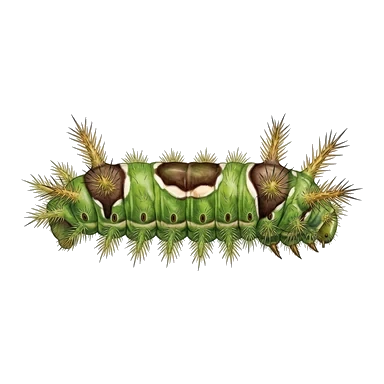 Nanunusok na balahibo
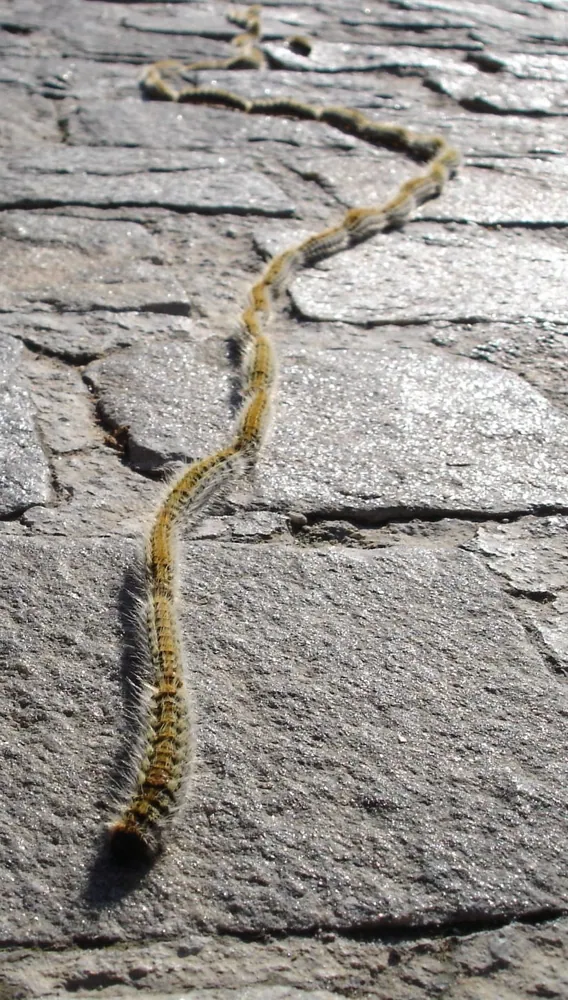
The pine processionary is a moth whose caterpillars are famous for marching in long, nose-to-tail lines through pine woods. Their hairs cause painful rashes and eye irritation, and they can strip the needles from whole trees. It lives around the Mediterranean and is spreading north.1

 Paano ito makikilala
- Caterpillars are orange-brown and hairy, with blue bands.1
- Large silken nests in pine trees, often with several in one tree and signs of stripped needles.1
- Caterpillars move in single-file processions, usually at night and when leaving the tree to pupate.1
- Adults have predominantly light brown forewings with brown markings and white hindwings.1
- Adult males have a crescent marking on the wings and are larger than the oak processionary.1
Madalas mapagkamalang: The oak processionary (Thaumetopoea processionea) is smaller as an adult, has an indistinct wing marking rather than a crescent, and lives in broad-leaved rather than coniferous forests. The pale eggar moth has no crescent marking on its wings.1
Lakas ng kamandag
Maliliit na balahibo o buhok ang nababali sa balat at nanunusok.
Ano ang epekto ng kamandag nito?
The species is not venomous. Its caterpillars have hairs containing an irritant chemical called thaumetopoein, which causes skin rashes (urticaria) and eye irritation on contact. Some people may have an allergic reaction. The hairs of fifth-stage larvae can also break off and spread across nearby exposed skin.1
Gaano ito kapanganib sa tao?
Panganib sa tao: MasakitTalagang masakit, pero halos hindi kailanman malala.Simple contact with the caterpillar hairs can cause severe rashes and eye irritation in humans and other mammals. Some individuals may have an allergic reaction.1
Ano ang ginagawa nito kapag natatakot?
When stressed or threatened, fifth-stage caterpillars eject harpoon-shaped hairs that irritate any exposed skin nearby.1
 Kung mahawakan mo ang mga balahibo nito
- Para sa nanunusok na balahibo ng higad: alisin ang mga ito gamit ang sticky tape, pagkatapos ay hugasan ang balat. Huwag kuskusin.
- Para sa kagat: hugasan at palamigin. Kumuha ng tulong medikal kung masama ang pakiramdam ng tao o madali siyang dumugo.
Laging tawagan muna ang numero pang-emergency (112, 000, 911). Ito ay pangkalahatang gabay sa pangunang lunas, hindi payong medikal. Mga batayan ng pangunang lunas
 Mag-ingat
- Huwag kailanman hawakan, hulihin o asarin ang ligaw na hayop, kahit maliit, at kahit mukha itong tulog o patay.
- Bigyan ito ng espasyo. Kung makasalubong ka ng isa, manatiling kalmado, dahan-dahang umatras at hayaan itong umalis.
- Kung mahawakan mo ang mga balahibo nito: manatiling kalmado, huwag gumalaw, tawagan ang numero pang-emergency (112, 000, 911) o pumunta agad sa ospital. Tandaan ang itsura nito, makakatulong ang litrato.
Hindi ka nito hinahabol. Ginagamit nito ang kamandag para manghuli ng pagkain o ipagtanggol ang sarili, at mas gusto pa nitong magtago. Higit pa tungkol sa pag-iingat
Gaano ito kalaki?
Gaano ito kahaba?
 halos kasinghaba ng paper clip
 mas mabagal kaysa sa suso sa hardin
Gaano kalaki si Pine processionary kumpara sa IYO?
Math lang sa browser mo. Walang sine-save o ipinapadala kahit saan.
Gaano ito kabilis?


Mga fact
Caterpillars in a procession hold together through touch from the caterpillar in front, which takes priority over the trail pheromone or silk.1
The caterpillars are one of the few temperate-zone insects whose larvae develop through the winter, living in silk nests high in pine trees.1
Adults live for only a single day, during which they mate and lay eggs.1
The Greek physician Dioscorides described the itching caused by this caterpillar in the 1st century AD, and Pliny the Elder recorded a treatment for it.1
Outbreaks are somewhat cyclical, with a period of 7 to 9 years.1
Myth buster
Mito: Fabre's caterpillars marched in a circle around a flower pot only because they were trapped on its rim.
Totoo: Young caterpillars' circular trails continue for as long as 12 hours even when they are free on a flat surface.1
Para sa mga eksperto sa kamandag
- Pangalang siyentipiko
- Thaumetopoea pityocampa
- Grupo
- Mga higad at insekto
- Pamilya
- Notodontidae2
- Ayos
- Lepidoptera
- Mga kontinente
- Europa, Aprika, Asya
- Mga sanggol
- Each female lays an enormous number of eggs near the tops of pine trees, in cylindrical egg masses 4 to 5 cm long covered with scales that mimic pine shoots.1
- Panganib sa tao
- 2 / 5: Masakit3
Saan galing ang mga fact
- Pine processionary (Wikipedia (CC BY-SA 4.0))
- Thaumetopoea pityocampa (iNaturalist): mga pangalan at klasipikasyon.
- Venom Wiki: sarili naming tantiya ang antas ng panganib, karaniwang laki at hula sa bilis. Tingnan kung paano namin ito kinukuwenta: Paano namin sinusukat ang panganib.
Bawat fact sa pahinang ito ay may numerong tumuturo sa pinagmulan nito. Kung may mali kami, pasensya na, mahilig lang kami sa hayop, hindi kami science journal. Sabihin sa amin sa [email protected] at aayusin namin.
 Gutom ang alakdan! Ang Venom Wiki ay proyekto ng iisang tao: libre, walang ads at walang trackers. Nakatutulong ang maliit na tip para manatili itong online.Pakainin ang alakdan
Higit pa mula sa parehong grupo: Mga higad at insekto
 Oak processionaryMga higad at insektoMasakit langHuwag hawakan
 White-spotted assassin bugMga higad at insektoMasakit lang
 Common bombardier beetleMga higad at insektoHindi nakapipinsala
 Asian giant water bugMga higad at insektoMasakit lang
 Blue-striped nettle grubMga higad at insektoMasakit langHuwag hawakan
 Brown-tail mothMga higad at insektoMasakit langHuwag hawakan
Nakatira rin sa: Europa
 Common European adderMga viper at adderKailangan ng doktor
 Spanish flyIba pang nakalalasong hayopKailangan ng doktorHuwag hawakan
 Common waspMga bubuyog, putakti at hornetMasakit lang
 European hornetMga bubuyog, putakti at hornetMasakit lang
 Fire salamanderMga poison frog, palaka at newtMasakit langHuwag hawakan
 Western honey beeMga bubuyog, putakti at hornetMasakit lang