
 Aforika
 Asia
Asia Yuropa
 Amerika Borwa
 Australia le Oceania
 Antarctica
 Lewatle la Pacific
 Lewatle la Atlantic
 Lewatle la India
 Lewatle la Arctic
 Lewatle la Mediterranean
 Lewatle le Lehibidu
 Lewatle la Caribbean
 Lewatle la Coral
 Lewatle la China Borwa
 Lewatle la Philippines
 Lewatle la Andaman
 Lewatle la Bokone
 Lewatle la Timor le la Arafura
 Kou ya Bengal
 Gulf ya California
Dusky spinefoot
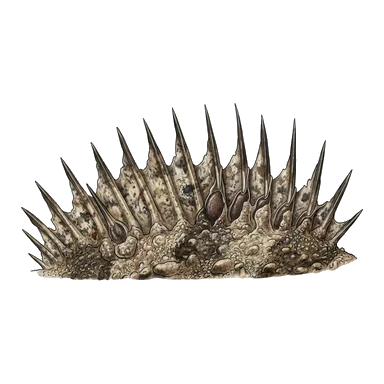 Mitlwa ya botlhole
The dusky spinefoot is a rabbitfish with venomous spines on its fins. It is native to the western Indian Ocean and has spread into the Mediterranean Sea through the Suez Canal. People also catch it as a food fish.1
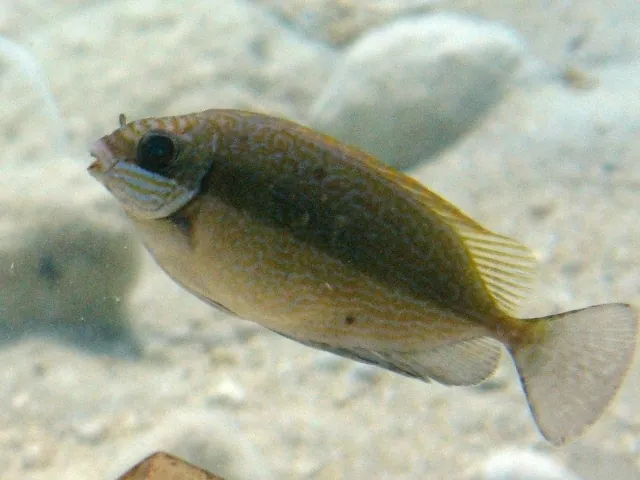

 Tsela ya go e lemoga
Maatla a botlhole
Mitlwa e e bogale e rwala botlhole. Go e gata kgotsa go e tshwara go a utlwisa botlhoko.
Botlhole jo e bo tsenyang bo dira eng?
The spines on its fins produce venom. In a study of a related rabbitfish, the venom was found to be similar to stonefish venom.1
E kotsi go le kae go batho?
Kotsi go batho: E botlhokoE ka utlwisa botlhoko tota, mme go seoka thata gore e nne masisi.When eaten, it has been linked to cases of mild ciguatera-like poisoning. Ciguatera is a form of food poisoning caused by toxins in some reef fish.1
E dira eng fa e tshogile?
When threatened, it stops suddenly and raises its dorsal, anal and pelvic fins, showing an array of venomous spines around its body.1
 Fa mitlwa ya yone e go tlhaba
- Tsenya ntho mo metsing a a mogote, a a bollo jo motho a ka bo itshokang a sa fiswe (a leke ka seatla sa gago pele), metsotso e le 30 go ya go 90. Batla thuso ya bongaka, bogolo jang go ditlhapi tsa lefika le distingrei.
Ka gale leletsa nomoro ya gago ya tshoganyetso pele (112, 000, 911). Se ke kaelo e e akaretsang ya thuso ya ntlha, ga se kgakololo ya bongaka. Motheo wa thuso ya ntlha
 Nna o babalesegile
- O se ka wa ama, wa tshwara kgotsa wa tshwenya phologolo ya naga, le fa e le e nnye, le fa e lebega e robetse kgotsa e sule.
- E fe sebaka. Fa o kopana le yone, ritibala, boela morago ka bonya mme o e tlogele e tsamaye ka tsela ya yone.
- Fa mitlwa ya yone e go tlhaba: ritibala, o se ka wa tshikinyega, leletsa nomoro ya gago ya tshoganyetso (112, 000, 911) kgotsa o ye bookelong ka bonako. Gopola gore e ne e lebega jang, setshwantsho se a thusa.
Ga e go batle. E dirisa botlhole jwa yone go tshwara dijo kgotsa go itshireletsa, mme e rata go iphitlha go feta. Go le gontsi ka go nna o babalesegile
Kae mo lefatsheng?
E kgolo go le kae?
E telele go le kae?
 boleele jo bo lekanang le diboloko tsa go aga tsa ditshamekisi di le 9 mo moleng
 e ka thuma boleele jwa bodiba jo bogolo jwa go thuma (50 m) ka metsotswana e le 36
Dusky spinefoot e kgolo go le kae fa e bapisiwa le WENA?
Ke dipalo fela mo sefetleng sa gago (browser). Ga go sepe se se bolokwang kgotsa se se romelwang gope.
E bonako go le kae?
Dintlha
Its spines are mainly a defence against predators. The highest predation pressure falls on its larvae and planktonic stages.1
It came to the Mediterranean through the Suez Canal. It was first recorded off Israel in 1955 and has since spread as far west as the French Mediterranean coast and the Adriatic Sea.1
It is a daytime feeder. At night it hides in cavities in the reef.1
It is an important fish for fisheries in the Mediterranean. In Kenya, it is caught mainly as bycatch.1
Ya baitseanape ba botlhole
- Leina la saense
- Siganus luridus
- Setlhopha
- Ditlhapi tse di tsenyang botlhole
- Lelapa
- Siganidae2
- Lekoko
- Acanthuriformes
- Dikontinente
- Lewatle la India, Lewatle le Lehibidu, Lewatle la Mediterranean, Lewatle la Arabia le Gulf ya Peresia, Mawatle
- Masea
- It spawns in April and from June to August, when seawater is between 24 and 29 °C. The eggs and larvae drift in the plankton near the surface.1
- Kotsi go batho
- 2 / 5: E botlhoko3
Kwa dintlha di tswang teng
- Dusky spinefoot (Wikipedia (CC BY-SA 4.0))
- Siganus luridus (iNaturalist): maina le thulaganyo ya mefuta.
- Venom Wiki: seelo sa kotsi, bogolo jo bo tlwaelegileng le kakanyo ya lebelo ke tsa rona. Bona kafa re di balang ka teng: Kafa re lekanyang kotsi ka teng.
Ntlha nngwe le nngwe mo tsebeng e e na le nomoro e e supang motswedi wa yone. Fa re dirile phoso, maitshwarelo, re barati ba diphologolo, e seng kgatiso ya saense. Re bolelele kwa [email protected] mme re tla e baakanya.
 Phepheng e tshwerwe ke tlala! Venom Wiki ke porojeke ya motho a le mongwe: ke mahala, ga e na dipapatso le ditraka. Mpho e nnye e thusa go e tshegetsa mo inthaneteng.Fepa phepheng
Tse dingwe tsa setlhopha se se tshwanang: Ditlhapi tse di tsenyang botlhole
 Reef stonefishDitlhapi tse di tsenyang botlholeE ka bolayaO se ka wa ama
 Red lionfishDitlhapi tse di tsenyang botlholeE tlhoka ngakaO se ka wa ama
 Estuarine stonefishDitlhapi tse di tsenyang botlholeE ka bolayaO se ka wa ama
 Short-tail stingrayDitlhapi tse di tsenyang botlholeE ka bolaya
 Striped eel catfishDitlhapi tse di tsenyang botlholeE ka bolayaO se ka wa ama
 Bluespotted ribbontail rayDitlhapi tse di tsenyang botlholeE tlhoka ngaka
E tshela gape kwa: Lewatle la India
 Australian box jellyfishDijelifishi le dibopiwa tsa lewatle tse di tlhabangE a bolayaO se ka wa ama
 Geography coneDikgopa tsa khouno le diokotopaseE a bolaya
 Greater blue-ringed octopusDikgopa tsa khouno le diokotopaseE a bolaya
 Southern blue-ringed octopusDikgopa tsa khouno le diokotopaseE a bolaya
 Hawksbill sea turtleDiphologolo tse dingwe tse di botlhole go di ama kgotsa go di jaE ka bolaya
 Irukandji jellyfishDijelifishi le dibopiwa tsa lewatle tse di tlhabangE ka bolayaO se ka wa ama