
 Aforika
 Asia
Asia Yuropa
 Amerika Borwa
 Australia le Oceania
 Antarctica
 Lewatle la Pacific
 Lewatle la Atlantic
 Lewatle la India
 Lewatle la Arctic
 Lewatle la Mediterranean
 Lewatle le Lehibidu
 Lewatle la Caribbean
 Lewatle la Coral
 Lewatle la China Borwa
 Lewatle la Philippines
 Lewatle la Andaman
 Lewatle la Bokone
 Lewatle la Timor le la Arafura
 Kou ya Bengal
 Gulf ya California
Ottoman viper
 Go loma
The Ottoman viper is a venomous viper, which means it injects venom when it bites. It lives in northeastern Greece, European Turkey, western Anatolia and some Greek and Turkish islands in the Aegean Sea. Its venom is potent, and it has caused deaths in adults, so it is important to know what it looks like.1



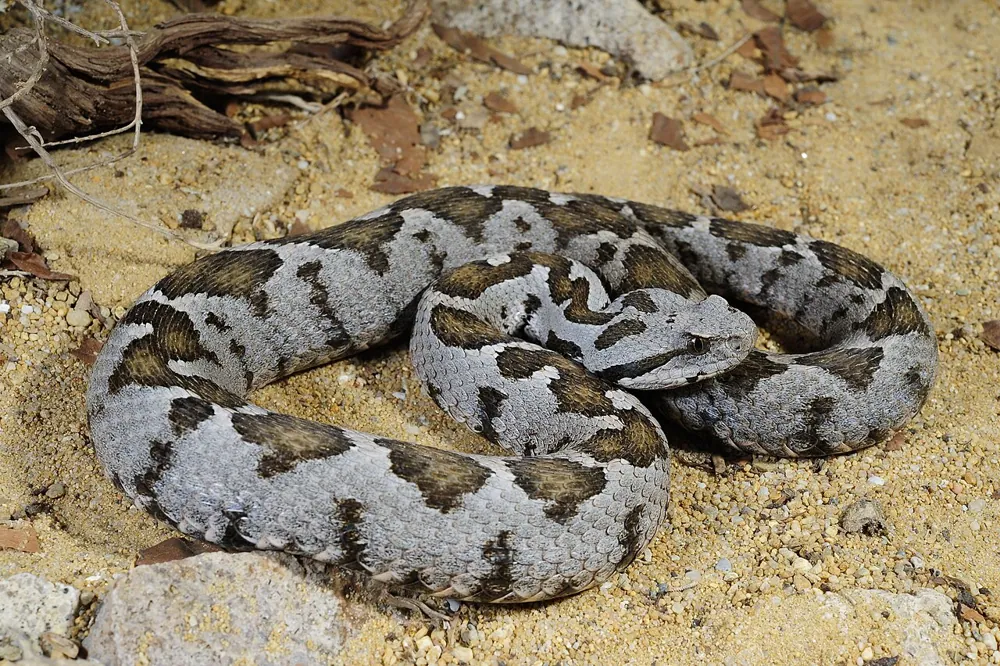
 Tsela ya go e lemoga
Maatla a botlhole
Botlhole bo tswa ka meno a yone fa e loma.
Botlhole jo e bo tsenyang bo dira eng?
Its venom is mainly cytotoxic, which damages cells, and haemotoxic, which damages blood. It injects only small amounts in a bite, but the venom is highly potent. Severe envenomation is more likely if venom is injected directly into a vein.1
E kotsi go le kae go batho?
Kotsi go batho: E kotsi thataE ka bolaya motho yo o sa alafiweng.The venom has caused deaths in adult humans. Young children and older people are at greater risk of severe envenomation.1
 Fa e loma
- Dira gore motho a nne a sa tshikinyege a ritibetse, tshegetsa setho se se lomilweng mo boemong jwa pelo, tlosa direng le dilo tse di tiileng, mme o mo ise bookelong ka bonako.
Ka gale leletsa nomoro ya gago ya tshoganyetso pele (112, 000, 911). Se ke kaelo e e akaretsang ya thuso ya ntlha, ga se kgakololo ya bongaka. Motheo wa thuso ya ntlha
 Nna o babalesegile
- O se ka wa ama, wa tshwara kgotsa wa tshwenya phologolo ya naga, le fa e le e nnye, le fa e lebega e robetse kgotsa e sule.
- E fe sebaka. Fa o kopana le yone, ritibala, boela morago ka bonya mme o e tlogele e tsamaye ka tsela ya yone.
- Fa e nngwe e go loma: ritibala, o se ka wa tshikinyega, leletsa nomoro ya gago ya tshoganyetso (112, 000, 911) kgotsa o ye bookelong ka bonako. Gopola gore e ne e lebega jang, setshwantsho se a thusa.
Ga e go batle. E dirisa botlhole jwa yone go tshwara dijo kgotsa go itshireletsa, mme e rata go iphitlha go feta. Go le gontsi ka go nna o babalesegile
Kae mo lefatsheng?
E kgolo go le kae?
E telele go le kae?
 boleele jo bo lekanang le dikatse tsa ntlo di le 2,5 go tloga kwa nkong go ya mogatleng
 boleele jo bo lekanang le dipanana di le 7 di latelana
 e ka taboga dimetara di le 100 ka metsotswana e le 100 (motho yo o bonako go gaisa o tlhoka 9,6)
Ottoman viper e kgolo go le kae fa e bapisiwa le WENA?
Ke dipalo fela mo sefetleng sa gago (browser). Ga go sepe se se bolokwang kgotsa se se romelwang gope.
E bonako go le kae?


Dintlha
Lab studies found that the venom of an adult male of 70 kg would have an estimated lethal dose of 40 to 50 mg.1
The largest recorded individuals, up to 130 cm long, come from certain Greek islands in the Aegean Sea.1
In one study of 4,446 snakes, the average venom yield was 10 mg (dry weight), and the largest yield was 18 mg.1
Although it is rated Least Concern by the IUCN, it is strictly protected under Appendix II of the Berne Convention.1
Kwa dintlha di tswang teng
- Montivipera xanthina (Wikipedia (CC BY-SA 4.0))
- Montivipera xanthina (iNaturalist): maina le thulaganyo ya mefuta.
- Venom Wiki: seelo sa kotsi, bogolo jo bo tlwaelegileng le kakanyo ya lebelo ke tsa rona. Bona kafa re di balang ka teng: Kafa re lekanyang kotsi ka teng.
Ntlha nngwe le nngwe mo tsebeng e e na le nomoro e e supang motswedi wa yone. Fa re dirile phoso, maitshwarelo, re barati ba diphologolo, e seng kgatiso ya saense. Re bolelele kwa [email protected] mme re tla e baakanya.
 Phepheng e tshwerwe ke tlala! Venom Wiki ke porojeke ya motho a le mongwe: ke mahala, ga e na dipapatso le ditraka. Mpho e nnye e thusa go e tshegetsa mo inthaneteng.Fepa phepheng
Tse dingwe tsa setlhopha se se tshwanang: Divaepara le dibolobolo
 Indian saw-scaled viperDivaepara le diboloboloE a bolaya
 Puff adderDivaepara le diboloboloE a bolaya
 Phika ya ga RussellDivaepara le diboloboloE a bolaya
 Common European adderDivaepara le diboloboloE tlhoka ngaka
 Eastern Russell's viperDivaepara le diboloboloE a bolaya
 Northeast African carpet viperDivaepara le diboloboloE a bolaya
E tshela gape kwa: Yuropa
 Spanish flyDiphologolo tse dingwe tse di botlhole go di ama kgotsa go di jaE tlhoka ngakaO se ka wa ama
 Common waspDinotshe, diwasepe le dihoneteE utlwisa botlhoko fela
 European hornetDinotshe, diwasepe le dihoneteE utlwisa botlhoko fela
 Fire salamanderDigwagwa tsa botlhole, digwagwa tse dingwe le dinewtE utlwisa botlhoko felaO se ka wa ama
 Western honey beeDinotshe, diwasepe le dihoneteE utlwisa botlhoko fela
 Mediterranean black widowDigokgoE tlhoka ngaka