
 Afrig
Afrig Asi
Asi Tugal
Tugal Amerig gu Bëj-saalum
 Ostarali ak Oseyani
 Antarktig
 Mbàmbulaanu Pasifik
 Mbàmbulaanu Atlantig
 Mbàmbulaanu End
 Mbàmbulaanu Arktik
 Géeju Mediteraane
 Géej gu Xonq
 Géeju Karayib
 Géeju Koraay
 Géeju Siin gu Bëj-saalum
 Géeju Filipin
 Géeju Andaman
 Géeju Bëj-gànnaar
 Géeju Timor ak Arafura
 Golfu Bengal
 Golfu Kaliforni
Monarch butterfly
 Am daŋar su ñu ko lekkeeDafay lekk: GàncaxAm daŋar ci yaram, du màtt walla jam
The monarch is one of the best-known butterflies in North America, with a black, orange and white pattern that is easy to spot. Its wings are poisonous if eaten, so it is a warning to predators. Some monarchs make a huge southward journey each autumn, covering thousands of miles.1


 Ni ngay ko xàmmee
- Black, orange and white wing pattern that is easy to recognise.1
- Wingspan of 8.9 to 10.2 cm.1
- Caterpillars are pale green or grey-white when very young, with a large black head.1
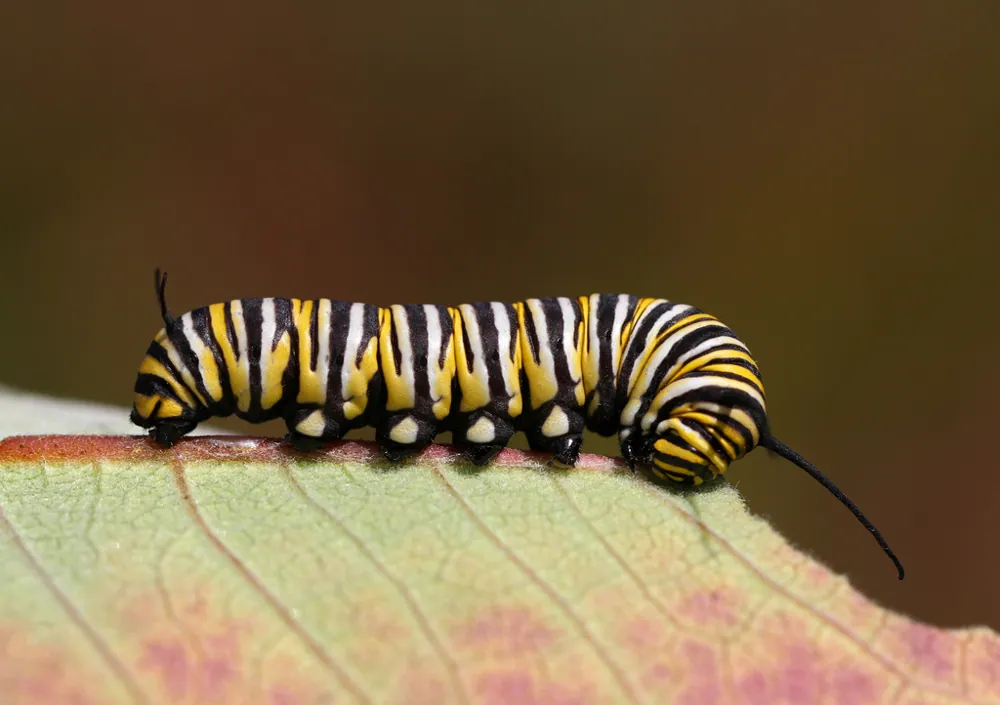
- Older caterpillars have white, yellow and black bands, plus black tentacles.1
Ñu ngi koy faral di jaxasoo ak: The viceroy butterfly is similar in colour and pattern but is much smaller. It also has an extra black stripe across each hindwing.1
Kàttanu daŋar
Lor na rekk su dara lekkee ko.
Ni mu lore nit ñi?
Musiba ci nit: WoyofNi jamu yamb walla lu ko yées. Lu jege, amul lor ci nit.Lan lay def bu tiitee?
Its bright black, orange and white pattern serves as a warning coloration to predators, and the viceroy butterfly copies it.1
 Su kenn laalee ko walla mu lekk ko
- Su kenn lekkee ko walla mu am ay màndarga ginnaaw bi mu ko lekkee: woo sa nimerob urgence walla centre antipoison ci saa si.
Saa su nekk, woo jëkk sa nimerob urgence (112, 000, 911). Lii ay ndigal yu yaatu ci ndimbal yu jëkk la, du ndigalu doktoor. Li war a xam ci ndimbal yu jëkk
 Sàmmal sa bopp
- Bul laal mukk, bul jàpp, bul sonal ab rab bu àll, doonte bu ndaw la, te doonte dafa mel ni dafa nelaw walla dafa dee.
- May ko bérab. Su nga ko gisee, dalal, dellu ginnaaw ndànk-ndànk te bàyyi ko mu dem yoonam.
- Su nga ko laalee walla nga lekk ko: bul moos say bët walla sa gémmiñ, raxas say loxo te wutal ndimbal doktoor.
Du la wut. Daŋaram nekk na rekk ngir kenn bañ ko lekk. Yeneen ci ni ngay sàmme sa bopp
Ni mu réye?
Ni mu guddoo?
 guddu na ni 3 bloku tabax yu ñu toftale
 mën na naaw ci benn terrain bu futbal bu mat ci 42 segond
Monarch butterfly ni mu réye ci wetu YOW?
Ay waññ rekk ci sa navigateur. Dara du denc te dara du yónnee fenn.
Ni mu gaawe?


Xibaar
Eastern North American monarchs migrate south each autumn to Florida and Mexico, covering thousands of miles, and return north in spring over several generations.1
A female monarch can lay eggs weighing up to her own body mass in total, even though each egg is only about 1/1000 of her mass.1
Fewer than 10% of monarch eggs and caterpillars commonly survive to adulthood, because of weather, predators, parasites and disease.1
Monarchs can develop from egg to adult in as little as 25 days in warm summer weather, but may take as long as seven weeks in cool spring conditions.1
A monarch caterpillar can travel up to 10 metres from its milkweed plant to find a safe place to pupate.1
The monarch was the first butterfly to have its genome sequenced, a draft of 273 million base pairs containing 16,866 protein-coding genes.1
Tasukatu léeb
Xalaat bu juum: Monarch butterflies are genetically modified organisms.
Dëgg: A 2015 study found genes from wasp bracoviruses in the North American monarch's genome. This led to articles calling monarchs genetically modified, but they are not genetically modified in the usual sense.1
Ngir boroom xam-xam ci daŋar
- Turu xam-xam
- Danaus plexippus
- Mbooloo
- Yeneen rab yu am daŋar ci seen yaram
- Njaboot
- Nymphalidae2
- Toftal
- Lepidoptera
- Kontinaa yi
- Amerig gu Bëj-gànnaar, Amerig gu Bëj-saalum
- Liir yi
- Females lay eggs singly, usually on the underside of young milkweed leaves, with 300 to 500 eggs over two to five weeks, and up to 1,180 eggs in total.1
- Musiba ci nit
- 1 / 5: Woyof3
Fa xibaar yi jóge
- Monarch butterfly (Wikipedia (CC BY-SA 4.0))
- Danaus plexippus (iNaturalist): tur ak ni ñu leen séddale.
- Venom Wiki: tolluwaayu musiba bi, réyaay bu yem bi ak xalaatu gaawaay bi, nun ñoo leen defar. Seetal ni nu leen waññe: Ni nuy natte musiba.
Xibaar bu nekk ci xët wii am na ab nimero buy won fa mu jóge. Su nu juumee, baal nu, nun ay nit ñu bëgg rab lanu, du ab jurnaalu xam-xam. Wax nu ko ci [email protected] te dinanu ko jubbanti.
 Jiit bi dafa xiif! Venom Wiki ab liggéeyu kenn la: amul pay, amul piblisite te amul traceur. Ab may bu tuuti dafay dimbali ngir mu des ci internet.Leel jiit bi
Yeneen ci mbooloo mi: Yeneen rab yu am daŋar ci seen yaram
 Striped blister beetleYeneen rab yu am daŋar ci seen yaramDafay metti rekkBul laal
 Eastern lubber grasshopperYeneen rab yu am daŋar ci seen yaramAmul lor
 Japanese pufferfishYeneen rab yu am daŋar ci seen yaramMën a rey
 Hawksbill sea turtleYeneen rab yu am daŋar ci seen yaramMën na rey
 Spanish flyYeneen rab yu am daŋar ci seen yaramSoxla na doktoorBul laal
 Greenland sharkYeneen rab yu am daŋar ci seen yaramDafay metti rekk
 Terciopelo
 Eastern coral snake
 Eastern diamondback rattlesnake
 Eyelash viper
 Timber rattlesnake
 Western diamondback rattlesnake