
 IAfrika
 IAsiya
 IYurophu
 uMzantsi Melika
 IOstreliya neOceania
 IAntarctica
 uLwandlekazi lwePasifiki
 uLwandlekazi lweAtlantiki
 uLwandlekazi lwaseIndiya
 uLwandlekazi lweArctic
 uLwandle lweMeditera
 uLwandle oluBomvu
 uLwandle lweKharibhiya
 uLwandle lweCoral
 uLwandle lwaseMzantsi China
 uLwandle lwePhilippines
 uLwandle lweAndaman
 uLwandle lwaseMntla (North Sea)
 uLwandle lweTimor ne-Arafura
 iBhayi yaseBengal
 iGulf yaseCalifornia
Black-banded sea krait
 Ukuluma
The black-banded sea krait is a sea snake with venom that is reportedly ten times stronger than a cobra's. It lives in the warm western Pacific Ocean, mostly around coral reefs. It spends much of its life in water but needs to come up to breathe.1



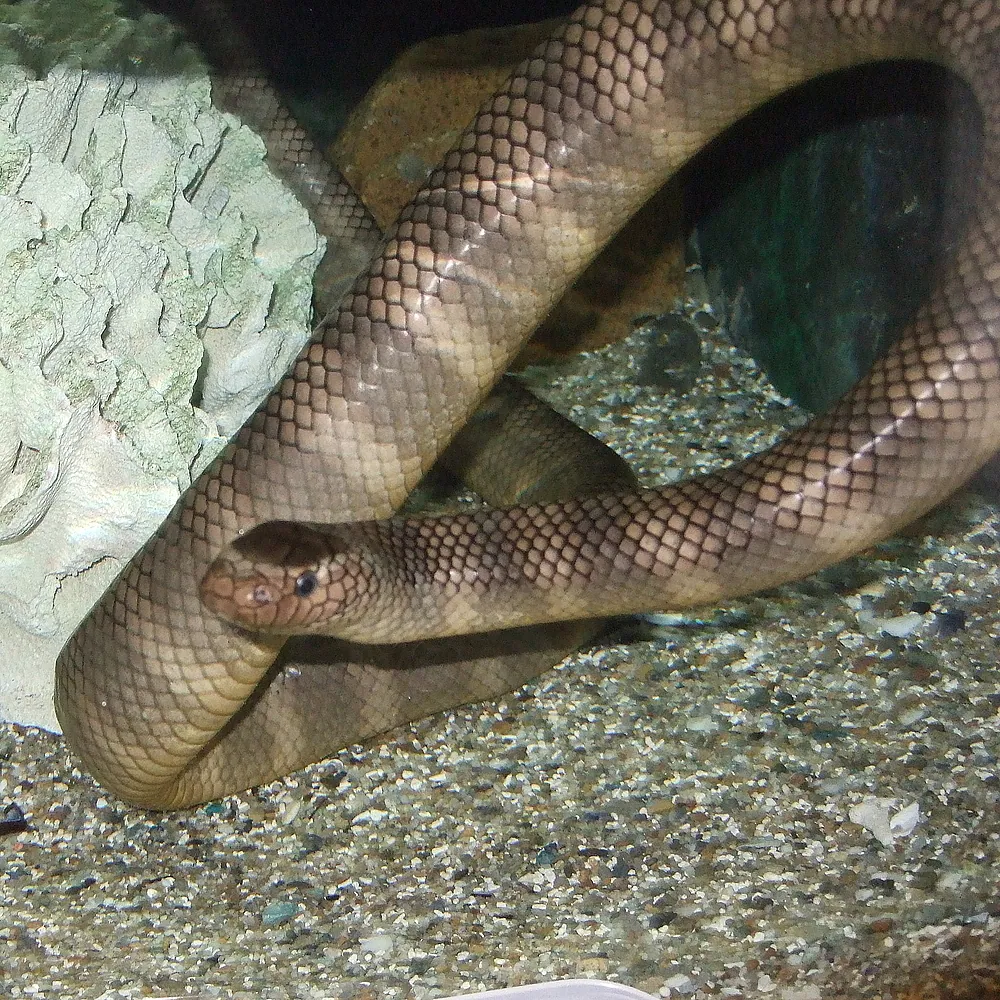
 Indlela yokusiqaphela
Amandla etyhefu yokuluma nokuhlaba
Ityhefu iphuma ngamazinyo aso etyhefu okanye ngamazinyo aso xa siluma.
Ityhefu yaso yokuluma okanye yokuhlaba yenza ntoni?
The bite is highly venomous and paralyses the prey. The venom glands are located behind the eyes.1
Siyingozi kangakanani ebantwini?
Ingozi ebantwini: Siyingozi kakhuluSinokubulala umntu ongafumani nyango.Its venom is reportedly ten times stronger than cobra venom, so any bite should be treated as serious.1
Senza ntoni xa soyika?
It prefers to save its energy and venom for hunting, so it strikes only as a very last resort when cornered, threatened or provoked.1
 Ukuba siyaluma
- Ukubopha ngoxinzelelo nokunqanda ukushukuma (pressure immobilisation): songa ibhandeji eqinileyo enwebekayo phezu kwendawo elunyiweyo uze unyuke ngelungu lonke, uliqinise ngesiplinti, kwaye ugcine umntu engashukumi kwaphela de kufike uncedo.
- Khupha umntu emanzini kwaye umse esibhedlele ngokukhawuleza.
Soloko utsalela inombolo kaxakeka kuqala (112, 000, 911). Esi sisikhokelo soncedo lokuqala ngokubanzi, asilocebiso lwezonyango. Iziseko zoncedo lokuqala
 Hlala ukhuselekile
- Ungaze uchukumise, ubambe okanye uqhule isilwanyana sasendle, nokuba sincinci, kwaye nokuba sibonakala silele okanye sifile.
- Sinike indawo. Ukuba udibana naso, hlala uzolile, buyela umva kancinci kwaye usiyeke sihambe ngendlela yaso.
- Ukuba siyakuluma: hlala uzolile, musa ukushukuma, tsalela inombolo kaxakeka (112, 000, 911) okanye uye esibhedlele ngokukhawuleza. Khumbula ukuba sasikhangeleka njani, ifoto iyanceda.
Asikuzingeli. Sisebenzisa ityhefu yaso ukubamba ukutya okanye ukuzikhusela, kwaye singakhetha ukuzimela. Okungakumbi malunga nokuhlala ukhuselekile
Phi emhlabeni?
Sikhulu kangakanani?
Side kangakanani?
 ubude obulingana neekati zasekhaya eziyi-3 ukusuka empumlweni ukuya emsileni
 ubude obulingana neebhanana eziyi-9 zilandelelana
 singaqubha ubude bechibi elikhulu lokuqubha (50 m) ngemizuzwana eyi-43
U-Black-banded sea krait mkhulu kangakanani xa uthelekisa NAWE?
Zizibalo nje kwibhrawuza yakho. Akukho nto igcinwayo okanye ithunyelwa naphi na.
Sikhawuleza kangakanani?
Iinyaniso
Its venom is reportedly ten times stronger than that of a cobra.1
It has been observed hunting in cooperative 'alliances' with bluefin trevally, which pick off small fish that the snake flushes from the coral.1
In some warm years, large numbers gather in sea caves and tide pools on the Ryukyu cliffs in search of fresh water and possibly to mate.1
Although it lives in the sea, it lays its eggs on land.1
In southern Japan its meat is used in a winter broth called irabu-jiru, which is said to taste like miso and a little like tuna.1
Its northward spread into waters near South Korea is linked to climate change, which has damaged its habitat.1
Kwiingcali zetyhefu
- Igama lenzululwazi
- Laticauda semifasciata
- Iqela
- Iinyoka zaselwandle
- Usapho
- Elapidae2
- Ucwangco
- Squamata
- Amazwekazi
- uLwandlekazi lwePasifiki, uLwandle lwePhilippines, uLwandle lwaseMzantsi China, Iilwandlekazi
- Iintsana
- Females lay 3 to 7 eggs on land, and the eggs hatch after 4 to 5 months.1
- Ingozi ebantwini
- 4 / 5: Siyingozi kakhulu3
Apho iinyaniso zivela khona
- Black-banded sea krait (Wikipedia (CC BY-SA 4.0))
- Laticauda semifasciata (iNaturalist): amagama nokuhlelwa.
- Venom Wiki: inqanaba lengozi, ubungakanani obuqhelekileyo noqikelelo lwesantya zezethu. Bona indlela esizifumana ngayo: Indlela esilinganisa ngayo ingozi.
Inyaniso nganye kweli phepha inenombolo ebonisa umthombo wayo. Ukuba senze impazamo, uxolo, sithanda izilwanyana, asiyomagazini yenzululwazi. Sixelele ku-[email protected] kwaye siza kuyilungisa.
 Unomadudwane ulambile! I-Venom Wiki yiprojekthi yomntu omnye: isimahla, ayinazibhengezo kwaye ayinazilandeli. Isipho esincinci sinceda ukuyigcina ikwi-intanethi.Yondla unomadudwane
Okungakumbi kwiqela elinye: Iinyoka zaselwandle
 Beaked sea snake
 Belcher's sea snake
 Blue-lipped sea krait
 Dubois' sea snake
 Olive sea snake
 Yellow-lipped sea krait
Sikwahlala: uLwandlekazi lwePasifiki
 Australian box jellyfishIijelifishi nezinye izilwanyana zaselwandle ezihlabayoSiyabulalaMusa ukuchukumisa
 Geography coneIinkumba ze-cone neengwaneSiyabulala
 Greater blue-ringed octopusIinkumba ze-cone neengwaneSiyabulala
 Japanese pufferfishEzinye izilwanyana ezityhefayoSiyabulala
 Southern blue-ringed octopusIinkumba ze-cone neengwaneSiyabulala
 Hawksbill sea turtleEzinye izilwanyana ezityhefayoSinokubulala