
 IAfrika
 IAsiya
 IYurophu
 uMzantsi Melika
 IOstreliya neOceania
 IAntarctica
 uLwandlekazi lwePasifiki
 uLwandlekazi lweAtlantiki
 uLwandlekazi lwaseIndiya
 uLwandlekazi lweArctic
 uLwandle lweMeditera
 uLwandle oluBomvu
 uLwandle lweKharibhiya
 uLwandle lweCoral
 uLwandle lwaseMzantsi China
 uLwandle lwePhilippines
 uLwandle lweAndaman
 uLwandle lwaseMntla (North Sea)
 uLwandle lweTimor ne-Arafura
 iBhayi yaseBengal
 iGulf yaseCalifornia
Greater blue-ringed octopus
 Ukuluma
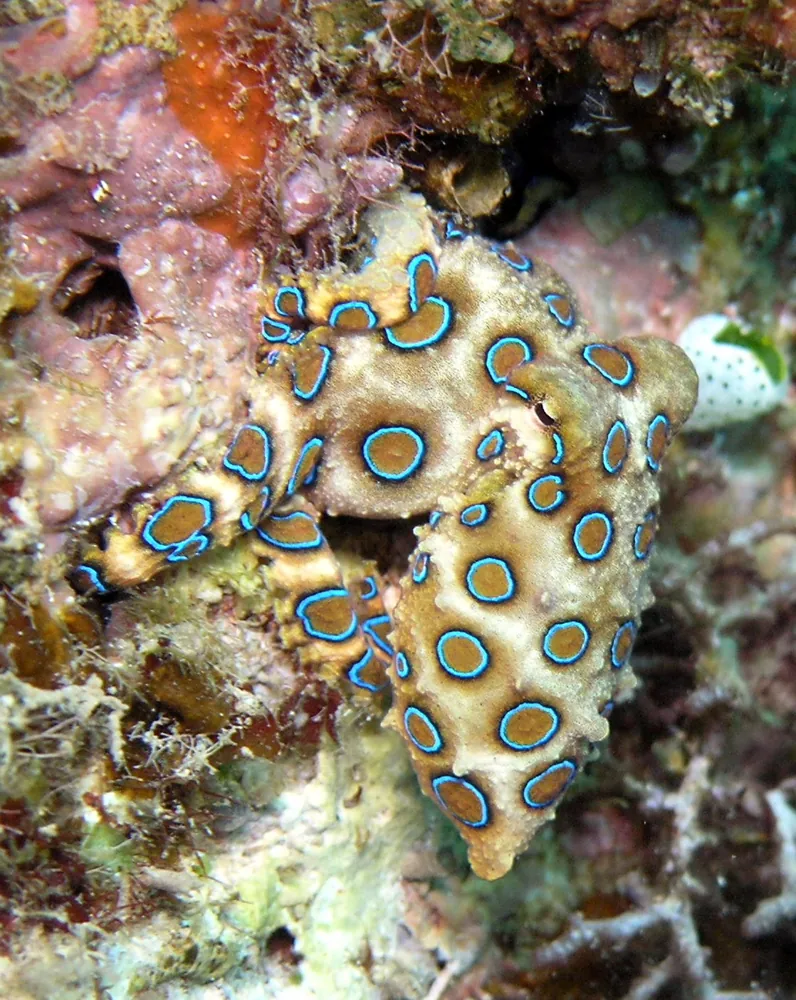
The greater blue-ringed octopus is a small sea creature that lives in the warm shallow waters of the Indo-West Pacific, including around Australia. It is one of the most venomous marine animals in the world, so knowing what it looks like matters.1



 Indlela yokusiqaphela
- A small octopus, up to 10 cm with its arms included, weighing about 80 grams on average.1
- Electric blue rings, about 7 to 8 mm across, roughly 60 of them, spread over its whole skin.1
- The rings flash iridescent blue as a warning signal, each flash lasting about a third of a second.1
- Its body colour varies from yellow ochre to light brown, or whitish when inactive.1
- Blue lines run through its eyes.1
Amandla etyhefu yokuluma nokuhlaba
Ityhefu iphuma ngamazinyo aso etyhefu okanye ngamazinyo aso xa siluma.
Ityhefu yaso yokuluma okanye yokuhlaba yenza ntoni?
Its venom contains tetrodotoxin (TTX), a powerful neurotoxin, which is a poison that attacks the nerves. It paralyses the muscles needed for movement, and in people it can lead to death through respiratory paralysis, which means the breathing muscles stop working. Symptoms include tingling and numbness of the face and lips, sweating, severe headaches, dizziness, speech problems, weakness and vomiting. Symptoms can appear between 15 minutes and four hours after a bite, and the victim stays conscious throughout.1
Siyingozi kangakanani ebantwini?
Ingozi ebantwini: SiyabulalaEsinye sezona zilwanyana ziyingozi emhlabeni.The bite is capable of being fatal to humans. The bite is painless, so a person may not notice it. Children are more sensitive to the toxin. Death can occur between 20 minutes and 24 hours after symptoms begin.1
Senza ntoni xa soyika?
It flashes its blue rings as a warning to predators, and it uses its venom to defend itself.1
 Ukuba siyaluma
- Ukubopha ngoxinzelelo nokunqanda ukushukuma (pressure immobilisation): songa ibhandeji eqinileyo enwebekayo phezu kwendawo elunyiweyo uze unyuke ngelungu lonke, uliqinise ngesiplinti, kwaye ugcine umntu engashukumi kwaphela de kufike uncedo.
- Ingwane enamakhonkco aluhlaza okwesibhakabhaka okanye inkumba ye-cone inokwenza umntu ayeke ukuphefumla esaphaphile: biza uncedo kwaye ulungele ukumphefumlela (rescue breaths) de i-ambulensi ithathe izintambo.
Soloko utsalela inombolo kaxakeka kuqala (112, 000, 911). Esi sisikhokelo soncedo lokuqala ngokubanzi, asilocebiso lwezonyango. Iziseko zoncedo lokuqala
 Hlala ukhuselekile
- Ungaze uchukumise, ubambe okanye uqhule isilwanyana sasendle, nokuba sincinci, kwaye nokuba sibonakala silele okanye sifile.
- Sinike indawo. Ukuba udibana naso, hlala uzolile, buyela umva kancinci kwaye usiyeke sihambe ngendlela yaso.
- Ukuba siyakuluma: hlala uzolile, musa ukushukuma, tsalela inombolo kaxakeka (112, 000, 911) okanye uye esibhedlele ngokukhawuleza. Khumbula ukuba sasikhangeleka njani, ifoto iyanceda.
Asikuzingeli. Sisebenzisa ityhefu yaso ukubamba ukutya okanye ukuzikhusela, kwaye singakhetha ukuzimela. Okungakumbi malunga nokuhlala ukhuselekile
Phi emhlabeni?
Sikhulu kangakanani?
Side kangakanani?
 ubude obulingana neebhloko zokudlala zokwakha eziyi-3 zilandelelana
 singaqubha ubude bechibi elikhulu lokuqubha (50 m) ngemizuzwana eyi-7,2
U-Greater blue-ringed octopus mkhulu kangakanani xa uthelekisa NAWE?
Zizibalo nje kwibhrawuza yakho. Akukho nto igcinwayo okanye ithunyelwa naphi na.
Sikhawuleza kangakanani?


Iinyaniso
The greater blue-ringed octopus is one of the most venomous marine animals in the world, despite being small.1
Its venom contains tetrodotoxin, the same toxin found in pufferfish.1
There is no known antidote or antitoxin for tetrodotoxin, and the toxin does not break down when heated or boiled.1
Its blue rings are a warning signal to predators, showing that it is highly venomous.1
Males die after mating, and females die after guarding their eggs because they refuse to eat.1
Umqhekezi weentsomi
Intsomi: A small octopus is harmless.
Inyaniso: Despite its small size, its bite can be deadly to humans.1
Kwiingcali zetyhefu
- Igama lenzululwazi
- Hapalochlaena lunulata
- Iqela
- Iinkumba ze-cone neengwane
- Usapho
- Octopodidae2
- Ucwangco
- Octopoda
- Amazwekazi
- uLwandlekazi lwaseIndiya, uLwandlekazi lwePasifiki, uLwandle lweCoral, uLwandle lwePhilippines, uLwandle lweTimor ne-Arafura, Iilwandlekazi
- Iintsana
- The female lays 50 to 100 eggs, which she carries under her arms for about a month. The young hatch as tiny planktonic paralarvae, about the size of a pea.1
- Ixesha lobomi
- malunga neminyaka eyi-21
- Ingozi ebantwini
- 5 / 5: Siyabulala3
Apho iinyaniso zivela khona
- Greater blue-ringed octopus (Wikipedia (CC BY-SA 4.0))
- Hapalochlaena lunulata (iNaturalist): amagama nokuhlelwa.
- Venom Wiki: inqanaba lengozi, ubungakanani obuqhelekileyo noqikelelo lwesantya zezethu. Bona indlela esizifumana ngayo: Indlela esilinganisa ngayo ingozi.
Inyaniso nganye kweli phepha inenombolo ebonisa umthombo wayo. Ukuba senze impazamo, uxolo, sithanda izilwanyana, asiyomagazini yenzululwazi. Sixelele ku-[email protected] kwaye siza kuyilungisa.
 Unomadudwane ulambile! I-Venom Wiki yiprojekthi yomntu omnye: isimahla, ayinazibhengezo kwaye ayinazilandeli. Isipho esincinci sinceda ukuyigcina ikwi-intanethi.Yondla unomadudwane
Okungakumbi kwiqela elinye: Iinkumba ze-cone neengwane
 Geography coneIinkumba ze-cone neengwaneSiyabulala
 Southern blue-ringed octopusIinkumba ze-cone neengwaneSiyabulala
 Blue sea dragonIinkumba ze-cone neengwaneKubuhlungu nje
 Common octopusIinkumba ze-cone neengwaneAsinangozi
 Giant Pacific octopusIinkumba ze-cone neengwaneAsinangozi
 Blue-lined octopusIinkumba ze-cone neengwaneSiyabulala
Sikwahlala: uLwandlekazi lwaseIndiya
 Australian box jellyfishIijelifishi nezinye izilwanyana zaselwandle ezihlabayoSiyabulalaMusa ukuchukumisa
 Hawksbill sea turtleEzinye izilwanyana ezityhefayoSinokubulala
 Irukandji jellyfishIijelifishi nezinye izilwanyana zaselwandle ezihlabayoSinokubulalaMusa ukuchukumisa
 Reef stonefishIintlanzi ezinetyhefuSinokubulalaMusa ukuchukumisa
 Crown-of-thorns starfishIi-sea urchin, iinkwenkwezi zolwandle neentshulubeKufuna ugqirhaMusa ukuchukumisa
 Portuguese man o' warIijelifishi nezinye izilwanyana zaselwandle ezihlabayoKufuna ugqirhaMusa ukuchukumisa