
 IAfrika
 IAsiya
 IYurophu
 uMzantsi Melika
 IOstreliya neOceania
 IAntarctica
 uLwandlekazi lwePasifiki
 uLwandlekazi lweAtlantiki
 uLwandlekazi lwaseIndiya
 uLwandlekazi lweArctic
 uLwandle lweMeditera
 uLwandle oluBomvu
 uLwandle lweKharibhiya
 uLwandle lweCoral
 uLwandle lwaseMzantsi China
 uLwandle lwePhilippines
 uLwandle lweAndaman
 uLwandle lwaseMntla (North Sea)
 uLwandle lweTimor ne-Arafura
 iBhayi yaseBengal
 iGulf yaseCalifornia
Cape cobra
 Ukuluma
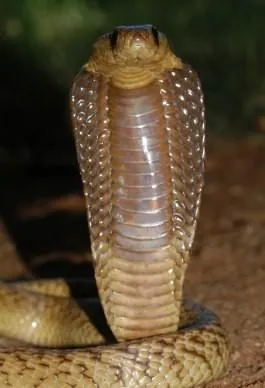
The Cape cobra is a medium-sized, highly venomous cobra. It lives in many kinds of land across southern Africa, and it often comes close to people. It is regarded as one of the most dangerous cobras in all of Africa.1



 Indlela yokusiqaphela
- Colour ranges from yellow through golden brown and dark brown to black.1
- Many individuals have black or pale stippling and blotches.1
- Juveniles have a dark throat that continues down the belly.1
- Adults are typically 1.2 to 1.4 m long.1
- When threatened, it raises the front of its body and spreads a broad hood.1
Sidla ngokubhidaniswa no: Juvenile Cape cobras have dark throats, which often leads people to confuse them with the rinkhals, a spitting cobra. The dark throat fades during the first year or two of life.1
Amandla etyhefu yokuluma nokuhlaba
Ityhefu iphuma ngamazinyo aso etyhefu okanye ngamazinyo aso xa siluma.
Ityhefu yaso yokuluma okanye yokuhlaba yenza ntoni?
Its venom is thick and syrupy, and contains potent neurotoxins that act on the nerves, and possibly cardiotoxins that affect the heart. The venom can affect the respiratory system, nervous system and heart. When death occurs, it normally takes one to ten hours, or more, and is often caused by respiratory failure due to paralysis.1
Siyingozi kangakanani ebantwini?
Ingozi ebantwini: SiyabulalaEsinye sezona zilwanyana ziyingozi emhlabeni.It is regarded as one of the most dangerous cobras in Africa because of its potent venom and its frequent presence around houses. The mortality rate for untreated bites is not exactly known, but is thought to be high, around 50%. Outcomes depend on factors such as the amount of venom injected and the bitten person's state of mind.1
 Iindaba ezimnandi: oogqirha banamayeza (i-antivenom) okanye unyango lwale nto.1
Senza ntoni xa soyika?
When threatened, it raises its forebody, spreads a broad hood, may hiss loudly and strikes readily.1
 Ukuba siyaluma
- Mechanical ventilation (a machine that helps the person breathe) and symptom management are often enough to save a life. Serious cases need antivenom, which is a polyvalent antivenom produced by the South African Institute of Medical Research.1
- Gcina umntu engashukumi kwaye ezolile, susa imisesane nezinto eziqinileyo, uze umse esibhedlele ngokukhawuleza: i-antivenom lunyango.
Soloko utsalela inombolo kaxakeka kuqala (112, 000, 911). Esi sisikhokelo soncedo lokuqala ngokubanzi, asilocebiso lwezonyango. Iziseko zoncedo lokuqala
 Hlala ukhuselekile
- Ungaze uchukumise, ubambe okanye uqhule isilwanyana sasendle, nokuba sincinci, kwaye nokuba sibonakala silele okanye sifile.
- Sinike indawo. Ukuba udibana naso, hlala uzolile, buyela umva kancinci kwaye usiyeke sihambe ngendlela yaso.
- Ukuba siyakuluma: hlala uzolile, musa ukushukuma, tsalela inombolo kaxakeka (112, 000, 911) okanye uye esibhedlele ngokukhawuleza. Khumbula ukuba sasikhangeleka njani, ifoto iyanceda.
Asikuzingeli. Sisebenzisa ityhefu yaso ukubamba ukutya okanye ukuzikhusela, kwaye singakhetha ukuzimela. Okungakumbi malunga nokuhlala ukhuselekile
Sikhulu kangakanani?
Side kangakanani?
 ubude obulingana neekati zasekhaya eziyi-3 ukusuka empumlweni ukuya emsileni
 ubude obulingana neebhanana eziyi-9 zilandelelana
 singagqiba iimitha ezili-100 ngemizuzwana eyi-48 (owona mntu ukhawulezayo udinga i-9,6)
U-Cape cobra mkhulu kangakanani xa uthelekisa NAWE?
Zizibalo nje kwibhrawuza yakho. Akukho nto igcinwayo okanye ithunyelwa naphi na.
Sikhawuleza kangakanani?


Iinyaniso
Apho iinyaniso zivela khona
- Cape cobra (Wikipedia (CC BY-SA 4.0))
- Naja nivea (iNaturalist): amagama nokuhlelwa.
- Venom Wiki: inqanaba lengozi, ubungakanani obuqhelekileyo noqikelelo lwesantya zezethu. Bona indlela esizifumana ngayo: Indlela esilinganisa ngayo ingozi.
Inyaniso nganye kweli phepha inenombolo ebonisa umthombo wayo. Ukuba senze impazamo, uxolo, sithanda izilwanyana, asiyomagazini yenzululwazi. Sixelele ku-[email protected] kwaye siza kuyilungisa.
 Unomadudwane ulambile! I-Venom Wiki yiprojekthi yomntu omnye: isimahla, ayinazibhengezo kwaye ayinazilandeli. Isipho esincinci sinceda ukuyigcina ikwi-intanethi.Yondla unomadudwane
Okungakumbi kwiqela elinye: Amaphimpi, iimamba nee-krait
 Black mambaAmaphimpi, iimamba nee-kraitSiyabulala
 Egyptian cobraAmaphimpi, iimamba nee-kraitSiyabulala
 Eastern green mambaAmaphimpi, iimamba nee-kraitSiyabulala
 Jameson's mambaAmaphimpi, iimamba nee-kraitSiyabulala
 Western green mambaAmaphimpi, iimamba nee-kraitSiyabulala
 Ashe's spitting cobraAmaphimpi, iimamba nee-kraitSinokubulala
 Deathstalker
 Puff adder
 Boomslang
 Fat-tailed scorpion
 Gaboon viper
 Western honey bee