
 IAfrika
 IAsiya
 IYurophu
 uMzantsi Melika
 IOstreliya neOceania
 IAntarctica
 uLwandlekazi lwePasifiki
 uLwandlekazi lweAtlantiki
 uLwandlekazi lwaseIndiya
 uLwandlekazi lweArctic
 uLwandle lweMeditera
 uLwandle oluBomvu
 uLwandle lweKharibhiya
 uLwandle lweCoral
 uLwandle lwaseMzantsi China
 uLwandle lwePhilippines
 uLwandle lweAndaman
 uLwandle lwaseMntla (North Sea)
 uLwandle lweTimor ne-Arafura
 iBhayi yaseBengal
 iGulf yaseCalifornia
Eastern green mamba
 Ukuluma
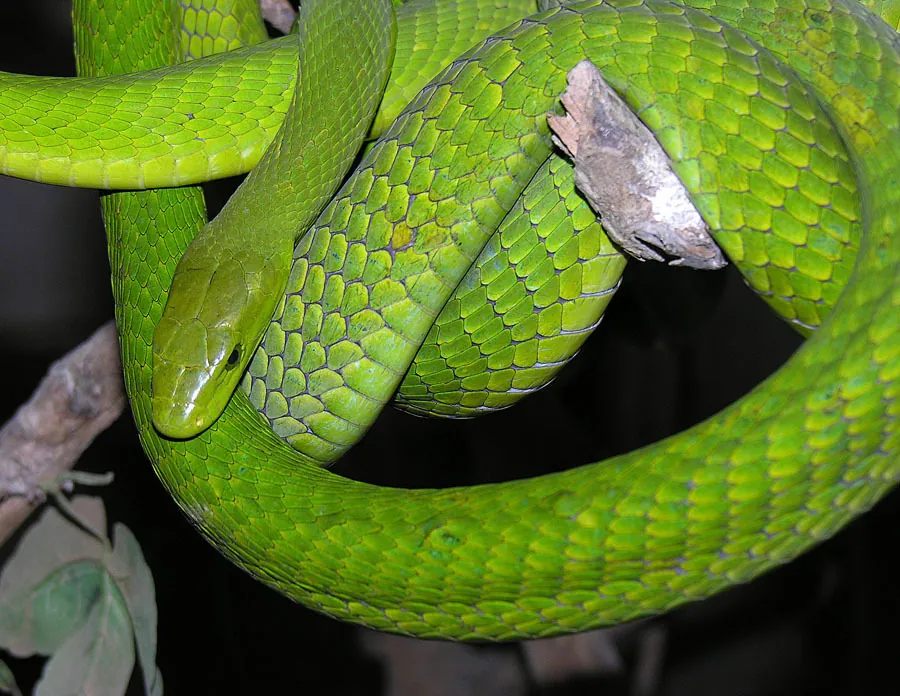
The eastern green mamba is a highly venomous snake with a slender body and bright green back. It lives in trees along the coasts of southern and East Africa. Although it is one of the most common green mambas, it is shy and usually hidden in leaves, so it is rarely seen.1



 Indlela yokusiqaphela
- Bright green upperparts, sometimes with a few isolated yellow scales.1
- Pale yellow-green belly.1
- Juveniles are blue-green and turn bright green at about 75 cm long.1
- Long, slender, coffin-shaped head. It can flatten its neck into a slight hood when threatened.1
- The inside of the mouth is white or bluish-white.1
Sidla ngokubhidaniswa no: Green forms of the boomslang are often called green mambas in Southern Africa. They have larger eyes and shorter heads. Green bush snakes of the genus Philothamnus are often confused with smaller eastern green mambas. The boomslang is also venomous.1
Amandla etyhefu yokuluma nokuhlaba
Ityhefu iphuma ngamazinyo aso etyhefu okanye ngamazinyo aso xa siluma.
Ityhefu yaso yokuluma okanye yokuhlaba yenza ntoni?
Its venom contains neurotoxins, which attack the nerves, and cardiotoxins, which damage the heart. Symptoms include swelling at the bite, dizziness, nausea, dehydration, laboured breathing and difficulty swallowing. These can progress to irregular heartbeat, convulsions and respiratory paralysis, which stops breathing and can be fatal. Paralysis may be mild or absent.1
Siyingozi kangakanani ebantwini?
Ingozi ebantwini: SiyabulalaEsinye sezona zilwanyana ziyingozi emhlabeni.A survey in southern Africa from 1957 to 1979 recorded 17 bites confirmed as eastern green mambas. Ten of these caused systemic envenomation, and no victims died. Bites are most common from September to February, the breeding season, when the snake is most irritable. The average dose able to kill a human is about 18 to 20 mg of venom, and one bite can deliver 60 to 95 mg (dry weight). In 2024, a YouTuber died after being bitten, following anaphylactic shock.1
Senza ntoni xa soyika?
It is shy and avoids people and predators, attacking only when it feels threatened, and it can flatten its neck into a hood.1
 Ukuba siyaluma
- Severe bites must be treated immediately on site, as they can quickly prove deadly.1
- Gcina umntu engashukumi kwaye ezolile, susa imisesane nezinto eziqinileyo, uze umse esibhedlele ngokukhawuleza: i-antivenom lunyango.
Soloko utsalela inombolo kaxakeka kuqala (112, 000, 911). Esi sisikhokelo soncedo lokuqala ngokubanzi, asilocebiso lwezonyango. Iziseko zoncedo lokuqala
 Hlala ukhuselekile
- Ungaze uchukumise, ubambe okanye uqhule isilwanyana sasendle, nokuba sincinci, kwaye nokuba sibonakala silele okanye sifile.
- Sinike indawo. Ukuba udibana naso, hlala uzolile, buyela umva kancinci kwaye usiyeke sihambe ngendlela yaso.
- Ukuba siyakuluma: hlala uzolile, musa ukushukuma, tsalela inombolo kaxakeka (112, 000, 911) okanye uye esibhedlele ngokukhawuleza. Khumbula ukuba sasikhangeleka njani, ifoto iyanceda.
Asikuzingeli. Sisebenzisa ityhefu yaso ukubamba ukutya okanye ukuzikhusela, kwaye singakhetha ukuzimela. Okungakumbi malunga nokuhlala ukhuselekile
Sikhulu kangakanani?
Side kangakanani?
 ubude obulingana nezinja eziyi-2,5 ukusuka empumlweni ukuya emsileni
 ubude obulingana neebhanana eziyi-14 zilandelelana
 singagqiba iimitha ezili-100 ngemizuzwana eyi-43 (owona mntu ukhawulezayo udinga i-9,6)
U-Eastern green mamba mkhulu kangakanani xa uthelekisa NAWE?
Zizibalo nje kwibhrawuza yakho. Akukho nto igcinwayo okanye ithunyelwa naphi na.
Sikhawuleza kangakanani?


Iinyaniso
Males fight each other during the breeding season, usually entwining and pushing to pin each other's heads down. These fights can last several hours, but the snakes do not bite each other.1
Unlike most elapid snakes, which hunt actively, it often waits in ambush for its prey, a style more common among vipers.1
On average, an individual moves only about 5.4 metres per day, and it can stay in the same place for days.1
It has the least toxic venom of the three green mamba species, but it is still highly venomous.1
The oldest recorded eastern green mamba was a captive snake that lived 18.8 years.1
Umqhekezi weentsomi
Intsomi: It is an aggressive, fast-moving 'people-chaser'.
Inyaniso: It is shy and elusive, usually hidden in trees, and it generally avoids people. It attacks only when it feels threatened.1
Kwiingcali zetyhefu
- Igama lenzululwazi
- Dendroaspis angusticeps
- Iqela
- Amaphimpi, iimamba nee-krait
- Usapho
- Elapidae2
- Ucwangco
- Squamata
- Amazwekazi
- IAfrika
- Iintsana
- The female lays 4 to 17 eggs, usually 10 to 15, in leaf litter in hollow trees, from October to November. The young measure about 30 to 45 cm in the wild.1
- Ixesha lobomi
- malunga neminyaka eyi-18,81
- Ingozi ebantwini
- 5 / 5: Siyabulala3
Apho iinyaniso zivela khona
- Eastern green mamba (Wikipedia (CC BY-SA 4.0))
- Dendroaspis angusticeps (iNaturalist): amagama nokuhlelwa.
- Venom Wiki: inqanaba lengozi, ubungakanani obuqhelekileyo noqikelelo lwesantya zezethu. Bona indlela esizifumana ngayo: Indlela esilinganisa ngayo ingozi.
Inyaniso nganye kweli phepha inenombolo ebonisa umthombo wayo. Ukuba senze impazamo, uxolo, sithanda izilwanyana, asiyomagazini yenzululwazi. Sixelele ku-[email protected] kwaye siza kuyilungisa.
 Unomadudwane ulambile! I-Venom Wiki yiprojekthi yomntu omnye: isimahla, ayinazibhengezo kwaye ayinazilandeli. Isipho esincinci sinceda ukuyigcina ikwi-intanethi.Yondla unomadudwane
Okungakumbi kwiqela elinye: Amaphimpi, iimamba nee-krait
 Black mambaAmaphimpi, iimamba nee-kraitSiyabulala
 Egyptian cobraAmaphimpi, iimamba nee-kraitSiyabulala
 Cape cobraAmaphimpi, iimamba nee-kraitSiyabulala
 Jameson's mambaAmaphimpi, iimamba nee-kraitSiyabulala
 Western green mambaAmaphimpi, iimamba nee-kraitSiyabulala
 Ashe's spitting cobraAmaphimpi, iimamba nee-kraitSinokubulala
 Deathstalker
 Puff adder
 Boomslang
 Fat-tailed scorpion
 Gaboon viper
 Western honey bee