
 IAfrika
 IAsiya
 IYurophu
 uMzantsi Melika
 IOstreliya neOceania
 IAntarctica
 uLwandlekazi lwePasifiki
 uLwandlekazi lweAtlantiki
 uLwandlekazi lwaseIndiya
 uLwandlekazi lweArctic
 uLwandle lweMeditera
 uLwandle oluBomvu
 uLwandle lweKharibhiya
 uLwandle lweCoral
 uLwandle lwaseMzantsi China
 uLwandle lwePhilippines
 uLwandle lweAndaman
 uLwandle lwaseMntla (North Sea)
 uLwandle lweTimor ne-Arafura
 iBhayi yaseBengal
 iGulf yaseCalifornia
Common vampire bat
 Ukuluma
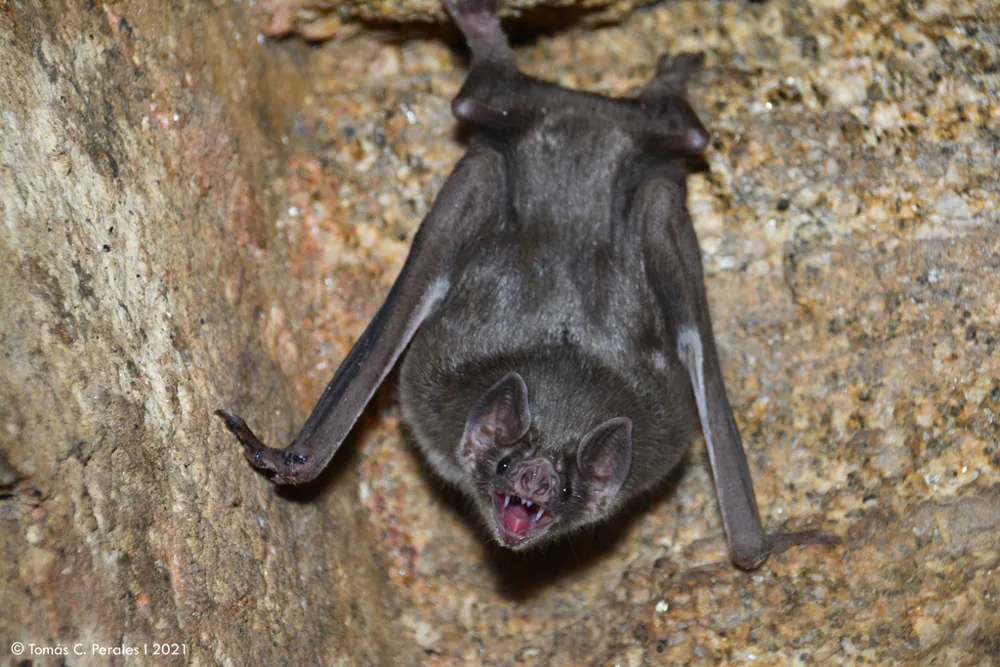
The common vampire bat is a small bat that feeds on the blood of mammals, mostly farm animals such as cattle and horses. It lives in the Americas, from Mexico to Chile and Argentina, and it is one of only three vampire bat species in the world. It matters because it can carry rabies and is considered a pest by farmers.1

 Indlela yokusiqaphela
- Short-haired fur, silver-grey on the underside and darker on the back1
- Flat, leaf-shaped nose and a deeply grooved lower lip1
- A well-developed, clawed thumb on each wing, longer than in its relatives1
- Average body length of about 9 cm, with an 18 cm wingspan1
- Can run and leap on the ground, using its wings to push forward1
Sidla ngokubhidaniswa no: The hairy-legged vampire bat and the white-winged vampire bat look very similar. The common vampire bat can be told apart by its longer thumb, and it feeds on mammal blood far more often than the other two, which mostly feed on birds.1
Amandla etyhefu yokuluma nokuhlaba
Ityhefu iphuma ngamazinyo aso etyhefu okanye ngamazinyo aso xa siluma.
Siyingozi kangakanani ebantwini?
Ingozi ebantwini: KubuhlunguKunokuba buhlungu ngokwenene, kodwa phantse akusoze kube kubi kakhulu.The bat is a carrier of rabies, and the danger is mostly to livestock rather than to people. Any person who wakes to find a vampire bat in their sleeping quarters should seek medical attention, and young children may not fully wake up during a bite.1
 Ukuba siyaluma
- Anyone who wakes to find a vampire bat in their sleeping area should get medical attention. Bats should be avoided and not handled, and they should not be kept in living spaces.1
- Hlamba inxeba kakuhle kwaye ufumane uncedo lwezonyango.
Soloko utsalela inombolo kaxakeka kuqala (112, 000, 911). Esi sisikhokelo soncedo lokuqala ngokubanzi, asilocebiso lwezonyango. Iziseko zoncedo lokuqala
 Hlala ukhuselekile
- Ungaze uchukumise, ubambe okanye uqhule isilwanyana sasendle, nokuba sincinci, kwaye nokuba sibonakala silele okanye sifile.
- Sinike indawo. Ukuba udibana naso, hlala uzolile, buyela umva kancinci kwaye usiyeke sihambe ngendlela yaso.
- Ukuba siyakuluma: hlala uzolile, musa ukushukuma, tsalela inombolo kaxakeka (112, 000, 911) okanye uye esibhedlele ngokukhawuleza. Khumbula ukuba sasikhangeleka njani, ifoto iyanceda.
Asikuzingeli. Sisebenzisa ityhefu yaso ukubamba ukutya okanye ukuzikhusela, kwaye singakhetha ukuzimela. Okungakumbi malunga nokuhlala ukhuselekile
Sikhulu kangakanani?
Side kangakanani?
Sinzima kangakanani?

 ubude obulingana neebhloko zokudlala zokwakha eziyi-3 zilandelelana
 singabhabha siwele ibala lebhola ekhatywayo lonke ngemizuzwana eyi-19
U-Common vampire bat mkhulu kangakanani xa uthelekisa NAWE?
Zizibalo nje kwibhrawuza yakho. Akukho nto igcinwayo okanye ithunyelwa naphi na.
Sikhawuleza kangakanani?


Iinyaniso
Its saliva contains an anticoagulant called Draculin, named after Count Dracula, which keeps the blood from clotting while it feeds.1
A genetically engineered drug based on the anticoagulant in its saliva, called desmoteplase, has been shown to increase blood flow in stroke patients.1
Heat sensors in its nose help it find blood vessels close to the surface of the skin.1
It has the fewest teeth of any bat, and its upper incisors have no enamel, which keeps them sharp.1
Vampire bats share food with each other, and a bat that is well fed will regurgitate blood to a hungry roost-mate, mostly to its own young.1
It hunts at night and can travel 5 to 8 km from its roost to find food.1
Kwiingcali zetyhefu
- Igama lenzululwazi
- Desmodus rotundus
- Iqela
- Izilwanyana ezincancisayo ezinetyhefu
- Usapho
- Phyllostomidae2
- Ucwangco
- Chiroptera
- Amazwekazi
- uMntla Melika, uMzantsi Melika
- Iintsana
- Females give birth to one offspring per pregnancy after a gestation period of about seven months.1
- Imeko yaso endle
- Least Concern1
- Ingozi ebantwini
- 2 / 5: Kubuhlungu3
Apho iinyaniso zivela khona
- Common vampire bat (Wikipedia (CC BY-SA 4.0))
- Desmodus rotundus (iNaturalist): amagama nokuhlelwa.
- Venom Wiki: inqanaba lengozi, ubungakanani obuqhelekileyo noqikelelo lwesantya zezethu. Bona indlela esizifumana ngayo: Indlela esilinganisa ngayo ingozi.
Inyaniso nganye kweli phepha inenombolo ebonisa umthombo wayo. Ukuba senze impazamo, uxolo, sithanda izilwanyana, asiyomagazini yenzululwazi. Sixelele ku-[email protected] kwaye siza kuyilungisa.
 Unomadudwane ulambile! I-Venom Wiki yiprojekthi yomntu omnye: isimahla, ayinazibhengezo kwaye ayinazilandeli. Isipho esincinci sinceda ukuyigcina ikwi-intanethi.Yondla unomadudwane
Okungakumbi kwiqela elinye: Izilwanyana ezincancisayo ezinetyhefu
 Cuban solenodonIzilwanyana ezincancisayo ezinetyhefuKubuhlungu nje
 Hispaniolan solenodonIzilwanyana ezincancisayo ezinetyhefuKubuhlungu nje
 Northern short-tailed shrewIzilwanyana ezincancisayo ezinetyhefuAsinangozi
 Hairy-legged vampire batIzilwanyana ezincancisayo ezinetyhefuAsinangozi
 White-winged vampire batIzilwanyana ezincancisayo ezinetyhefuAsinangozi
 PlatypusIzilwanyana ezincancisayo ezinetyhefuKubuhlungu nje
 Terciopelo
 Eastern coral snake
 Eastern diamondback rattlesnake
 Eyelash viper
 Timber rattlesnake
 Western diamondback rattlesnake