
 IAfrika
 IAsiya
 IYurophu
 uMzantsi Melika
 IOstreliya neOceania
 IAntarctica
 uLwandlekazi lwePasifiki
 uLwandlekazi lweAtlantiki
 uLwandlekazi lwaseIndiya
 uLwandlekazi lweArctic
 uLwandle lweMeditera
 uLwandle oluBomvu
 uLwandle lweKharibhiya
 uLwandle lweCoral
 uLwandle lwaseMzantsi China
 uLwandle lwePhilippines
 uLwandle lweAndaman
 uLwandle lwaseMntla (North Sea)
 uLwandle lweTimor ne-Arafura
 iBhayi yaseBengal
 iGulf yaseCalifornia
Cuban solenodon
 Ukuluma
The Cuban solenodon is a small, furry, shrew-like mammal that lives only in the mountain forests of eastern Cuba. It is one of the few mammals that can inject venom, which it uses to catch its prey. It is endangered and was once thought to be extinct.1



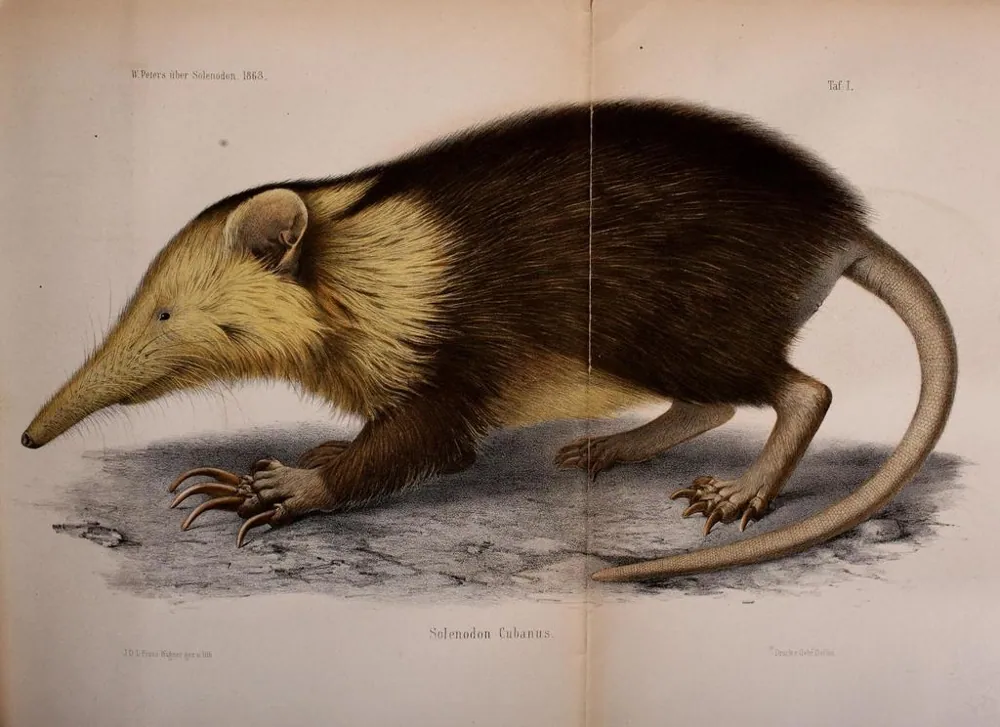
 Indlela yokusiqaphela
- Dark brown to black hair1
- Small eyes and an extremely elongated snout1
- Looks like a large brown rat, with a long, naked, scaly tail1
- Measures 41–56 cm from nose to tail tip1
Sidla ngokubhidaniswa no: It is sometimes compared to a shrew, but it most closely resembles the tenrecs of Madagascar.1
Amandla etyhefu yokuluma nokuhlaba
Ityhefu iphuma ngamazinyo aso etyhefu okanye ngamazinyo aso xa siluma.
Ityhefu yaso yokuluma okanye yokuhlaba yenza ntoni?
Its venom comes from modified salivary glands in the lower jaw, so it is a venomous bite. The venom is strong enough to kill lizards, other small reptiles, frogs, small birds and rodents. Solenodons do not appear to be immune to the venom of their own kind, and cage mates have been reported dying after fights.1
Siyingozi kangakanani ebantwini?
Ingozi ebantwini: KubuhlunguKunokuba buhlungu ngokwenene, kodwa phantse akusoze kube kubi kakhulu. Ukuba siyaluma
- Hlamba inxeba kakuhle kwaye ufumane uncedo lwezonyango.
Soloko utsalela inombolo kaxakeka kuqala (112, 000, 911). Esi sisikhokelo soncedo lokuqala ngokubanzi, asilocebiso lwezonyango. Iziseko zoncedo lokuqala
 Hlala ukhuselekile
- Ungaze uchukumise, ubambe okanye uqhule isilwanyana sasendle, nokuba sincinci, kwaye nokuba sibonakala silele okanye sifile.
- Sinike indawo. Ukuba udibana naso, hlala uzolile, buyela umva kancinci kwaye usiyeke sihambe ngendlela yaso.
- Ukuba siyakuluma: hlala uzolile, musa ukushukuma, tsalela inombolo kaxakeka (112, 000, 911) okanye uye esibhedlele ngokukhawuleza. Khumbula ukuba sasikhangeleka njani, ifoto iyanceda.
Asikuzingeli. Sisebenzisa ityhefu yaso ukubamba ukutya okanye ukuzikhusela, kwaye singakhetha ukuzimela. Okungakumbi malunga nokuhlala ukhuselekile
Sikhulu kangakanani?
Side kangakanani?
Sinzima kangakanani?
 ubude obulingana neebhanana eziyi-3 zilandelelana
 ubude obulingana neebhloko zokudlala zokwakha eziyi-18 zilandelelana
 singagqiba iimitha ezili-100 ngemizuzwana eyi-45 (owona mntu ukhawulezayo udinga i-9,6)
U-Cuban solenodon mkhulu kangakanani xa uthelekisa NAWE?
Zizibalo nje kwibhrawuza yakho. Akukho nto igcinwayo okanye ithunyelwa naphi na.
Sikhawuleza kangakanani?


Iinyaniso
The solenodons are one of the few groups of mammals that are venomous.1
It was declared extinct in 1970, but was found again in 1974.1
The Cuban solenodon found in 2003 was named Alejandrito. It was healthy, and it was released back into the wild after two days of scientific study.1
Males mate with several females, but they do not help raise the young. Males and females only meet to mate.1
Umqhekezi weentsomi
Intsomi: The Cuban solenodon is extinct.
Inyaniso: It is not extinct. It was once thought to be extinct because it is so rare and hard to see, but it survives today and is listed as endangered.1
Apho iinyaniso zivela khona
- Cuban solenodon (Wikipedia (CC BY-SA 4.0))
- Atopogale cubana (iNaturalist): amagama nokuhlelwa.
- Venom Wiki: inqanaba lengozi, ubungakanani obuqhelekileyo noqikelelo lwesantya zezethu. Bona indlela esizifumana ngayo: Indlela esilinganisa ngayo ingozi.
Inyaniso nganye kweli phepha inenombolo ebonisa umthombo wayo. Ukuba senze impazamo, uxolo, sithanda izilwanyana, asiyomagazini yenzululwazi. Sixelele ku-[email protected] kwaye siza kuyilungisa.
 Unomadudwane ulambile! I-Venom Wiki yiprojekthi yomntu omnye: isimahla, ayinazibhengezo kwaye ayinazilandeli. Isipho esincinci sinceda ukuyigcina ikwi-intanethi.Yondla unomadudwane
Okungakumbi kwiqela elinye: Izilwanyana ezincancisayo ezinetyhefu
 Common vampire batIzilwanyana ezincancisayo ezinetyhefuKubuhlungu nje
 Hispaniolan solenodonIzilwanyana ezincancisayo ezinetyhefuKubuhlungu nje
 Northern short-tailed shrewIzilwanyana ezincancisayo ezinetyhefuAsinangozi
 Hairy-legged vampire batIzilwanyana ezincancisayo ezinetyhefuAsinangozi
 White-winged vampire batIzilwanyana ezincancisayo ezinetyhefuAsinangozi
 PlatypusIzilwanyana ezincancisayo ezinetyhefuKubuhlungu nje
 Terciopelo
 Eastern coral snake
 Eastern diamondback rattlesnake
 Eyelash viper
 Timber rattlesnake
 Western diamondback rattlesnake