
 IAfrika
 IAsiya
 IYurophu
 uMzantsi Melika
 IOstreliya neOceania
 IAntarctica
 uLwandlekazi lwePasifiki
 uLwandlekazi lweAtlantiki
 uLwandlekazi lwaseIndiya
 uLwandlekazi lweArctic
 uLwandle lweMeditera
 uLwandle oluBomvu
 uLwandle lweKharibhiya
 uLwandle lweCoral
 uLwandle lwaseMzantsi China
 uLwandle lwePhilippines
 uLwandle lweAndaman
 uLwandle lwaseMntla (North Sea)
 uLwandle lweTimor ne-Arafura
 iBhayi yaseBengal
 iGulf yaseCalifornia
Cupboard spider
 Ukuluma
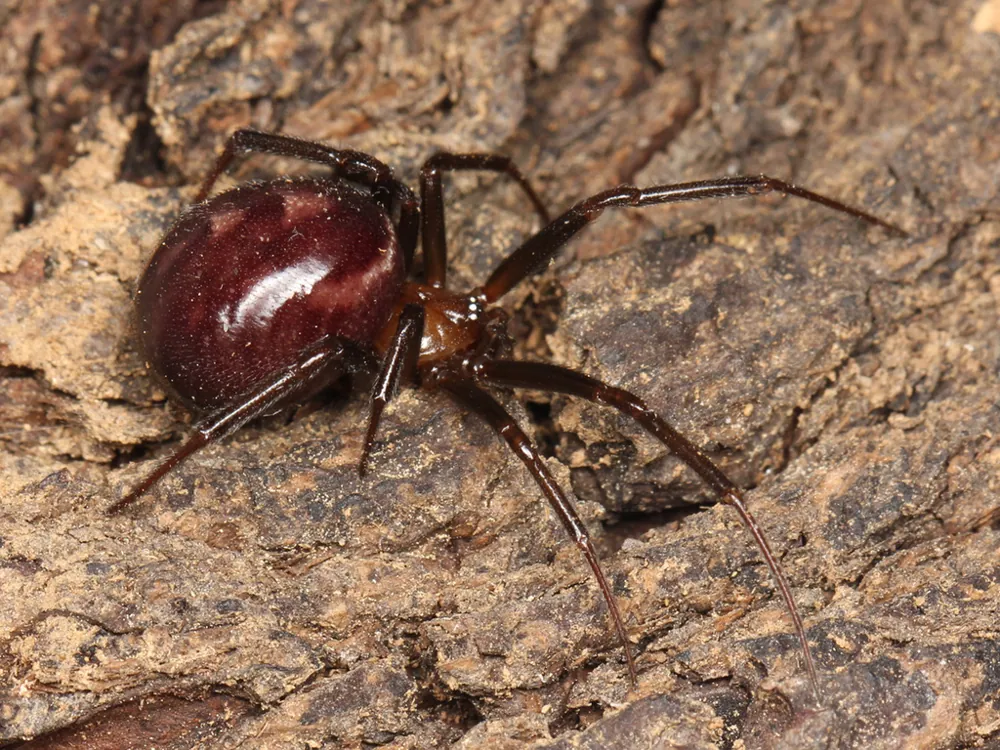
The cupboard spider is a common house spider that lives in dark corners and builds messy, three-dimensional webs. It is often mistaken for the dangerous black widow, but its bite is usually minor. Its name shows that it is found in many parts of the world, including Europe, temperate Asia and areas where it has been introduced.1

 Indlela yokusiqaphela
- Adult females are 6 to 10.5 mm long, dark coloured and round-bodied, with a bulbous abdomen.1
- Typical colour ranges from purplish brown to black, with light-coloured markings.1
- It has no bright red hourglass pattern or other bright, distinctive markings.1
- Males are thinner and can be nearly as long as females, at 4.1 to 10 mm.1
- Sexually mature males have lighter, more reddish legs than females.1
Sidla ngokubhidaniswa no: It is often confused with black widows and redbacks (Latrodectus species), which have a bright red hourglass pattern that this spider lacks. Steatoda borealis is similar in shape but slightly smaller and found in colder climates. It has coloured markings on the top of the abdomen rather than the underside.1
Amandla etyhefu yokuluma nokuhlaba
Ityhefu iphuma ngamazinyo aso etyhefu okanye ngamazinyo aso xa siluma.
Ityhefu yaso yokuluma okanye yokuhlaba yenza ntoni?
The bite is minor in humans and has no long-lasting effects. Symptoms can include blistering at the bite site and pain. A few cases have included fever, nausea, sweating and a general feeling of being unwell that lasted several days.1
Siyingozi kangakanani ebantwini?
Ingozi ebantwini: KuthambileNjengokuhlatywa yinyosi okanye ngaphantsi. Phantse asinangozi ebantwini.The spider is not aggressive. Most injuries to people happen when a spider is accidentally squeezed or pinched and bites in defence. It is possible that a spider may bite a finger pushed into its web by mistake.1
 Iindaba ezimnandi: oogqirha banamayeza (i-antivenom) okanye unyango lwale nto.1
Senza ntoni xa soyika?
It usually flees when a large creature comes near, and it bites when it is squeezed or pinched.1
 Ukuba siyaluma
- Hlamba indawo elunyiweyo uze ubeke ipakethi yomkhenkce kuyo ngenxa yeentlungu. Fumana uncedo lwezonyango ukuba iintlungu zinamandla, ziyasasazeka okanye umntu uziva engaphilanga kakuhle.
Soloko utsalela inombolo kaxakeka kuqala (112, 000, 911). Esi sisikhokelo soncedo lokuqala ngokubanzi, asilocebiso lwezonyango. Iziseko zoncedo lokuqala
 Hlala ukhuselekile
- Ungaze uchukumise, ubambe okanye uqhule isilwanyana sasendle, nokuba sincinci, kwaye nokuba sibonakala silele okanye sifile.
- Sinike indawo. Ukuba udibana naso, hlala uzolile, buyela umva kancinci kwaye usiyeke sihambe ngendlela yaso.
- Ukuba siyakuluma: hlala uzolile, musa ukushukuma, tsalela inombolo kaxakeka (112, 000, 911) okanye uye esibhedlele ngokukhawuleza. Khumbula ukuba sasikhangeleka njani, ifoto iyanceda.
Asikuzingeli. Sisebenzisa ityhefu yaso ukubamba ukutya okanye ukuzikhusela, kwaye singakhetha ukuzimela. Okungakumbi malunga nokuhlala ukhuselekile
Sikhulu kangakanani?
Side kangakanani?
 sincinci kangangokuba singahlala eluzipheni lwakho
U-Cupboard spider mkhulu kangakanani xa uthelekisa NAWE?
Zizibalo nje kwibhrawuza yakho. Akukho nto igcinwayo okanye ithunyelwa naphi na.
Sikhawuleza kangakanani?


Iinyaniso
Director Sam Raimi chose this spider to play the radioactive spider that bites Peter Parker in the 2002 film Spider-Man. The filming spider was painted with red and blue makeup.1
The spider reportedly preys on black widows, which can make it useful to have around.1
It can go several months without feeding, as long as it has access to water.1
Females can live up to six years, while males typically live 1 to 1.5 years and often die shortly after mating.1
Umqhekezi weentsomi
Intsomi: It is a dangerous widow spider, just like the black widow.
Inyaniso: Its bite is minor in humans and has no long-lasting effects, although it can cause pain, blistering and, in a few cases, several days of feeling unwell.1
Kwiingcali zetyhefu
- Igama lenzululwazi
- Steatoda grossa
- Iqela
- Izigcawu
- Usapho
- Theridiidae2
- Ucwangco
- Araneae
- Amazwekazi
- IYurophu
- Iintsana
- A well-fed female can lay three or more egg sacs each year, with 40 to 100 eggs in each sac. The eggs usually hatch within a month at normal household temperature and humidity, and the spiderlings are independent from the moment they hatch.1
- Ixesha lobomi
- malunga neminyaka eyi-61
- Ingozi ebantwini
- 1 / 5: Kuthambile3
Apho iinyaniso zivela khona
- Steatoda grossa (Wikipedia (CC BY-SA 4.0))
- Steatoda grossa (iNaturalist): amagama nokuhlelwa.
- Venom Wiki: inqanaba lengozi, ubungakanani obuqhelekileyo noqikelelo lwesantya zezethu. Bona indlela esizifumana ngayo: Indlela esilinganisa ngayo ingozi.
Inyaniso nganye kweli phepha inenombolo ebonisa umthombo wayo. Ukuba senze impazamo, uxolo, sithanda izilwanyana, asiyomagazini yenzululwazi. Sixelele ku-[email protected] kwaye siza kuyilungisa.
 Unomadudwane ulambile! I-Venom Wiki yiprojekthi yomntu omnye: isimahla, ayinazibhengezo kwaye ayinazilandeli. Isipho esincinci sinceda ukuyigcina ikwi-intanethi.Yondla unomadudwane
Okungakumbi kwiqela elinye: Izigcawu
 Mediterranean black widow
 Diving bell spider
 European yellow sac spider
 Noble false widow
 Tarantula wolf spider
 Daddy long-legs spider
Sikwahlala: IYurophu
 Common European adderIi-viper namarhambaKufuna ugqirha
 Spanish flyEzinye izilwanyana ezityhefayoKufuna ugqirhaMusa ukuchukumisa
 Common waspIinyosi, oonomeva nee-hornetKubuhlungu nje
 European hornetIinyosi, oonomeva nee-hornetKubuhlungu nje
 Fire salamanderAmasele atyhefayo, amaxoxo nee-newtKubuhlungu njeMusa ukuchukumisa
 Western honey beeIinyosi, oonomeva nee-hornetKubuhlungu nje